
Loading, please wait...
LOT 1863
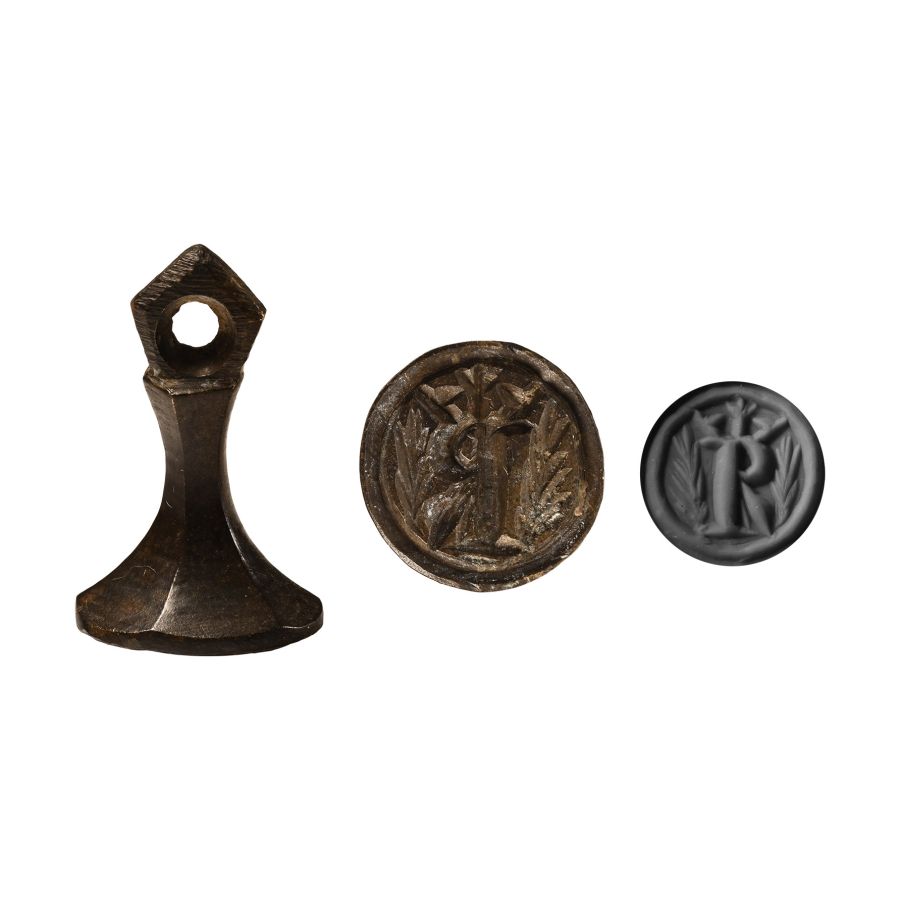
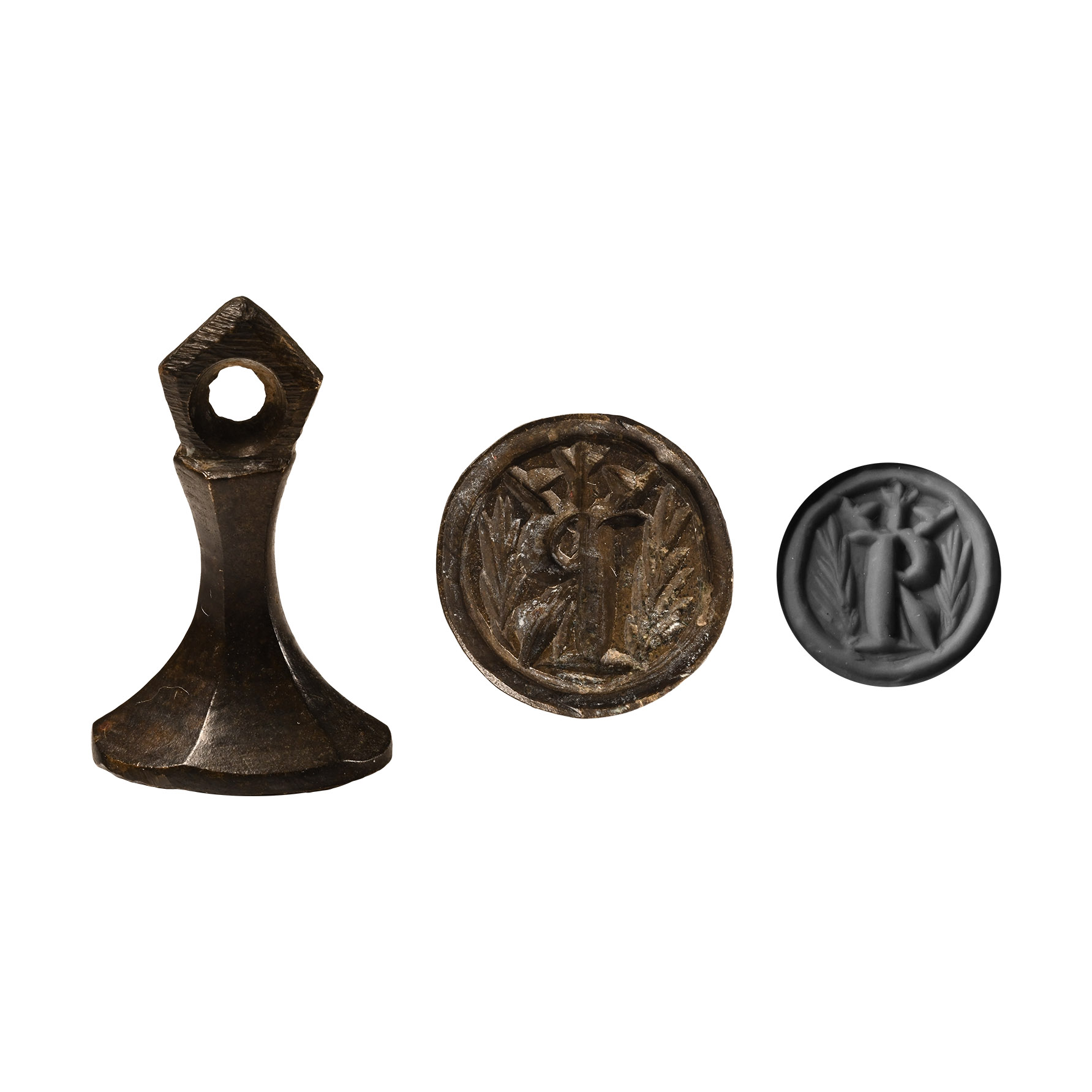
Medieval 'Published' Bronze Seal Matrix with Crowned R
14TH CENTURY A.D.
1 in. (8.8 grams, 26 mm).
Chessman-type with pierced finial; die with capital 'R' beneath a crown surrounded by a wreath. [No Reserve]
ProvenanceFrom the collection of the famous author, writer and speaker, Gordon Bailey, Essex, UK; formed since 1968.
PublishedBailey, G., Detector Finds 4 - Finds Identified, Witham, 2000, p.28, fig17; Bailey, G., Detector Finds 6, Witham, 2008, p.32, fig.C8.31a-c.
CONDITIONTimeLine Auctions follows a vetting process to ensure the authenticity and legality of all items, reinforcing our commitment to integrity and responsible trading. Each antiquity, antique, and coin lot undergoes thorough examination by a vetting committee of at least ten external specialists, professional trade association members, scientists, and archaeologists: Our Vetting Process
AUCTIONS:
TimeLine is a leading auction house specialising in antiquities, ancient art, collectables, natural history, coins, medals, and books. Our auctions offer museums, collectors, historians, and enthusiasts the opportunity to acquire unique and historically significant pieces.
-
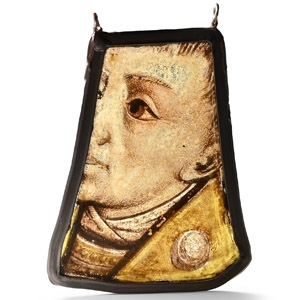
Medieval Stained Glass Panel of a Bishop
Northern France, late 15th century A.D.Sold for (Inc. bp): £234
Wearing a jewelled cope and with a disc brooch on the folded collar; lead came frame with suspension loops. 75 grams, 10.5 cm
Ex central London gallery. -
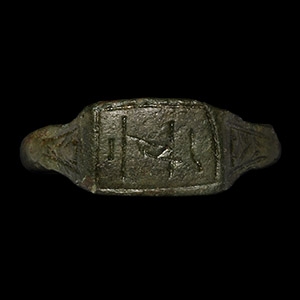
Medieval Bronze Ring with 'IHS' Motif
Circa 14th-15th century A.D.Sold for (Inc. bp): £26
Comprising a slender shank with scooped shoulders and incised foliage motifs, rectangular bezel with incised border and 'IHS' christogram. 1.73 grams, 20.43 mm overall, 17.51 mm internal diameter (approximate size British O, USA 7, Europe 14.98, Japan 14)
Private collection formed since the 1940s. UK art market. Property of an Essex, UK, gentleman.
The profile of the ring is influenced by eastern Mediterranean fashion of the 11th-12th century, specifically the Fatimid period workshops of Egypt or Syria. -
.jpg)
Medieval Gilt Zoomorphic Buckle Plate
Circa 12th-13th century A.D.Sold for (Inc. bp): £85
Gilt-bronze with reserved design of a hound advancing with head turned on a pounced field with bevelled edges, two straps for attachment to the buckle loop. 2.4 grams, 21.5 mm
Ex Chapman collection, UK, 1990s. Accompanied by a previous handwritten catalogue information slip.
