
Loading, please wait...
LOT 1726
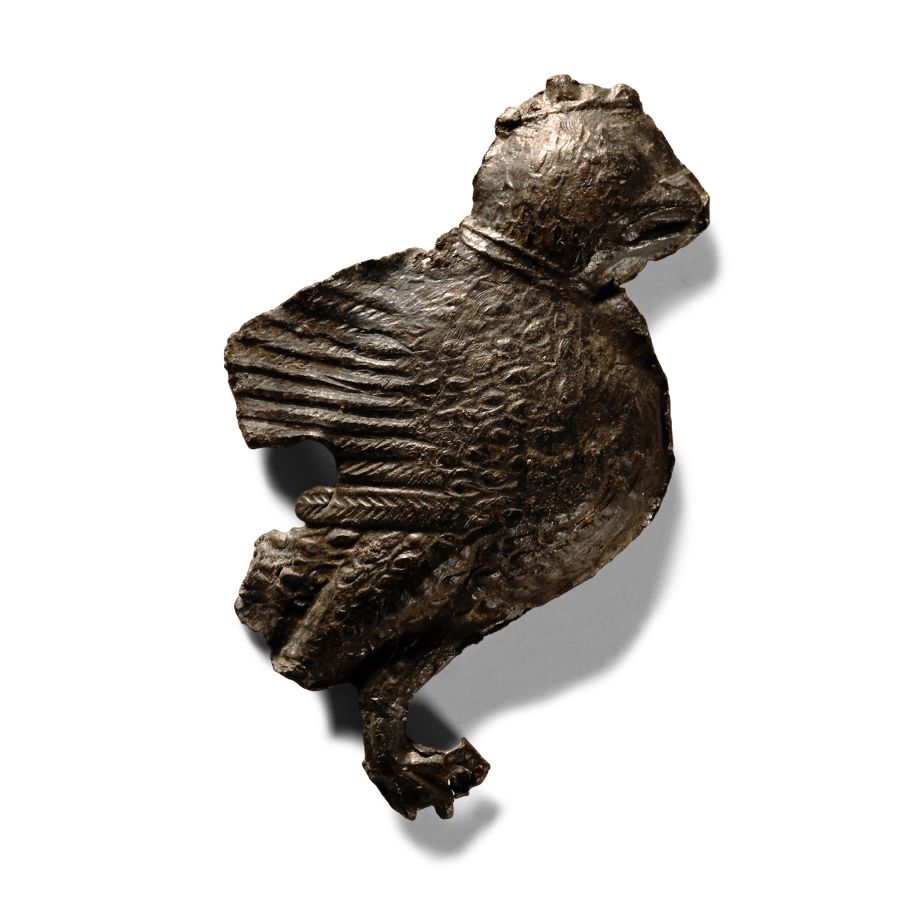
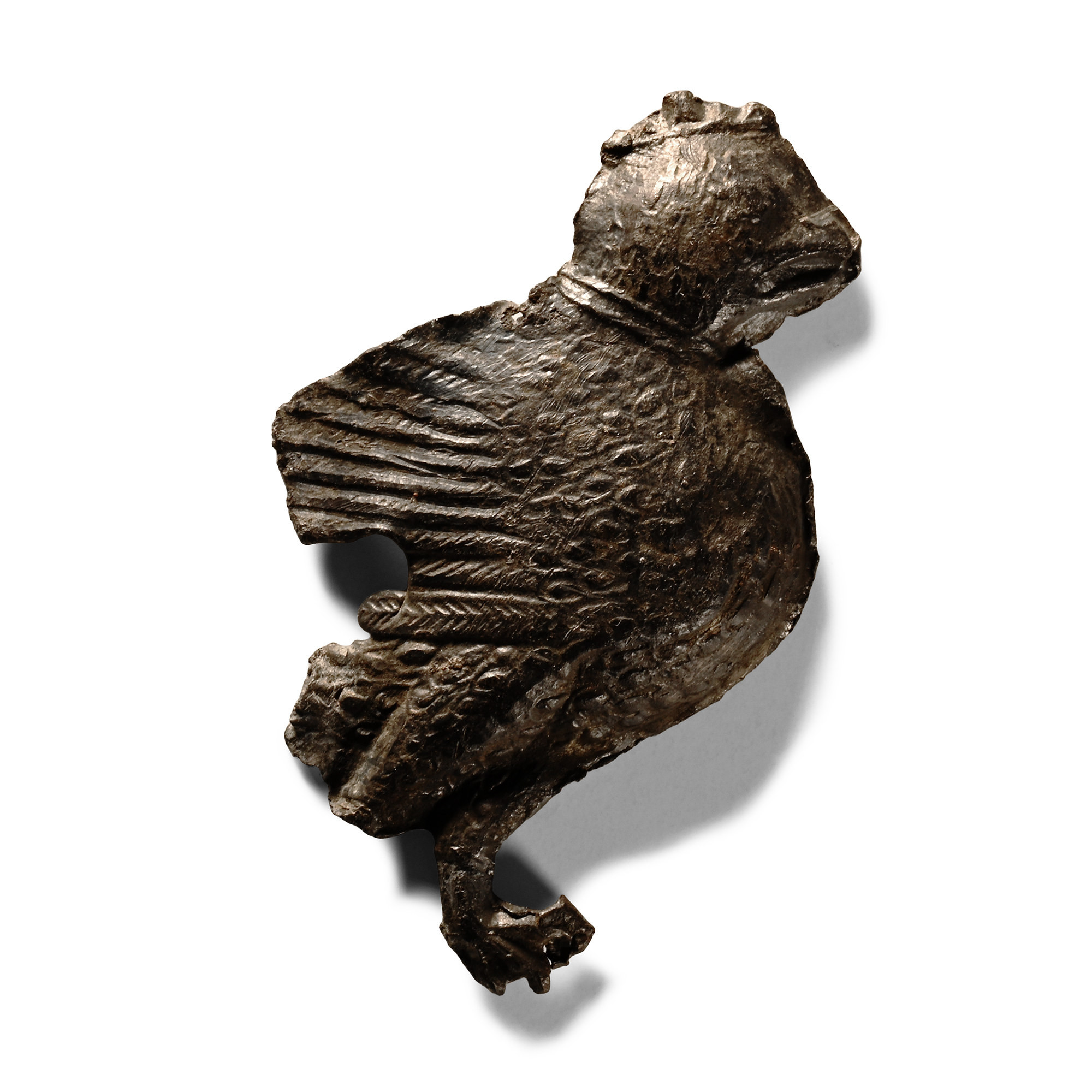
Medieval Pewter 'Popinjay' Pilgrim's Badge
CIRCA 14TH-15TH CENTURY A.D.
1 3/4 in. (6.44 grams, 47 mm).
Slightly domed in profile with low-relief detailing to the wings, with collar at the throat. [No Reserve]
ProvenanceFound on the Thames foreshore, London, UK.
Ex Nigel Mills, London, UK.
The term 'popinjay' is an old word for 'parrot'. It is associated with the rhyme 'Popinjay, jolly May' this month being seen as the month of love.
CONDITIONTimeLine Auctions follows a vetting process to ensure the authenticity and legality of all items, reinforcing our commitment to integrity and responsible trading. Each antiquity, antique, and coin lot undergoes thorough examination by a vetting committee of at least ten external specialists, professional trade association members, scientists, and archaeologists: Our Vetting Process
AUCTIONS:
TimeLine is a leading auction house specialising in antiquities, ancient art, collectables, natural history, coins, medals, and books. Our auctions offer museums, collectors, historians, and enthusiasts the opportunity to acquire unique and historically significant pieces.
-

Medieval Stained Glass with Head of a Blond Youth
Southern Low Countries, circa 1520-1530 A.D.Sold for (Inc. bp): £247
Roundel with irregular panel depicting a blond youth with his right hand raised to his ear; set within green foliage fragments to form a circular design. 170 grams, 13 cm
Private collection, France, by repute for several generations. with De Baecque Encheres, 5 March 2022, no.57. Accompanied by a previous illustrated catalogue page. -
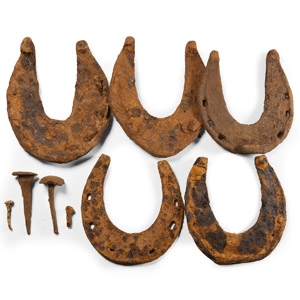
Medieval Iron Horseshoe Group
Circa 15th-16th century A.D.Sold for (Inc. bp): £59
Mainly formed with broad plate and countersunk rectangular nail-holes. 1.2 kg total, 2.5-13.5 cm
From the collection of B. Posey, Germany 1990s. -
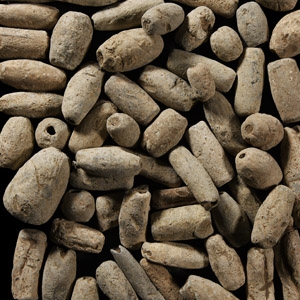
Medieval Lead Fishing Weight Group
Circa 14th-16th century A.D.Sold for (Inc. bp): £13
Mixed group of tubular, fusiform, oblate and other types. 2.2 kg total, 16-63 mm
Found Hertfordshire, UK.
