
Loading, please wait...
LOT 1843
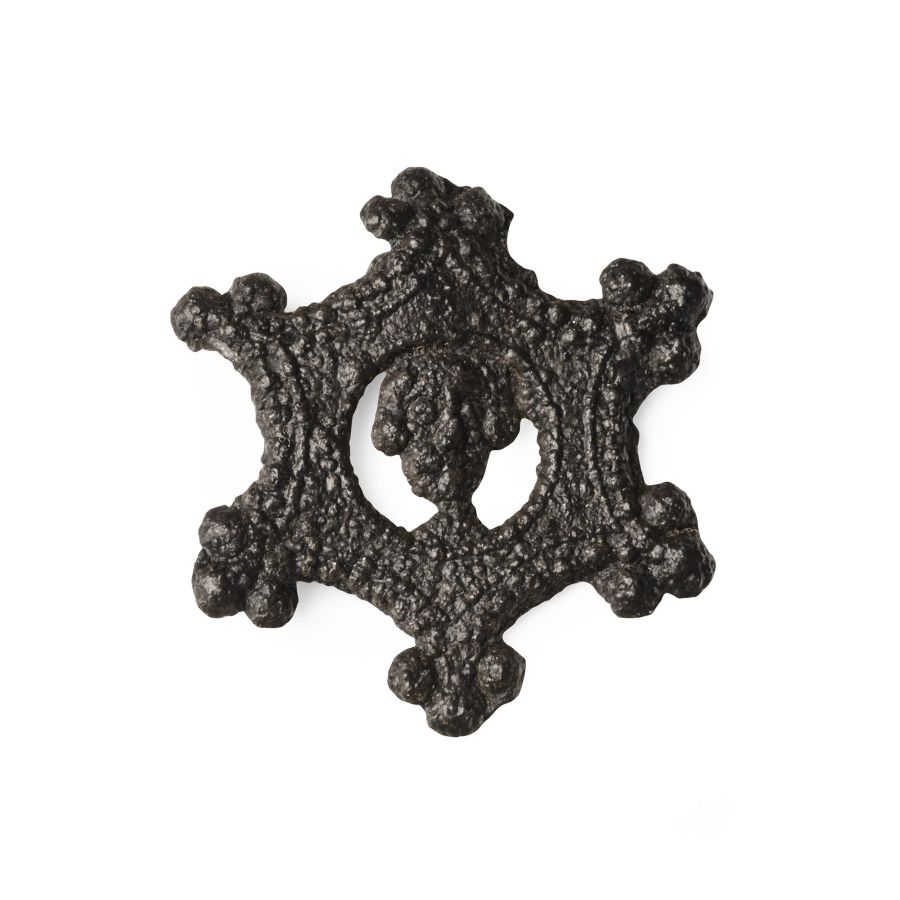
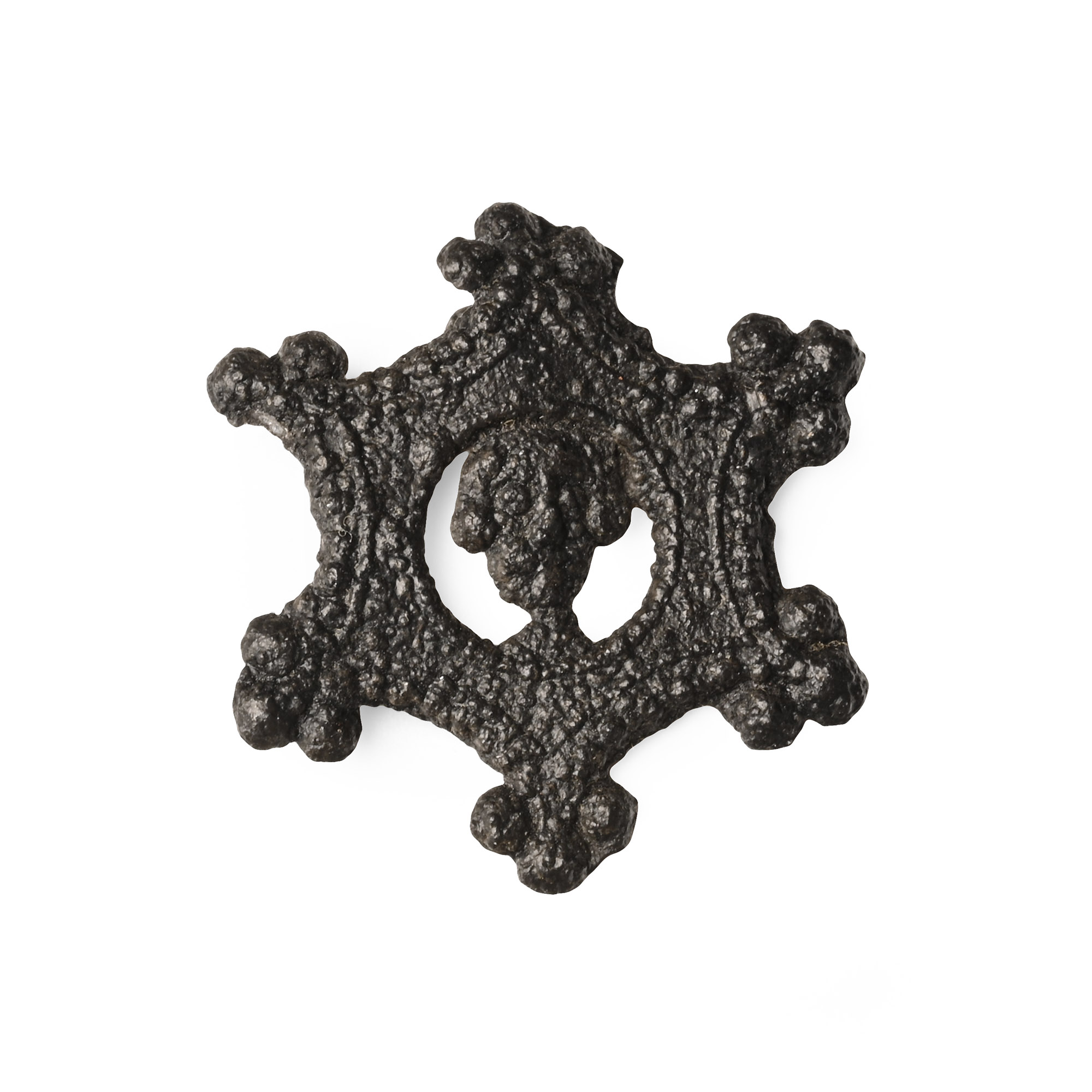
Medieval Pewter Pilgrim's Badge with Henry VI
CIRCA 14TH-15TH CENTURY A.D.
7/8 in. (1.36 grams, 23 mm).
Hexagonal in form with voided centre and a cluster of pellets at each outer angle; central facing bust; pin-lug to reverse. [No Reserve]
ProvenanceFrom a private Merseyside, UK, collection; formed since circa 2000.
LiteratureCf. British Museum accession no.1856,0701.2082, for similar badge of this monarch.
CONDITIONTimeLine Auctions follows a vetting process to ensure the authenticity and legality of all items, reinforcing our commitment to integrity and responsible trading. Each antiquity, antique, and coin lot undergoes thorough examination by a vetting committee of at least ten external specialists, professional trade association members, scientists, and archaeologists: Our Vetting Process
AUCTIONS:
TimeLine is a leading auction house specialising in antiquities, ancient art, collectables, natural history, coins, medals, and books. Our auctions offer museums, collectors, historians, and enthusiasts the opportunity to acquire unique and historically significant pieces.
-
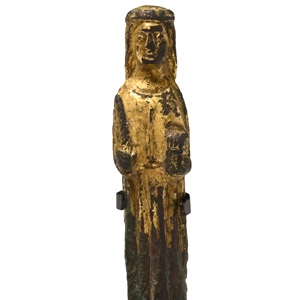
Medieval Gilt Bronze Statuette of Saint Catherine of Alexandria
England, 15th century A.D.Sold for (Inc. bp): £468
Modelled standing and wearing long robes, low crown on her head, short sword held on her right hand and a book on her left hand; mounted on a custom-made display stand. 29.9 grams, 52 mm (74.5 grams total, 60 mm including stand)
Private collection, UK. -
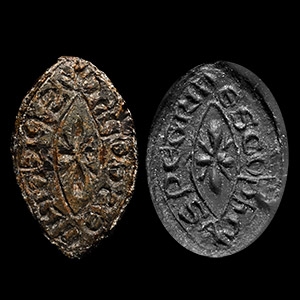
Medieval Lead Seal Matrix for Peter of Scuppeholm
13th century A.D.Sold for (Inc. bp): £20
Vesica-shaped with raised fleur-de-lys on the reverse, inscription '+ S'PETRI DE SCUPHOL' surrounding a double fleur-de-lys. 25.6 grams 36 mm
Ex Paul Moore, 1990s. Accompanied by a laminated Paul Moore identification card.
Scupholme is in South Somercotes, Lincolnshire, England. -
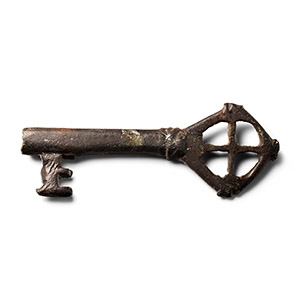
Medieval Bronze Door Key with Lozenge-Shaped Handle
14th-15th century A.D.Sold for (Inc. bp): £117
Barrel-key with voided lozenge bow, balustered shaft with hollow forward end, split ward with bits. 24 grams, 74 mm
Acquired on the UK art market before 2000. Property of an Essex, UK, gentleman.
