
Loading, please wait...
LOT 0346
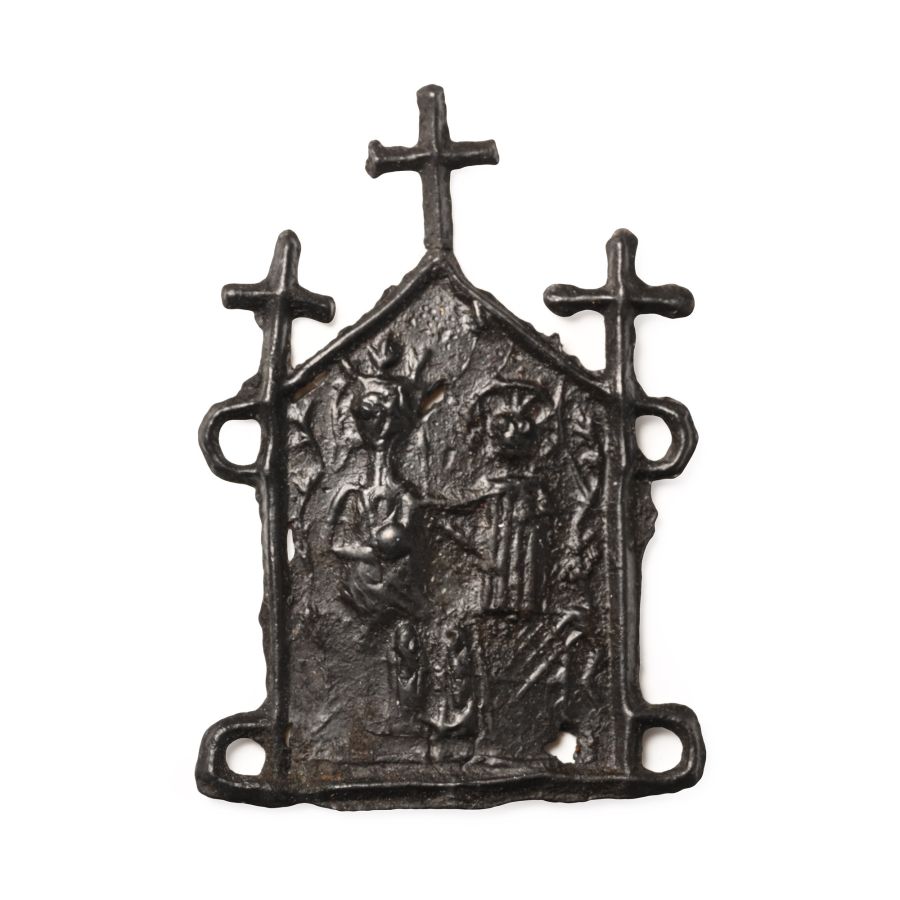
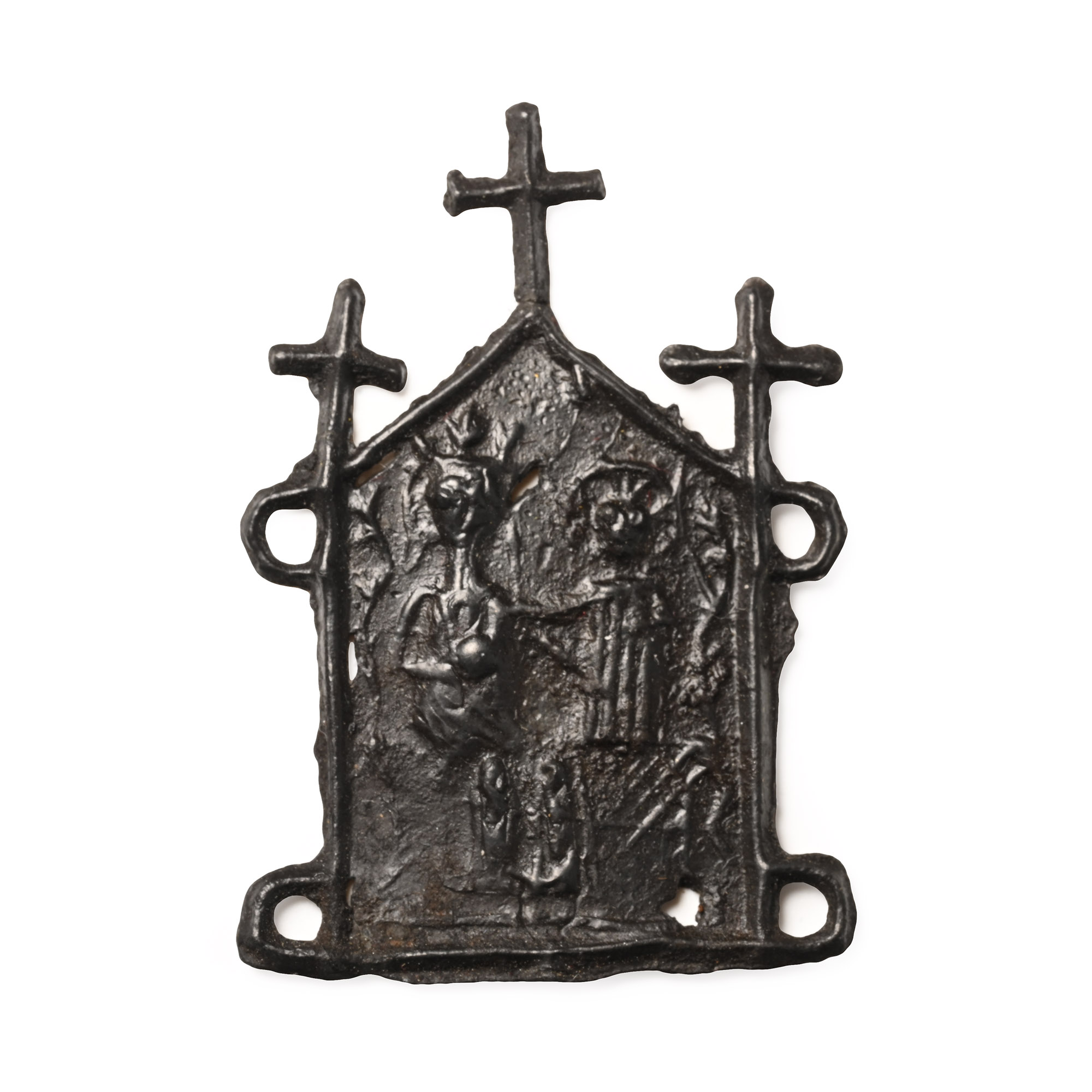
Medieval Pewter Pilgrim's Badge with Crosses
13TH CENTURY A.D.
1 5/8 in. (5.06 grams, 43 mm).
Styled as a church building surmounted by three crosses, raised hatching to one face, and a scene depicting the Virgin and Child beneath a starry sky to the other; four attachment loops remaining. [No Reserve]
ProvenanceEx European collection, 1990s.
Ex Cambridgeshire, UK, collection.
Cf. virtually identical Abb.1429 on p.343 of H.J.E. van Beuningen, A.M. Koldeweij & D. Kicken, Heilig en Profaan 2 1200 Laatmiddeleeuwse Insignes, [Rotterdam Papers XII], Cothen, 2001, where dated to the 13th century.
CONDITIONTimeLine Auctions follows a vetting process to ensure the authenticity and legality of all items, reinforcing our commitment to integrity and responsible trading. Each antiquity, antique, and coin lot undergoes thorough examination by a vetting committee of at least ten external specialists, professional trade association members, scientists, and archaeologists: Our Vetting Process
AUCTIONS:
TimeLine is a leading auction house specialising in antiquities, ancient art, collectables, natural history, coins, medals, and books. Our auctions offer museums, collectors, historians, and enthusiasts the opportunity to acquire unique and historically significant pieces.
-
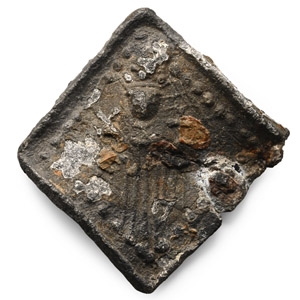
Medieval Pewter Pilgrim's Badge with Henry VI
Circa 14th-15th century A.D.Sold for (Inc. bp): £65
Lozengiform plaque with low-relief facing image of Henry VI with processional cross; pellets to the border; pin to the reverse. 3.17 grams, 22 mm
Found on the Thames foreshore, circa 2000. -
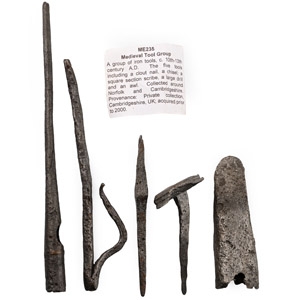
Medieval Iron Tool Group
10th-13th century A.D.Sold for (Inc. bp): £14
Including a sturdy clout nail, an awl, a chisel blade, and other items. 227 grams total, 7.5-19 cm
Acquired prior to 2000. From a private Cambridgeshire, UK, collection. From the property of a late Lincolnshire, UK, gentleman. -
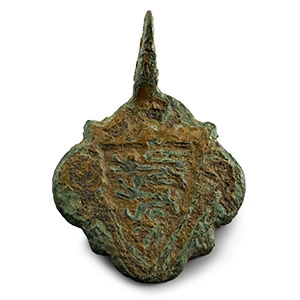
Medieval Gilt Bronze Knight's Heraldic Horse Harness Pendant with Royal Arms
England, 1300-1400 A.D.Sold for (Inc. bp): £72
Comprising a four-lobed plaque with interstitial points, integral pierced lug, reserved heater shield with three lions passant gardant. 7.38 grams, 42 mm
Found whilst searching with a metal detector in Long Crendon, Aylesbury Vale, Buckinghamshire, UK, on Saturday 22nd January 2011. Accompanied by a copy of the British Museum's Portable Antiquities Scheme (PAS) report no.SUR-25BC77.
