
Loading, please wait...
LOT 1798
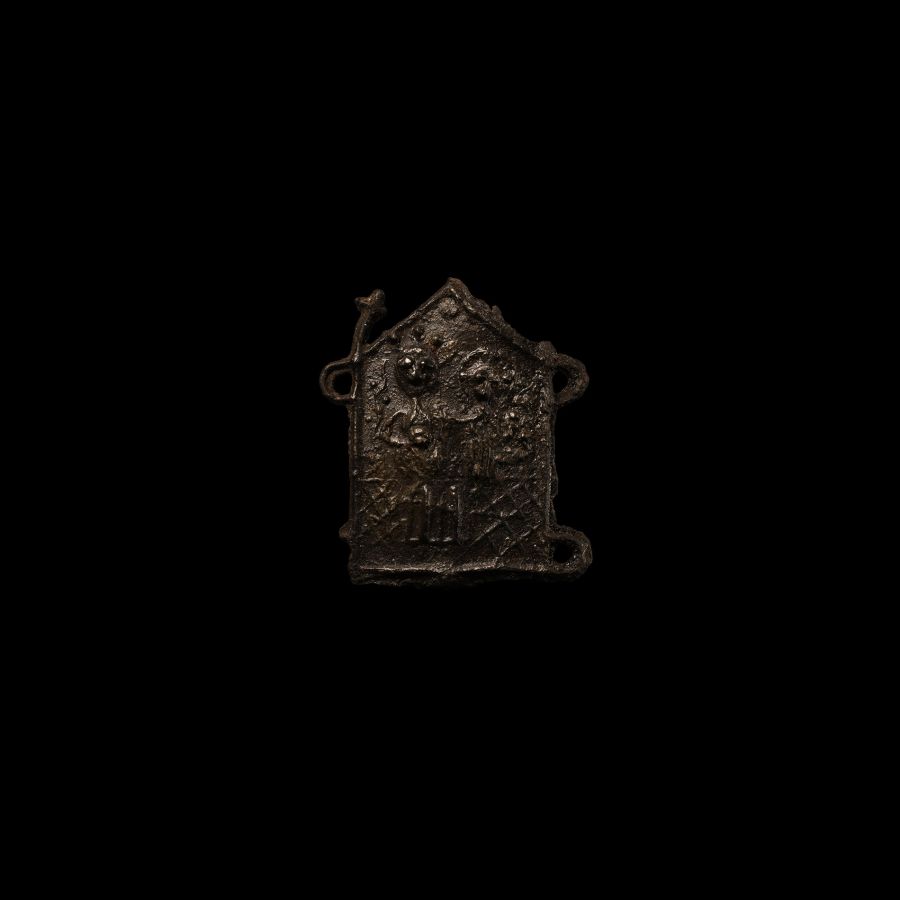
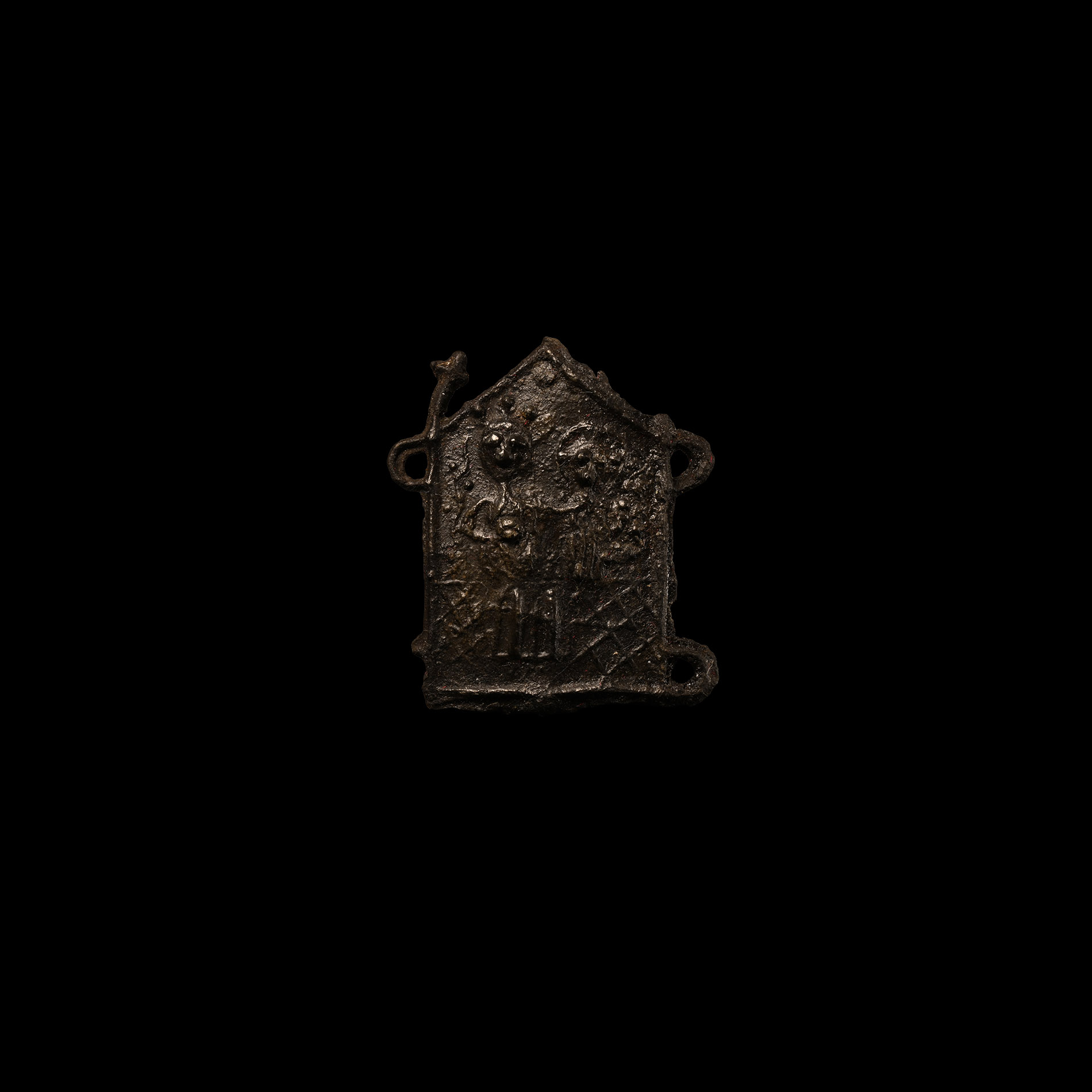
Medieval Pewter Pilgrim's Badge with Church
14TH-15TH CENTURY A.D.
1 3/8 in. (4.86 grams, 34 mm).
In the form of a church building with one cross remaining to roof, raised hatching to reverse and Virgin and Child figural scene to the other; three remaining attachment loops. [No Reserve]
ProvenanceEuropean collection, 1990s.
Property of a Cambridgeshire, UK, gentleman.
TimeLine Auctions follows a vetting process to ensure the authenticity and legality of all items, reinforcing our commitment to integrity and responsible trading. Each antiquity, antique, and coin lot undergoes thorough examination by a vetting committee of at least ten external specialists, professional trade association members, scientists, and archaeologists: Our Vetting Process
AUCTIONS:
TimeLine is a leading auction house specialising in antiquities, ancient art, collectables, natural history, coins, medals, and books. Our auctions offer museums, collectors, historians, and enthusiasts the opportunity to acquire unique and historically significant pieces.
-
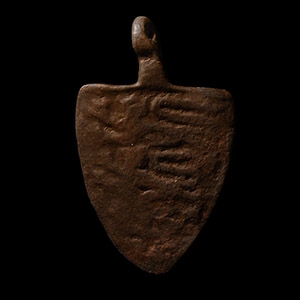
Medieval Bronze Knight's Royal Heraldic Horse Harness Pendant with Arms of England
14th century A.D.Sold for (Inc. bp): £169
Heater-shaped with motif of three lions, the royal arms of England from 1198 to 1340 and then from 1360 to 1369; blazoned 'gules, three lions passant guardant in pale or'. 10.2 grams, 43 mm
Fine condition.
Found Cambridgeshire, UK. -
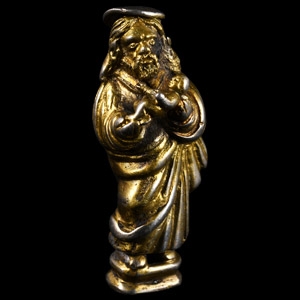
Medieval Gilt Silver Saint Simeon
Germany, Upper Rhine, circa 1500 A.D.Sold for (Inc. bp): £260
Holding the Infant Christ, modelled in the round with semi-naturalistic features, standing bare-footed on a plinth and wearing floor length robes. 14 grams, 4 cm
Austrian private collection since circa 1995. with ImKinsky Auctions 24 June 2020, lot 538 (part). Ex central London gallery. -
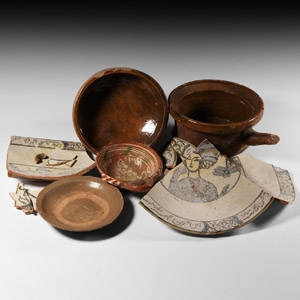
Medieval Ceramic Group
15th century A.D. and laterSold for (Inc. bp): £65
Comprising glazed pots and dishes and including a decorated example dated '1607' and a fragmentary dish with polychrome floral motifs. 2.7 kg total, 4.5-23 cm
Acquired 1990s-early 2000s. East Anglian private collection.
