
Loading, please wait...
LOT 1840
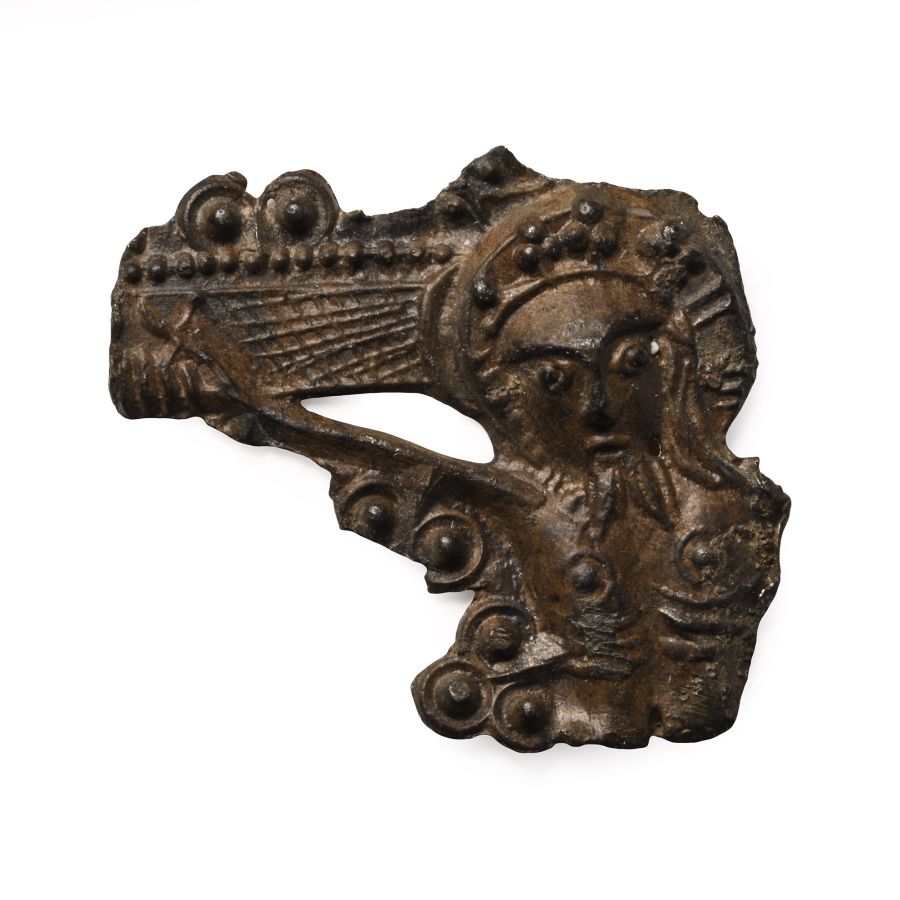
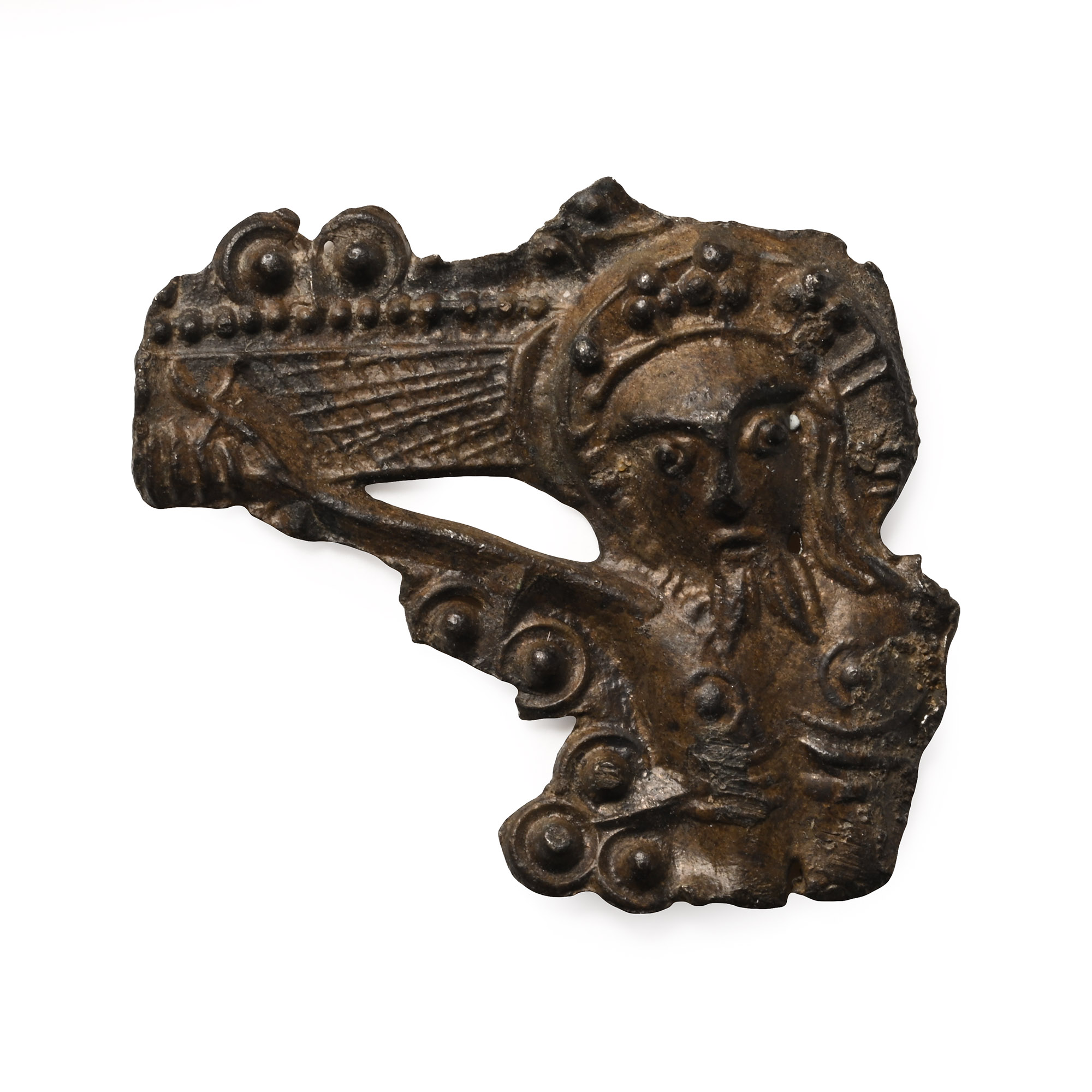
Medieval Pewter Pilgrim's Badge with Christ on Cross
CIRCA 14TH-15TH CENTURY A.D.
1 in. (2.52 grams, 25 mm).
Fragment with nimbate facing head of the Corpus Christi with right arm, portion of the cross with decorative roundels. [No Reserve]
ProvenanceFrom a private Merseyside, UK, collection; formed since circa 2000.
LiteratureCf. Spencer, B., Pilgrim Souvenirs and Secular Badges, Woodbridge, 2010, item 180(d), for type.
CONDITIONTimeLine Auctions follows a vetting process to ensure the authenticity and legality of all items, reinforcing our commitment to integrity and responsible trading. Each antiquity, antique, and coin lot undergoes thorough examination by a vetting committee of at least ten external specialists, professional trade association members, scientists, and archaeologists: Our Vetting Process
AUCTIONS:
TimeLine is a leading auction house specialising in antiquities, ancient art, collectables, natural history, coins, medals, and books. Our auctions offer museums, collectors, historians, and enthusiasts the opportunity to acquire unique and historically significant pieces.
-
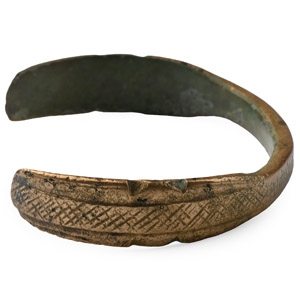
Medieval Bronze Decorated Bracelet
14th-16th century A.D.Sold for (Inc. bp): £13
Penannular in form with lobe finials, hatched median band. 26 grams, 62 mm
From an old Lincoln, UK, collection, 1950s-1970s. From the property of a late Lincolnshire, UK, gentleman. -
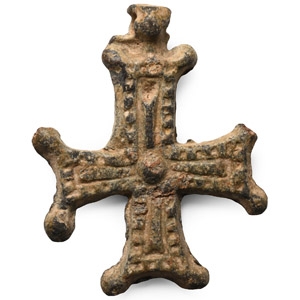
Medieval Lead Cross Pendant
14th-16th century A.D.Sold for (Inc. bp): £13
Expanding arms with pellet to each corner, raised decoration to both faces, integral suspension loop above. 4.82 grams, 30 mm
Ex Norri collection, Milton Keynes, UK, 1980s-1990s. -
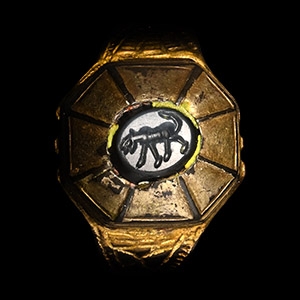
Large Medieval Silver-Gilt Ring with Lion Intaglio
14th-16th century A.D.Sold for (Inc. bp): £468
With a broad hoop, each shoulder decorated with a pointillé geometric motif, octagonal-section domed bezel with segmented upper and corrugated sidewall; inset nicolo with advancing lion motif. 9.96 grams, 31.53 mm overall, 19.51x23.08 mm internal diameter (approximate size British V 1/2, USA 10 3/4, Europe 24.40, Japan 23)
with Archaeologia, Switzerland, before 1983. Ex private North American collection. London private collection, 2016.
