
Loading, please wait...
LOT 1673
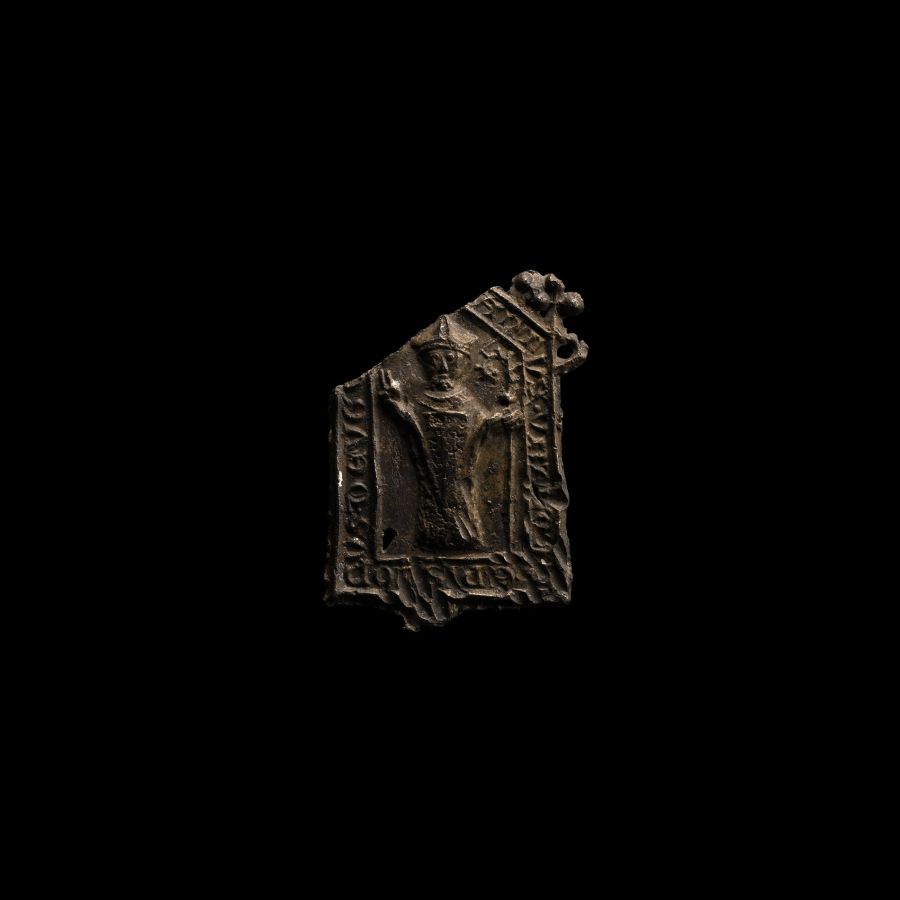
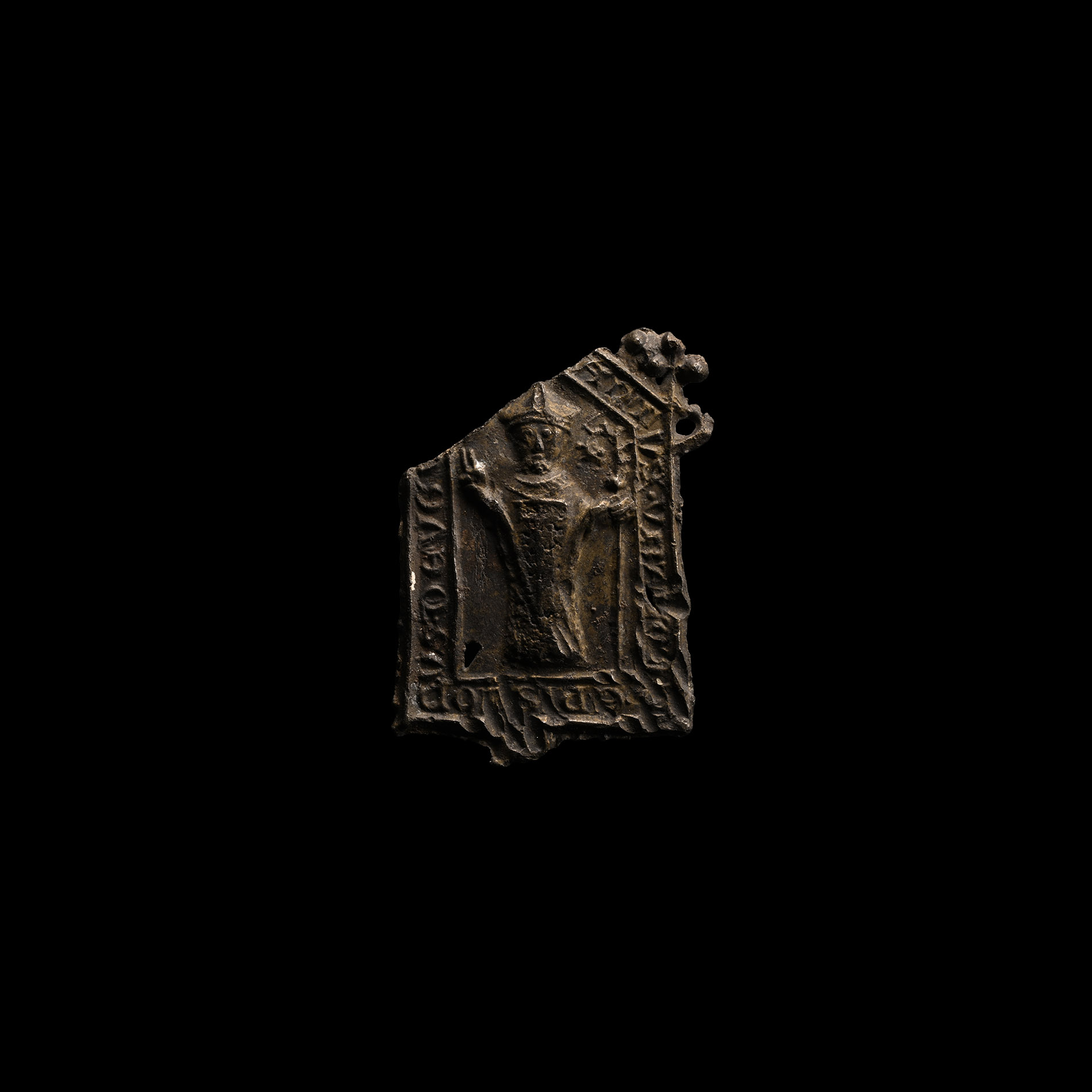
Medieval Pewter Pilgrim's Badge of St. Ubaldus
14TH-15TH CENTURY A.D.
1 3/4 in. (7.7 grams, 43 mm).
Formed as a pentagonal plate showing a bishop in relief to the centre, wearing a mitre and floor length cope and surplice, holding attributes of his office, surrounding Latin legend: '[S]ANTVS VBALDVS EPISCOPVS DEV GV[BIO]' (St. Ubaldus, bishop, of Gubbio); one remaining attachment loop. [No Reserve]
ProvenanceEuropean collection, 1990s.
Property of a Cambridgeshire, UK, gentleman.
Another example, also fragmentary, but allowing completion of the inscription here, is reproduced as Abb.370 on p.200 of H.J.E. van Beuningen & A.M. Koldeweij, Heilig en Profaan 1000 Laatmiddeleeuwse Insignes [Rotterdam Papers VIII], Cothen, 1993, where dated c.1350-c.1450.
FootnotesCommemorating a pilgrimage to the shrine of St. Ubaldus (1085-1160) in Gubbio.
CONDITIONTimeLine Auctions follows a vetting process to ensure the authenticity and legality of all items, reinforcing our commitment to integrity and responsible trading. Each antiquity, antique, and coin lot undergoes thorough examination by a vetting committee of at least ten external specialists, professional trade association members, scientists, and archaeologists: Our Vetting Process
AUCTIONS:
TimeLine is a leading auction house specialising in antiquities, ancient art, collectables, natural history, coins, medals, and books. Our auctions offer museums, collectors, historians, and enthusiasts the opportunity to acquire unique and historically significant pieces.
-
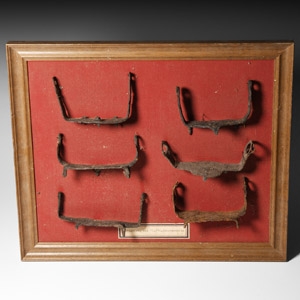
Medieval Early Iron 'Ice Crampon' Collection
15th-16th century A.D.Sold for (Inc. bp): £33
Mounted on a framed back board for display. 1 kg, 38.5 x 32 cm
Acquired 1960s-1990s. Late Alison Barker collection, a retired London barrister. -
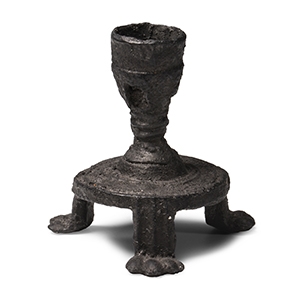
Medieval Pewter Candlestick
15th-16th century A.D.Sold for (Inc. bp): £546
Featuring lion's paw tripod feet and a socket with low relief lozenges decorating the cup. 40 grams, 51 mm high
Acquired 1990s-early 2000s. East Anglian private collection. -
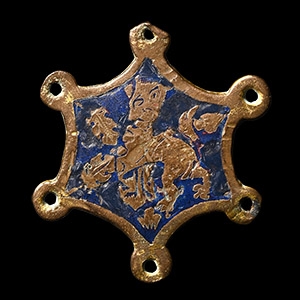
Medieval Gilt Bronze Knight's Heraldic Horse Harness Mount with Manticore
13th-15th century A.D.Sold for (Inc. bp): £221
The hexagonal body with scooped edges and a pierced lobe to each angle, blue enamelled field with reserved image of a manticore passant. 8.1 grams, 42 mm
Formerly in an old UK private collection. Ex property of a London gentleman.
