
Loading, please wait...
LOT 1823
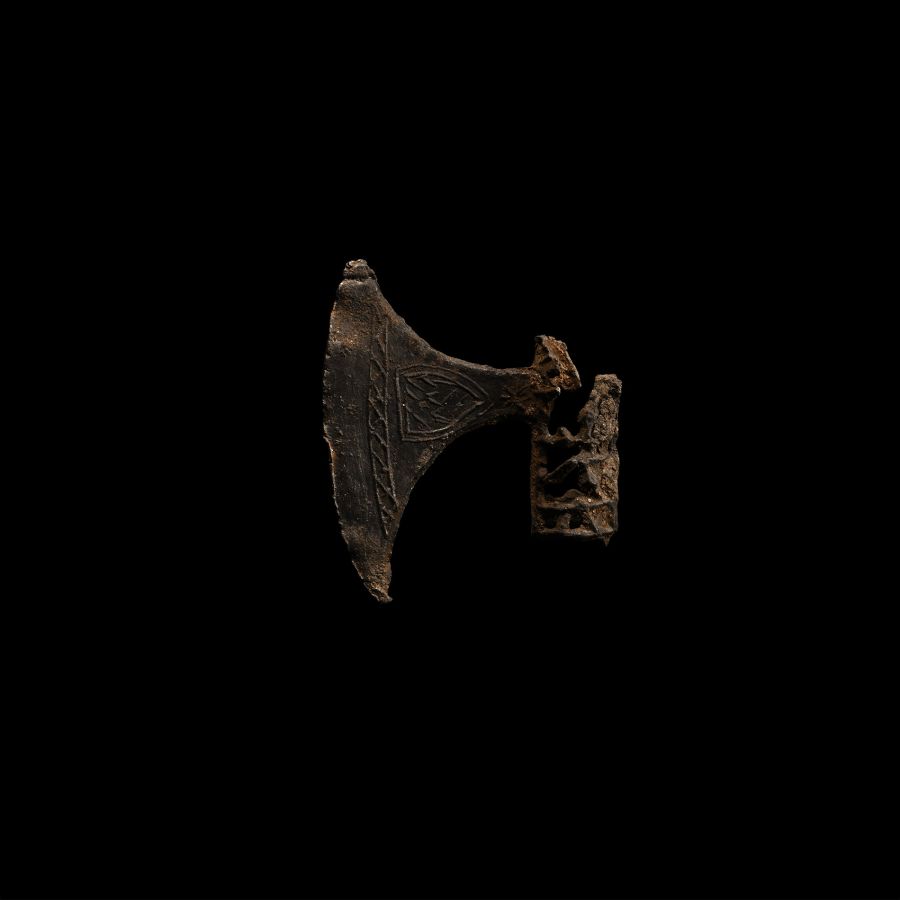
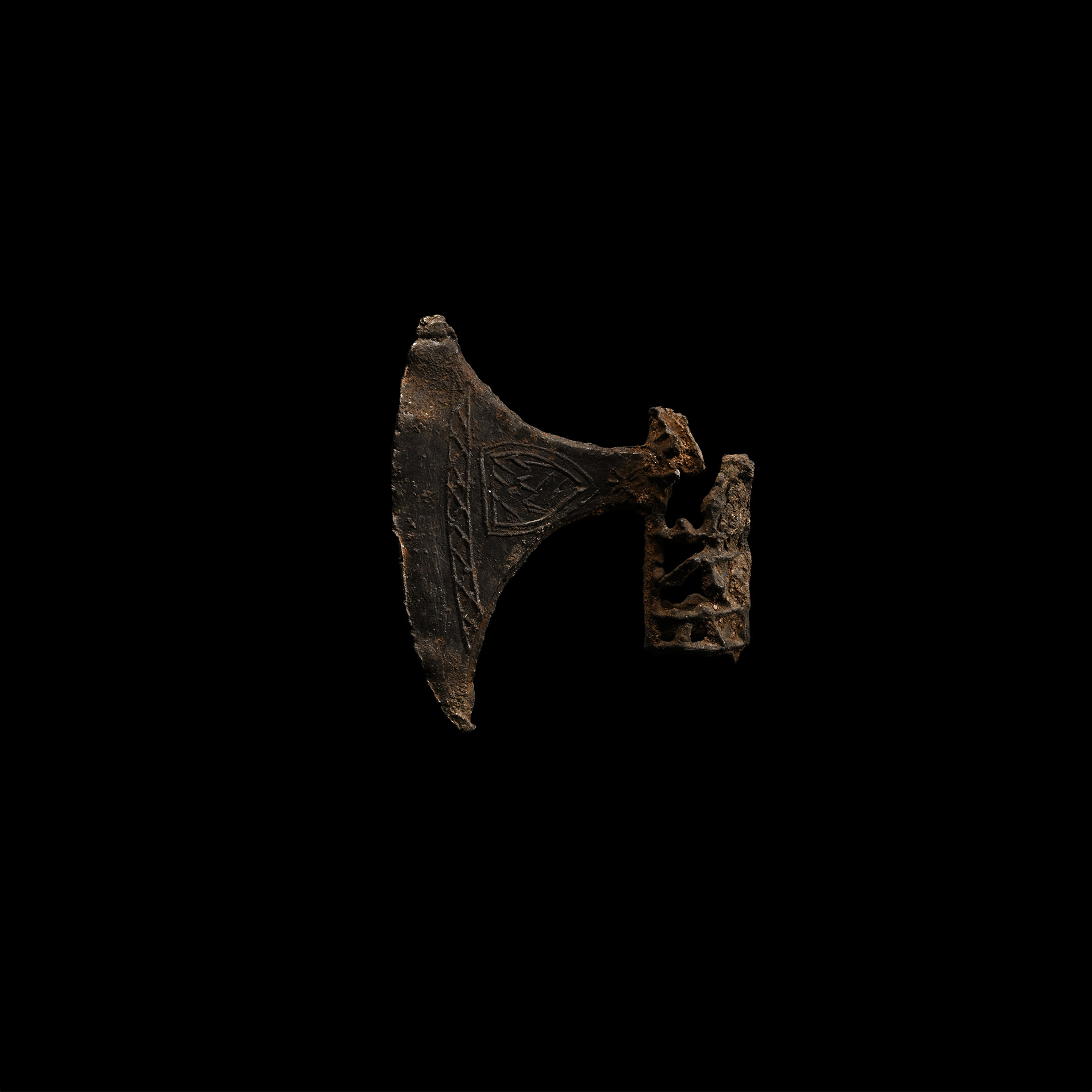
Medieval Pewter Axe-Shaped Pilgrim's Badge with Heraldic Shield
14TH-15TH CENTURY A.D.
1 1/2 in. (5.36 grams, 39 mm).
Featuring an openwork socket and fan-shaped blade decorated in relief on both faces with geometric bands, a monogram and heraldic shield. [No Reserve]
ProvenanceEuropean collection, 1990s.
Property of a Cambridgeshire, UK, gentleman.
For comparable examples, see Spencer, B., Pilgrims and Secular Badges, London, 1998, no.301.
CONDITIONTimeLine Auctions follows a vetting process to ensure the authenticity and legality of all items, reinforcing our commitment to integrity and responsible trading. Each antiquity, antique, and coin lot undergoes thorough examination by a vetting committee of at least ten external specialists, professional trade association members, scientists, and archaeologists: Our Vetting Process
AUCTIONS:
TimeLine is a leading auction house specialising in antiquities, ancient art, collectables, natural history, coins, medals, and books. Our auctions offer museums, collectors, historians, and enthusiasts the opportunity to acquire unique and historically significant pieces.
LOT 1823
Medieval Pewter Axe-Shaped Pilgrim's Badge with Heraldic Shield
Sold for (Inc. bp): £52
-
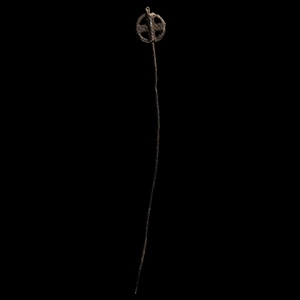
Medieval Pewter Pilgrim's Pin with Cross Finial
14th-15th century A.D.Sold for (Inc. bp): £33
The slender stem with a free-running openwork roundel with central cross. 2.06 grams, 11.7 cm
European collection, 1990s. Property of a Cambridgeshire, UK, gentleman. -
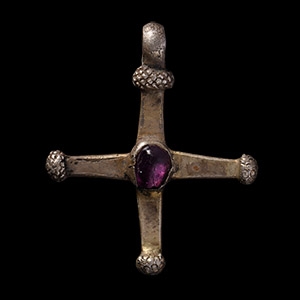
Medieval Silver-Gilt Jewelled Cross with Inscription
14th-15th century A.D.Estimate: £1,000 - 1,400 (‡+bp*)
Opening Bid: £500
Set with a central cabochon-cut amethyst, rounded knops with textured detailing to the end of each arm, integral loop for suspension; to the reverse, the name 'HENRI' inscribed on the vertical axis, the acronym 'AGLA' horizontally, a Maltese cross to the centre. 2.95 grams, 31 mm
UK art market, acquired prior to 1985. From the collection of a North American gentleman, acquired in 2012.
The acronym 'AGLA' stands for the Hebrew phrase 'Atah gebur le-olam Adonai', meaning 'Thine Is The Power Throughout Endless Ages, O Lord'; it was used particularly in exorcisms, healing and divination, and was associated with Rosicrucianism. -
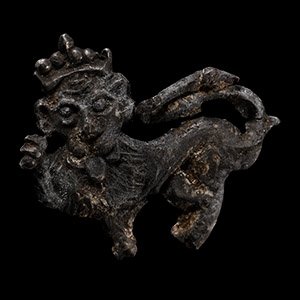
Medieval 'Thames' Pewter Lion Retainer's Badge
15th century A.D.Sold for (Inc. bp): £98
Comprising a lion passant guardant wearing a crown, tongue protruding; remains of pin to reverse. 1.85 grams, 23 mm
Found Thames foreshore spoil, 1980s and recorded with Museum of London.
This form of badge was used by the Lancastrians in the Wars of the Roses.
