
Loading, please wait...
LOT 1768
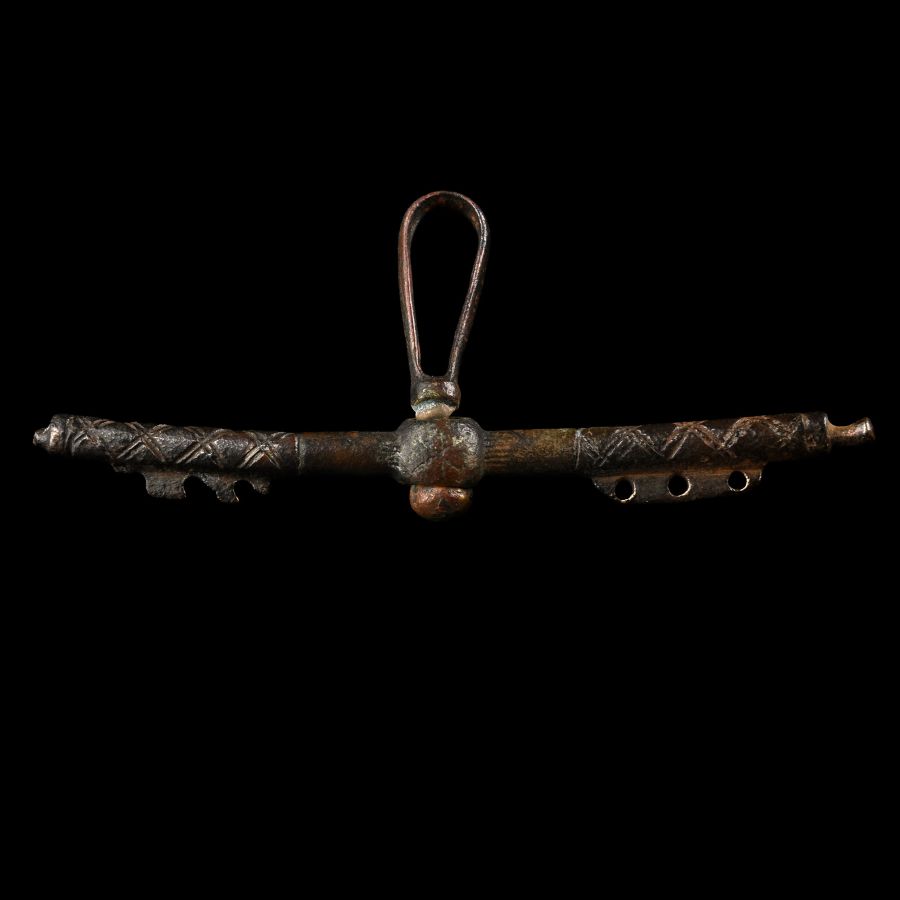
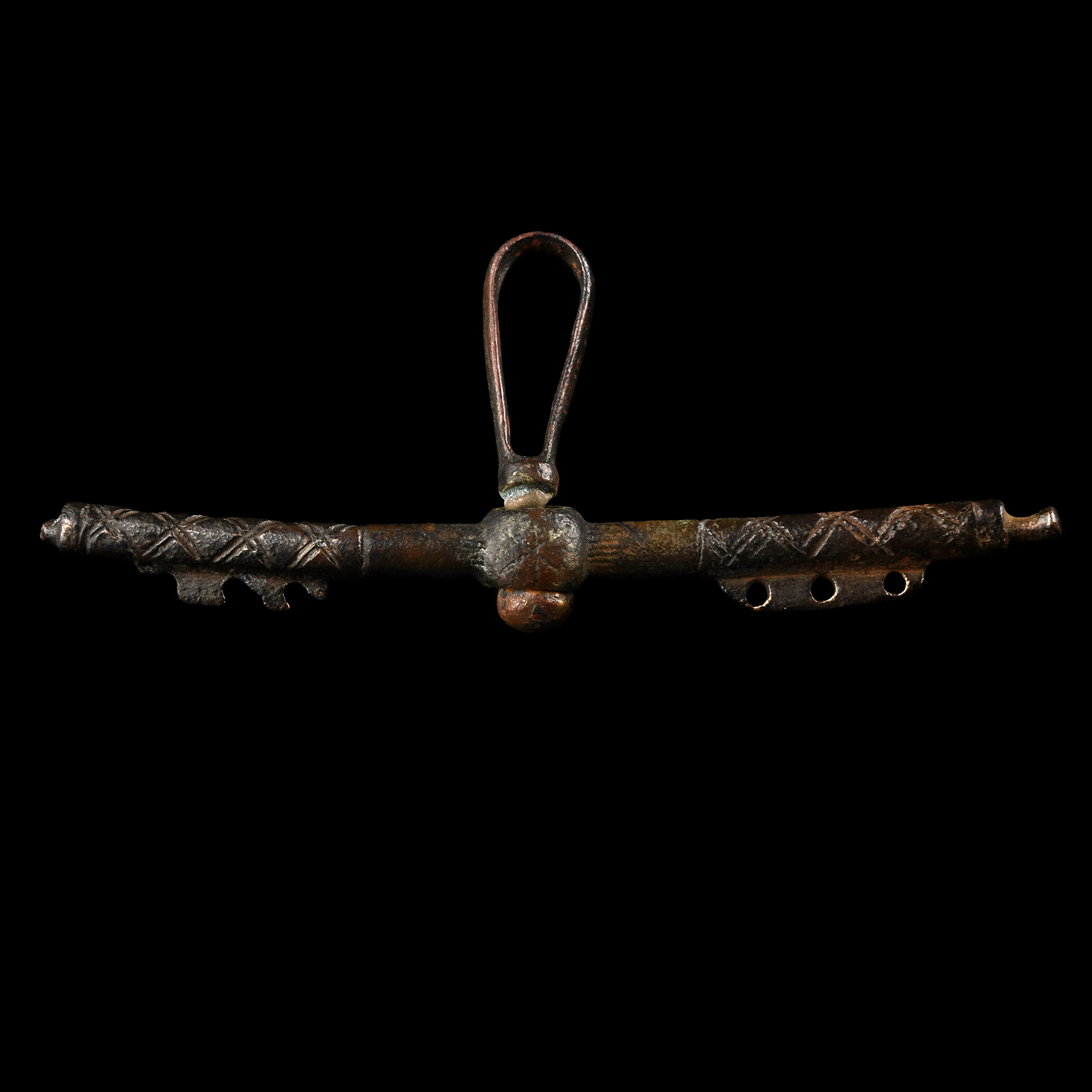
Medieval or Tudor Bronze Purse Bar
15TH-16TH CENTURY A.D.
5 1/4 in. (61 grams, 13.5 cm).
With hatched ornament to the outer ends of the bar and pierced rectangular panels beneath, swivel-mounted hoop. [No Reserve]
ProvenanceFrom the collection of a Buckinghamshire, UK, collector established from the earlier 1960s.
LiteratureSee Williams, D., Finds Research Group, Datasheet 50, Copper-Alloy Purse Components, 2018; Portable Antiquities Scheme nos. BH-C238C7 and NMS-8281F5.
CONDITIONTimeLine Auctions follows a vetting process to ensure the authenticity and legality of all items, reinforcing our commitment to integrity and responsible trading. Each antiquity, antique, and coin lot undergoes thorough examination by a vetting committee of at least ten external specialists, professional trade association members, scientists, and archaeologists: Our Vetting Process
AUCTIONS:
TimeLine is a leading auction house specialising in antiquities, ancient art, collectables, natural history, coins, medals, and books. Our auctions offer museums, collectors, historians, and enthusiasts the opportunity to acquire unique and historically significant pieces.
-
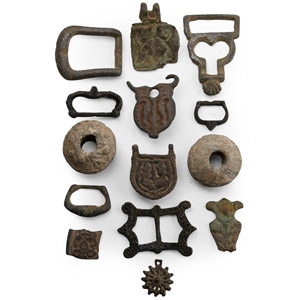
Medieval and Later Bronze and Other Artefact Collection
11th-17th century A.D.Sold for (Inc. bp): £13
Including lead spindle whorls, buckle plates and loops and other items. 175 grams total, 19-47 mm
From old Cheshire and Nottinghamshire private collections. From the property of a late Lincolnshire, UK, gentleman. -
.jpg)
Medieval Limestone Corbel of Jesus with Crown of Thorns
Circa 14th-15th century A.D.Sold for (Inc. bp): £221
Rectangular corbel with head of Christ modelled in the half-round, turned slightly with the eyelids drooping and lank hair framing the face; crown of thorns to the brow. 31.9 kg, 39 cm deep
From Lancashire, UK. From a collection acquired on the UK art market. Property of a West Midlands, UK, private collector. -
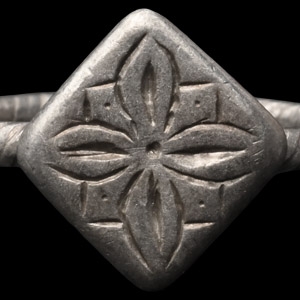
Medieval Silver Ring with Floral Cross
Circa 15th-16th century A.D.Sold for (Inc. bp): £182
Round-section hoop with faux rope-twist, lozenge-shaped bezel with a floral cross within a rectangle. 3.57 grams, 23.82 mm overall, 19.70 mm internal diameter (approximate size British P 1/2, USA 7 3/4, Europe 16.86, Japan 16)
Ex German art market, 2000s. Acquired from an EU collector living in London. From the collection of a Surrey, UK, gentleman.
