
Loading, please wait...
LOT 1359
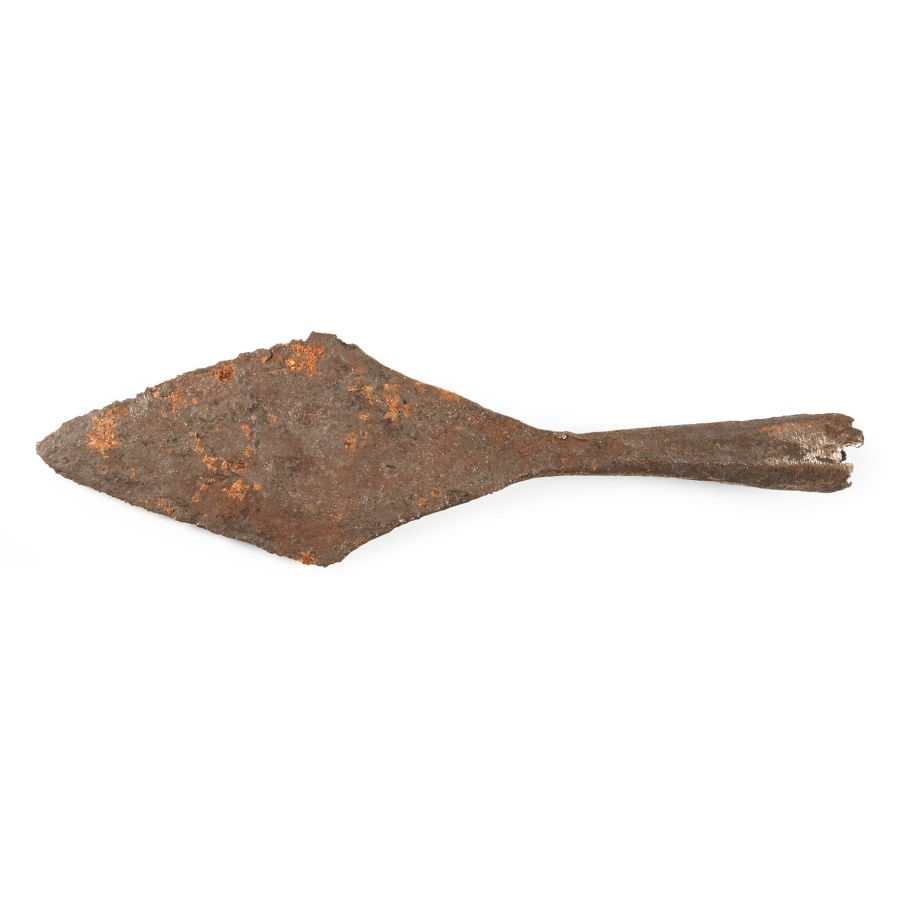
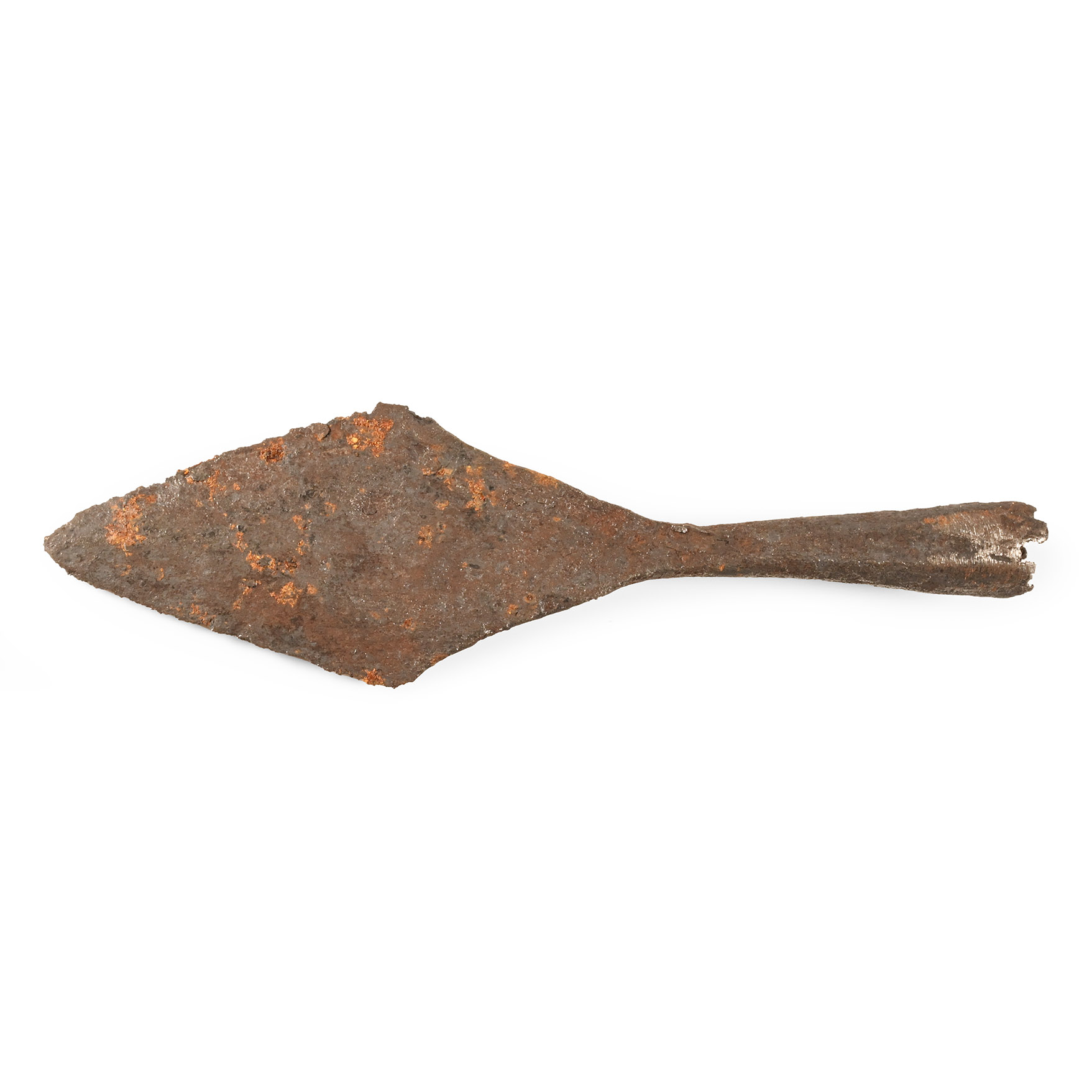
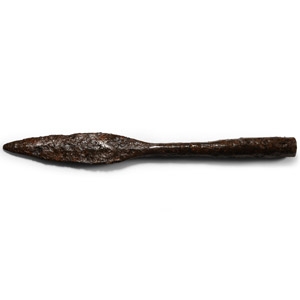
Medieval Lozenge-Shaped Iron Arrowhead
14TH-15TH CENTURY A.D.
4 in. (16.8 grams, 99 mm).
Lanceolate in profile with split socket. [No Reserve]
ProvenanceAcquired prior to 2000.
Ex Private collection, Cambridgeshire, UK.
Property of a Kent lady collector.
TimeLine Auctions follows a vetting process to ensure the authenticity and legality of all items, reinforcing our commitment to integrity and responsible trading. Each antiquity, antique, and coin lot undergoes thorough examination by a vetting committee of at least ten external specialists, professional trade association members, scientists, and archaeologists: Our Vetting Process
AUCTIONS:
TimeLine is a leading auction house specialising in antiquities, ancient art, collectables, natural history, coins, medals, and books. Our auctions offer museums, collectors, historians, and enthusiasts the opportunity to acquire unique and historically significant pieces.
-
.jpg)
Migration Period Iron Spatha Sword with Garnet Inlaid Hilt
5th-7th century A.D.Estimate: £5,000 - 7,000 (+bp*)
Opening Bid: £1,800
Comprising a double-edged parallel-sided blade showing battle nicks on both cutting edges, medium length tapering tang; lentoid-shaped lower-guard with inset garnets to one side; accompanied by an amber sword bead with a bronze stud with garnet inlay. 753 grams total, 1.9-80 cm
From the private collection of a London gentleman, from his grandfather's collection formed before the early 1970s. Accompanied by an academic report by Dr Raffaele D’Amato. This lot has been checked against the Interpol Database of stolen works of art and is accompanied by a search certificate no. 12063-217911.
This type of swords (cf. Lebedinsky 2001, p.117) usually had stones hanging from the pommel or hilt, like the one preserved here. This typology was widespread in central Europe by the Huns and there are also specimens attested in Gaul in the 5th century. -
Western Asiatic Bronze Javelin Head
Late 3rd millennium B.C.Estimate: £250 - 350 (+bp*)
Opening Bid: £125
Featuring a tripartite weapon with short, narrow leafy blade, elongated stem decorated by embossed geometric lines and folded tang. 220 grams, 32.3 cm
Acquired 1980-2015. Ex Abelita family collection.
The points within this typology are biconvex or leaf-shaped, not very sharp. These types of spears have been found in the tombs of Palestine from Tell el-'Ajjul (tomb 227) to the sites of the central plains and the banks of Jordan: Yavne, 'Ain Samiya, Jebel Qa'aqir, tombs G 83 and M 13 of Jericho, tombs 2100 and 2111 of Lachish. All are dated to the last two centuries of the 3rd millennium. -
Anglo-Saxon Iron Socketted Spearhead
5th-7th century A.D.Sold for (Inc. bp): £208
Lentoid-section leaf-shaped blade with slender neck and long closed socket; Swanton's Group D1. 190 grams, 26 cm
Found near Wetwang, East Yorkshire, UK. Acquired circa 2005. Ian Wilkinson collection, Nottinghamshire, UK.
A small number of leaf-shaped blades measuring between some 16 and 28 cm in length are similar to the smaller leaf-shaped pieces of the Swanton series C, except that they tend to be more slender overall. The socket is always narrowly split up its entire length.
