
Loading, please wait...
LOT 0396
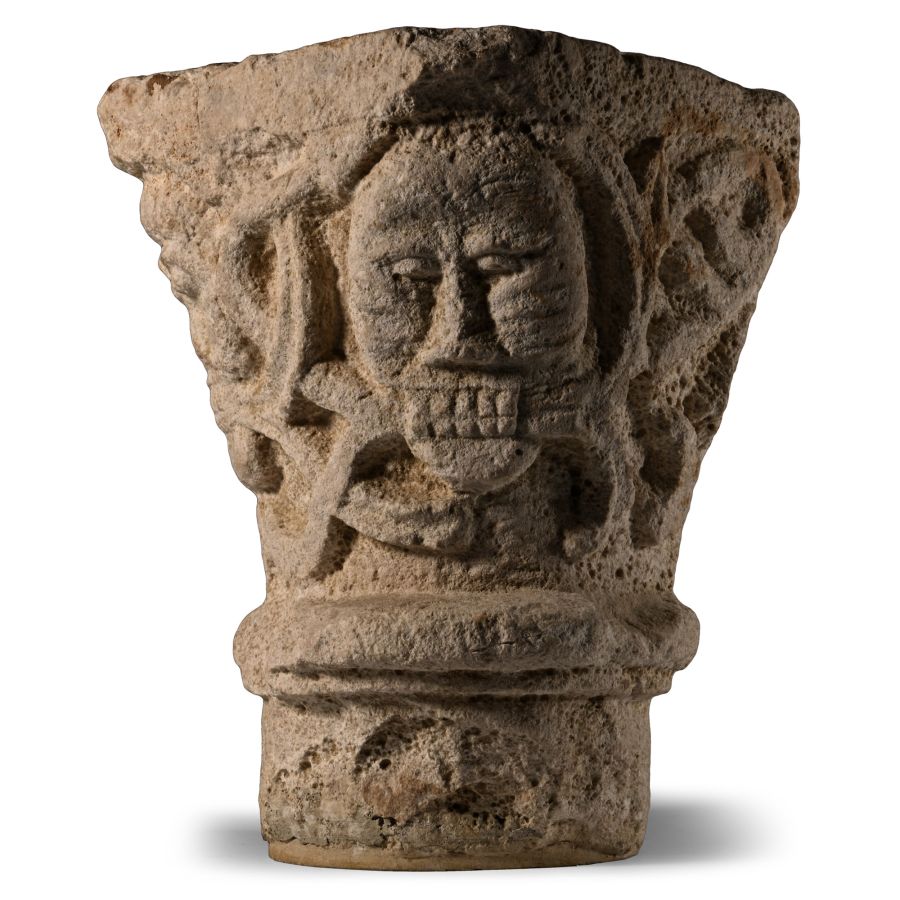
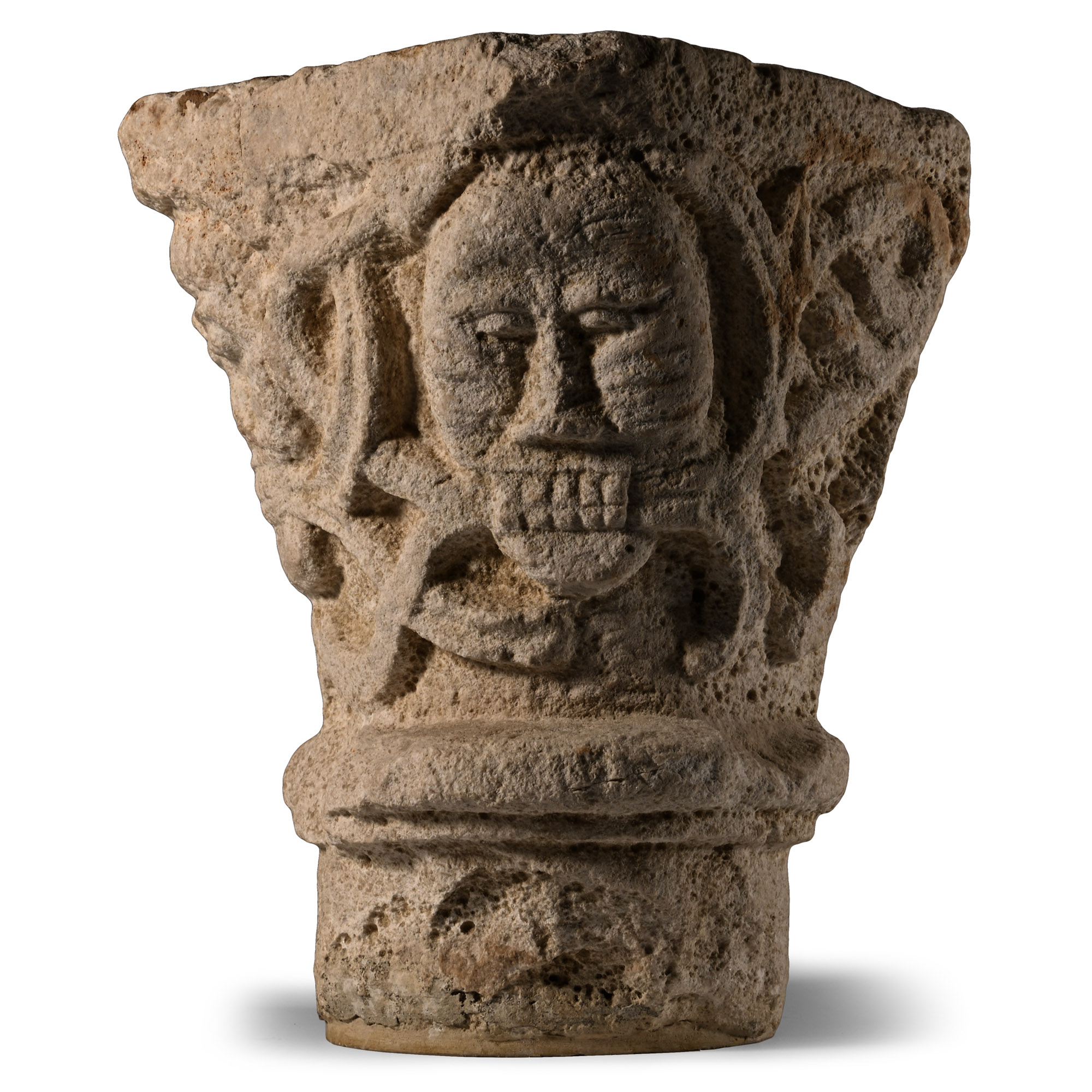
Medieval Limestone Cloister Capital with Green Man Heads
SOUTH WEST FRANCE, LATE 12TH CENTURY A.D.
11 1/4 in. (16.1 kg, 28.5 cm).
With square upper face developing to a round base; the spandrel decorated with a frieze comprising two grimacing faces linked by interlacing foliage; the back with two large acanthus leaves flanking a lanceolate floral motif. [No Reserve]
ProvenanceSAS Guillaumot-Richard, 25 June 2016, no.202.
Ex central London gallery.
Accompanied by an academic report by Dr Raffaele D’Amato.
This lot has been checked against the Interpol Database of stolen works of art and is accompanied by search certificate no.12183-221702.
Cf. Fogg, S., 30 heads, Stone heads from the 12th to the 15th century, London, 2018, pp.5ff., for similar images; Lassalle, V., ‘Les chapiteaux, l’organisation du décor et quelques particularités architecturales de l’église Notre-Dame, à Saignon (Vaucluse)’ in Archéologie du Midi médiéval. Tome 20, 2002, pp.37-55, for similar capitals with interlaced foliage, fig.4.
FootnotesGreen Man masks are commonly found as bosses in the aisles of churches or in the cloisters of monastic complexes.
CONDITIONTimeLine Auctions follows a vetting process to ensure the authenticity and legality of all items, reinforcing our commitment to integrity and responsible trading. Each antiquity, antique, and coin lot undergoes thorough examination by a vetting committee of at least ten external specialists, professional trade association members, scientists, and archaeologists: Our Vetting Process
AUCTIONS:
TimeLine is a leading auction house specialising in antiquities, ancient art, collectables, natural history, coins, medals, and books. Our auctions offer museums, collectors, historians, and enthusiasts the opportunity to acquire unique and historically significant pieces.
LOT 0396
Medieval Limestone Cloister Capital with Green Man Heads
Sold for (Inc. bp): £5,720
-
Medieval Lead Seal Matrix
13th century A.D.Sold for (Inc. bp): £33
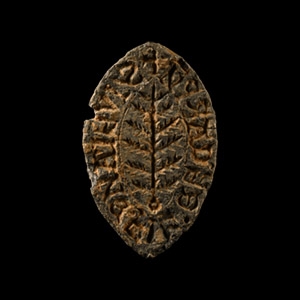
Vesica-shaped with central frond motif, legend to the border 'S’ IVLIANE FIL ELYARPN' for 'seal of Julian(a) son/daughter of Elyarp(-)n'. 8.65 grams, 33 mm
From the collection of the famous author, writer and speaker, Gordon Bailey, Essex, UK; formed since 1968. -
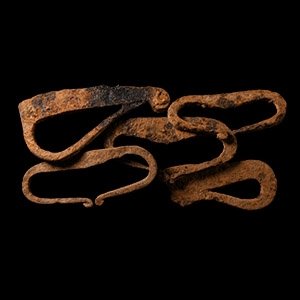
Medieval Iron Fire Starter Group
Circa 15th century A.D.Sold for (Inc. bp): £20
Including fire steels of various types with ornamental shaping. 118 grams total, 56-75 mm
Acquired 1990s-early 2000s. East Anglian private collection. -
.jpg)
Medieval Iron Rowel Spur Collection
Circa 13th-14th century A.D.Sold for (Inc. bp): £143
Comprising examples of various types, including some retaining the rowel. 217 grams total, 11.5-14.8 cm
Acquired 1990s-early 2000s. East Anglian private collection.
The deep curve of the shoulders, the lack of protrusion above the base of the rowel holder, the short rowel holder and the small diameter rowel are characteristics that point to dating some of this specimens in the 13th century. Kirpichnikov puts these spurs in type V (first half of the 13th-14th century) after a spur depicted on an English tombstone dating to the beginning of the 14th century.
