
Loading, please wait...
LOT 1910
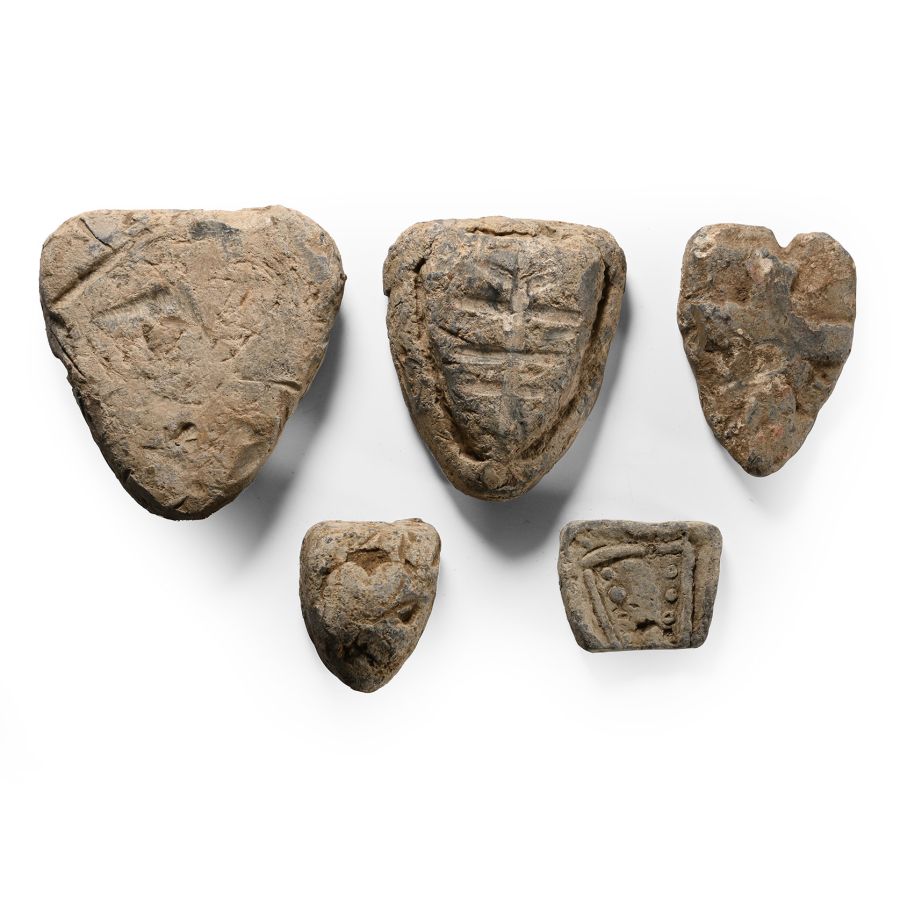
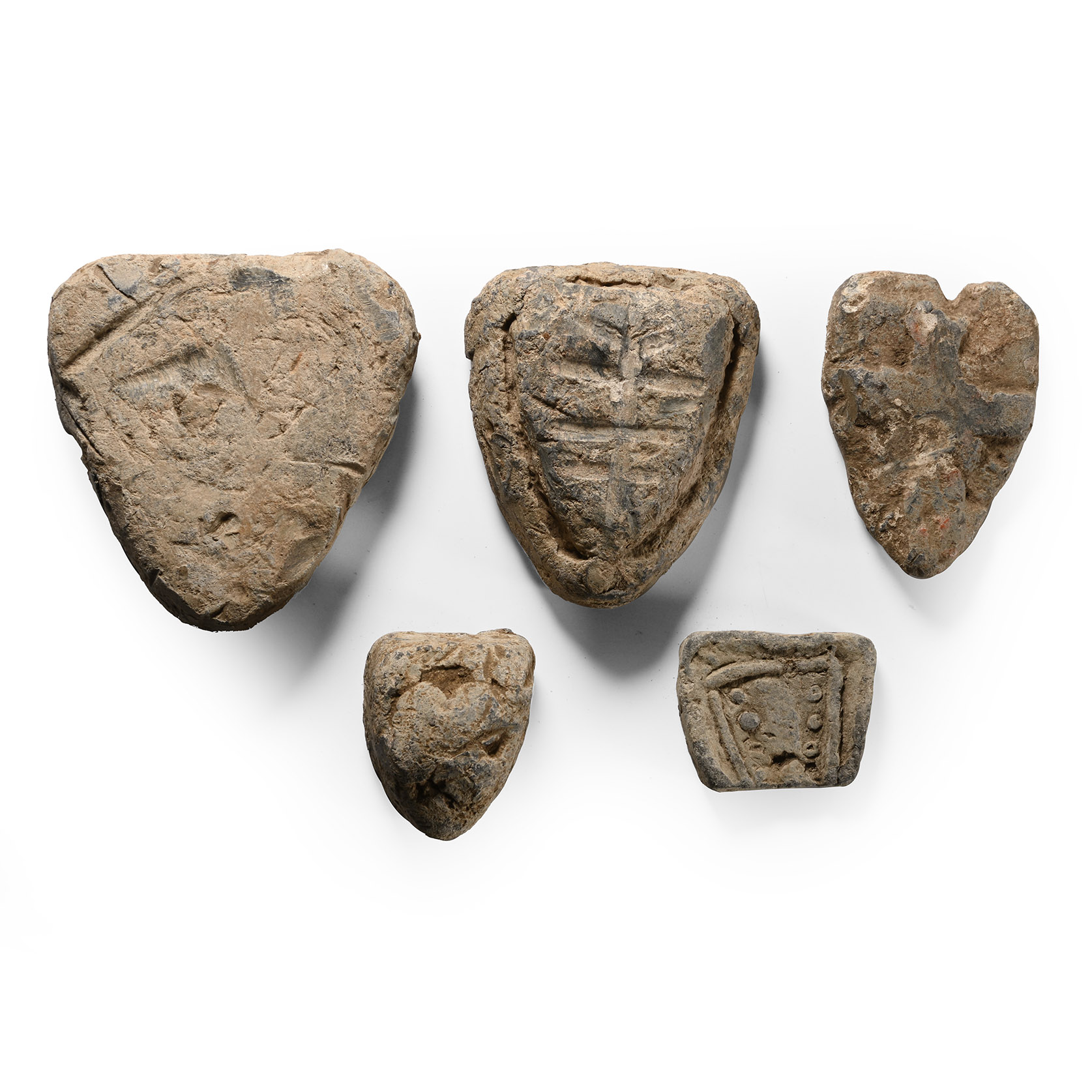
Medieval Lead Weight Group
12TH-15TH CENTURY A.D.
1 1/2 - 2 3/4 in. (1.4 kg total, 38-71 mm).
Mainly triangular and heater-shaped types with raised detailing. [5, No Reserve]
ProvenanceEx Simmons Gallery, 1990s.
CONDITIONTimeLine Auctions follows a vetting process to ensure the authenticity and legality of all items, reinforcing our commitment to integrity and responsible trading. Each antiquity, antique, and coin lot undergoes thorough examination by a vetting committee of at least ten external specialists, professional trade association members, scientists, and archaeologists: Our Vetting Process
AUCTIONS:
TimeLine is a leading auction house specialising in antiquities, ancient art, collectables, natural history, coins, medals, and books. Our auctions offer museums, collectors, historians, and enthusiasts the opportunity to acquire unique and historically significant pieces.
-
Medieval Marble Sarcophagus Fragment with a Man
14th-15th century A.D. or earlierSold for (Inc. bp): £1,235
Depicting the head of a mature bearded male against a draped background with swept folds. 7.4 kg, 34 cm
Private collection, England. -
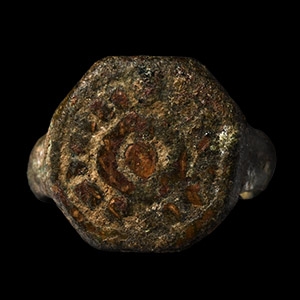
Medieval Bronze Holy Land Ring
Circa 14th-15th century A.D.Sold for (Inc. bp): £85
Small D-section hoop with panel to the underside, discoid bezel with concentric rings and band of pellets. 4.28 grams, 17.65 mm.
Acquired on the UK art market. Property of a Essex, UK, collector. Accompanied by an old handwritten information card. -
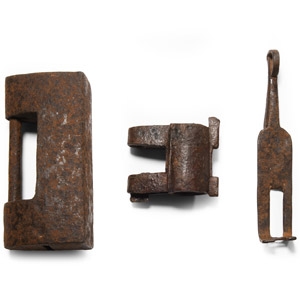
Medieval 'Published' Iron Barrel Lock and Key Group
14th-16th century A.D.Sold for (Inc. bp): £20
The lock heater-shaped in section with separate sliding mechanism, key with voided shank. 325 grams total, 4.9-10.6 cm
From the collection of the famous author, writer and speaker, Gordon Bailey, Essex, UK; formed since 1968.
