
Loading, please wait...
LOT 1880
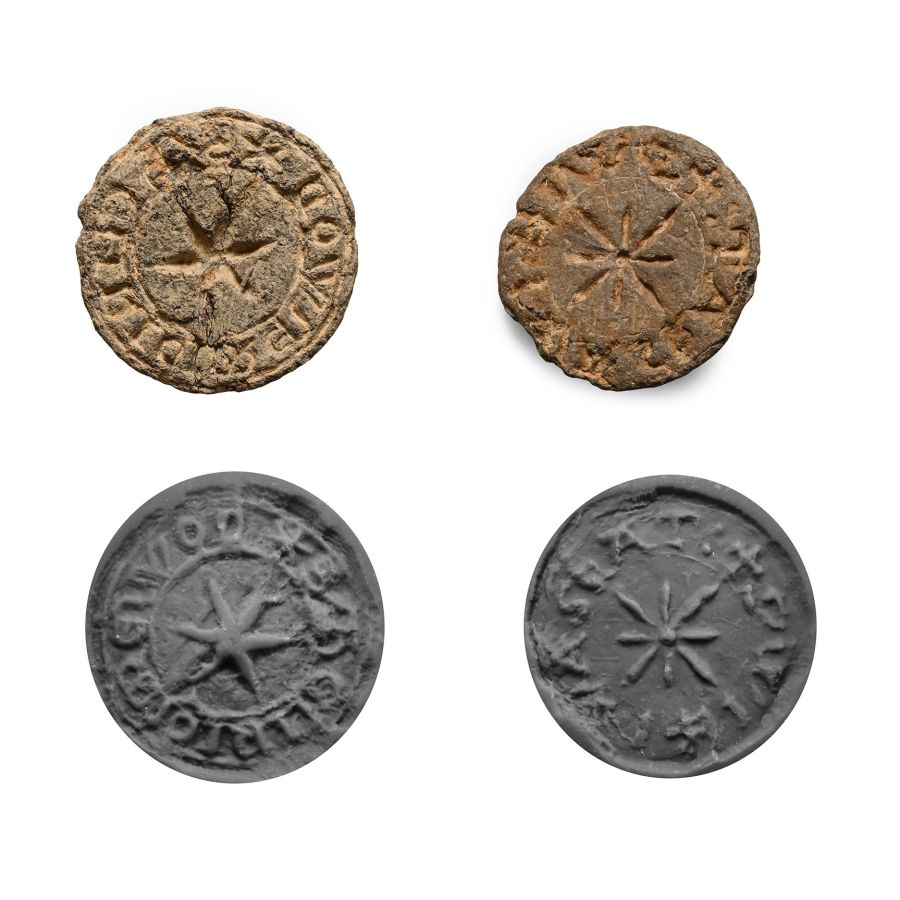
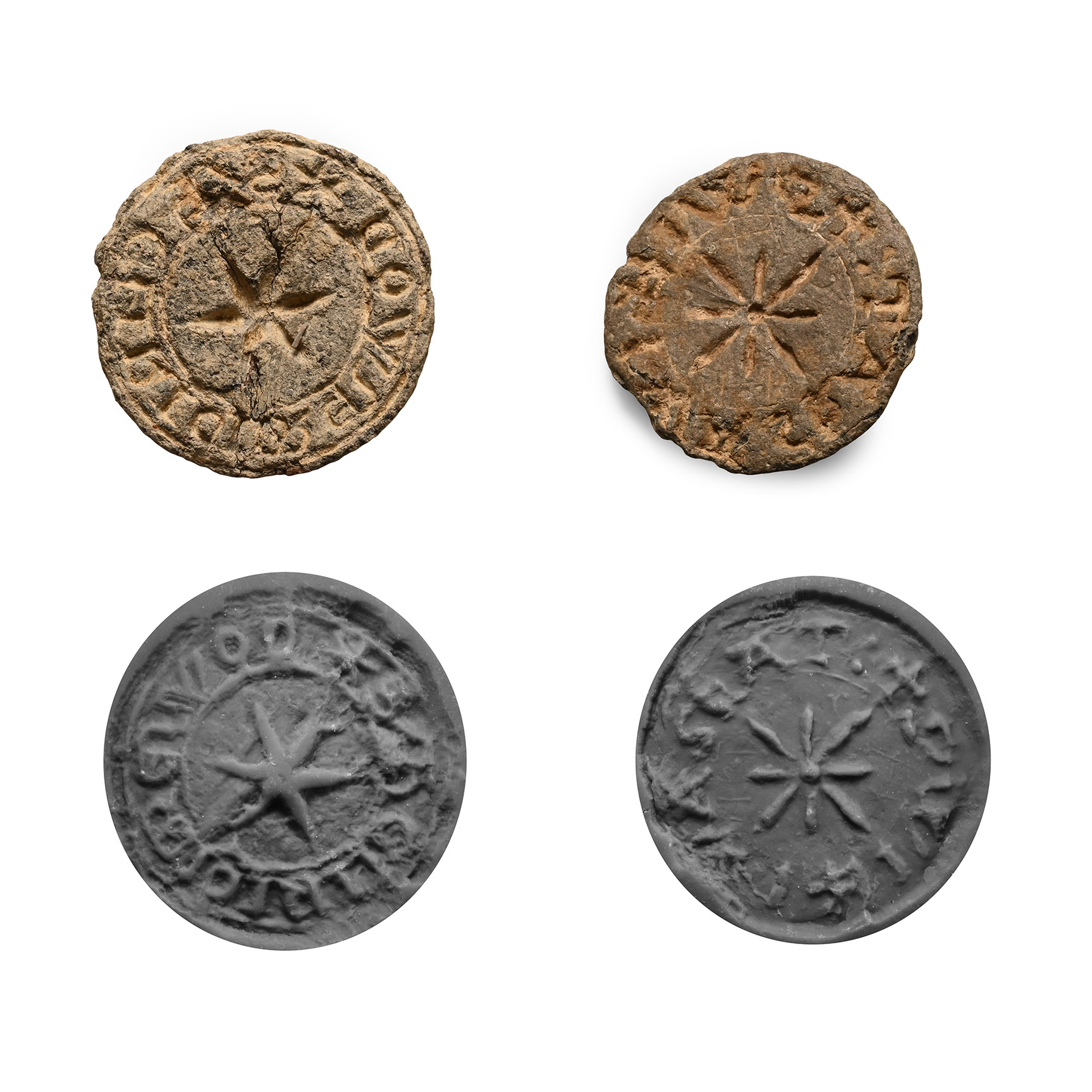
Medieval Lead Seal Matrix Pair
14TH CENTURY A.D.
1 in. (21.4 grams total, 25-27 mm).
Both with central eight-petalled flower within a roundel, surrounding inscription, one with legend 'S' WILLI WASRAT' = Seal of William Wasrat; the other with 'S' HENRICI BREIWOOD' = Seal of Henry Brewood, the family originating in Brewood, Staffordshire. [2, No Reserve]
ProvenanceFrom the collection of the famous author, writer and speaker, Gordon Bailey, Essex, UK; formed since 1968.
PublishedBailey, G., Finds identified, Witham, 2000, pp.25-26, figs.4,7.
LiteratureCf. Bailey, G., Detector Finds, Witham, 1999, p.55, fig.18, for similar seals.
FootnotesDuring the medieval period the use of seals on documents, letters and packages became widespread. Lead was cheap to use and easy to engrave, and from the late 12th until the end of 13th century seals of this type, with very conventional central designs, were important possessions amongst the lower classes.
CONDITIONTimeLine Auctions follows a vetting process to ensure the authenticity and legality of all items, reinforcing our commitment to integrity and responsible trading. Each antiquity, antique, and coin lot undergoes thorough examination by a vetting committee of at least ten external specialists, professional trade association members, scientists, and archaeologists: Our Vetting Process
AUCTIONS:
TimeLine is a leading auction house specialising in antiquities, ancient art, collectables, natural history, coins, medals, and books. Our auctions offer museums, collectors, historians, and enthusiasts the opportunity to acquire unique and historically significant pieces.
-
.jpg)
Medieval Gilt Bronze Lion Finial
14th-15th century A.D.Estimate: £400 - 600 (+bp*)
Opening Bid: £222
Modelled in the half-round standing with head left on a plinth base, rectangular fixing socket to underside. 25.1 grams, 32 mm high
‘The Ancient Menagerie Collection’ formerly the property of a Cambridgeshire lady, collected since the 1990s and acquired from auctions and dealers throughout Europe and the USA, now ex London collection. -
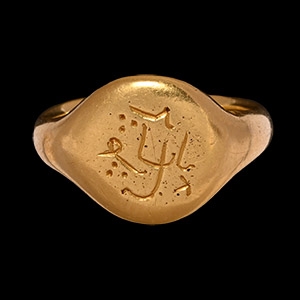
Late Medieval Period Gold Signet Ring with Arabic Inscription
15th-16th century A.D.Sold for (Inc. bp): £975
With D-section hoop and disc bezel, incised nasta'liq inscription. 8.13 grams, 20.48 mm overall, 17.47 mm internal diameter (approximate size British M, USA 6, Europe 12.46, Japan 12)
From an old French collection believed to have been formed in the 1960s. Acquired privately as part of a collection in the early 1990s. This lot has been checked against the Interpol Database of stolen works of art and is accompanied by a search certificate number no.12298-214825. -
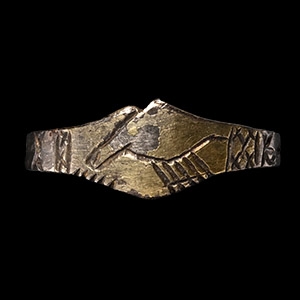
Large Medieval Silver Gilt Fede Ring with Magical Symbols
15th-16th century A.D.Sold for (Inc. bp): £364
Comprising a square-section shank and bezel formed as two clasped hands; hatched band to each cuff; punched markings to the outer face, pseudo-script or amuletic in purpose. 2.97 grams, 23.51 mm overall, 20.58 mm internal diameter (approximate size British U, USA 10, Europe 22.52, Japan 21)
From the collection of the famous author, writer and speaker, Gordon Bailey, Essex, UK; formed since 1968.
