
Loading, please wait...
LOT 1756
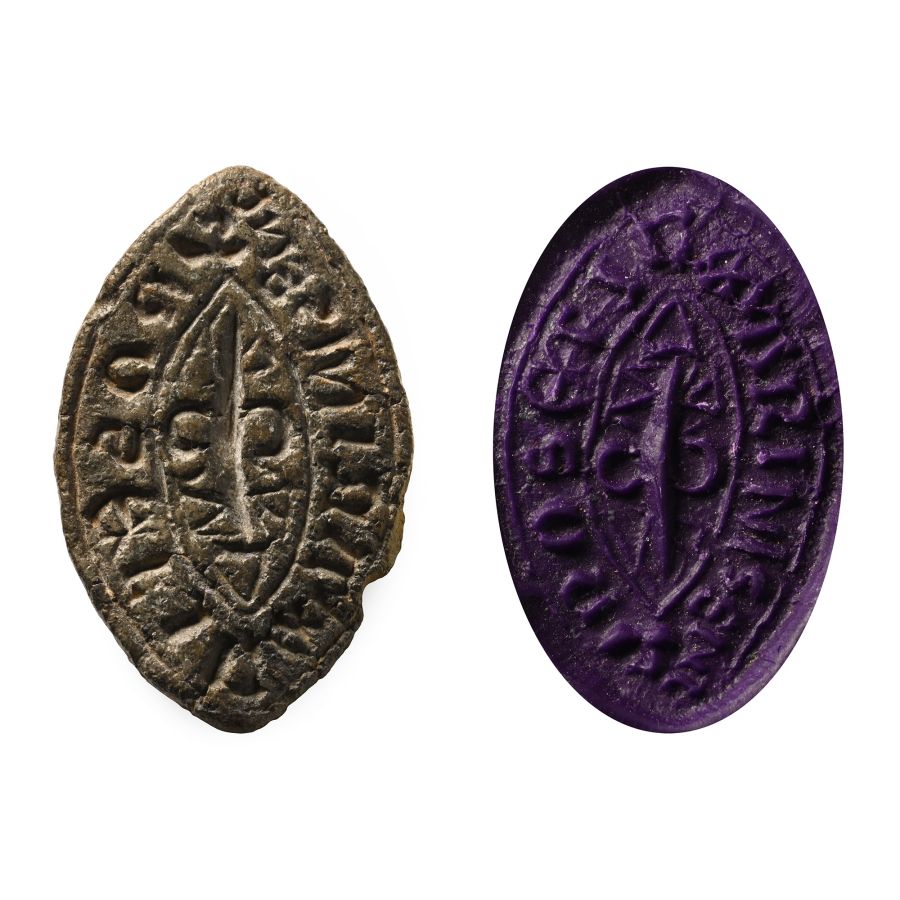
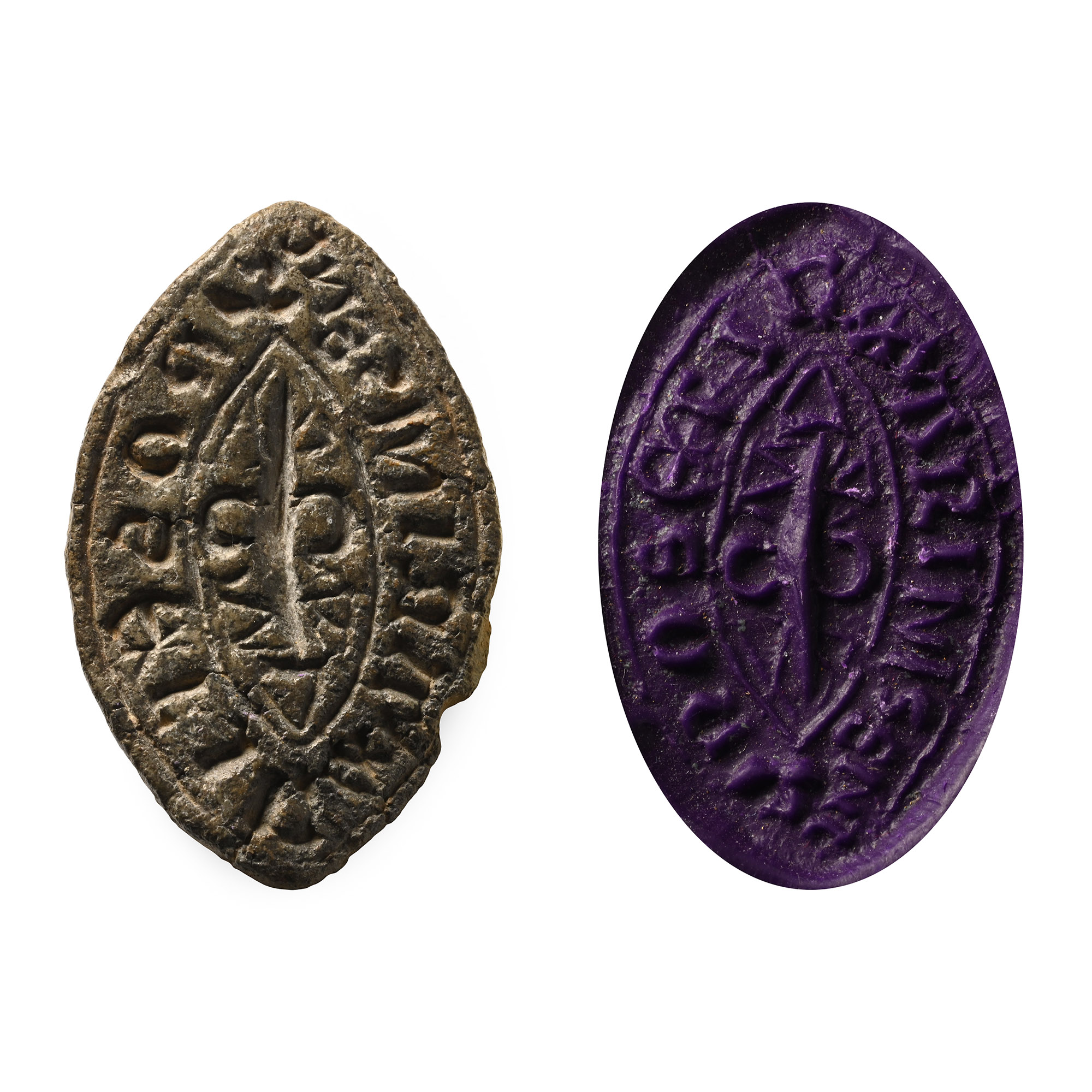
Medieval Lead Seal Matrix for Roberti Marinissni
13TH CENTURY A.D.
1 1/2 in. (16.6 grams, 38 mm).
Vesica-shaped with strap and loop to reverse; central field with incuse fleur-de-lys, border with legend 'S* ROBERTI MARINISSNI'. [No Reserve]
ProvenanceEx Paul Moore, 1990s.
Accompanied by a laminated Paul Moore identification card.
TimeLine Auctions follows a vetting process to ensure the authenticity and legality of all items, reinforcing our commitment to integrity and responsible trading. Each antiquity, antique, and coin lot undergoes thorough examination by a vetting committee of at least ten external specialists, professional trade association members, scientists, and archaeologists: Our Vetting Process
AUCTIONS:
TimeLine is a leading auction house specialising in antiquities, ancient art, collectables, natural history, coins, medals, and books. Our auctions offer museums, collectors, historians, and enthusiasts the opportunity to acquire unique and historically significant pieces.
-
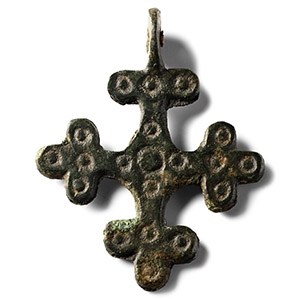
Medieval Bronze Cross Pendant
Circa 14th-16th century A.D.Sold for (Inc. bp): £117
Cross pommee type, bifacial with punched rings to the lobes and central lozenge. 4.36 grams, 37 mm
Acquired from Chris Martin-Zakheim, Iconastas, 5 Piccadilly Arcade, London SW1. From the private collection of a West London, UK, gentleman, formed since the early 2000s. -
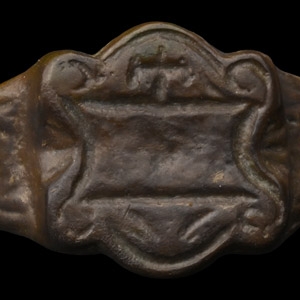
Medieval Bronze Ring with Cross on Base
Circa 15th-17th century A.D.Sold for (Inc. bp): £13
Flat-section hoop with a palmette on each shoulder, bezel divided into three fields with a cross on the uppermost field. 6.38 grams, 24.16 mm overall, 21.23 mm internal diameter (approximate size British W, USA 11, Europe 25, Japan 24)
Ex German art market, 2000s. Acquired from an EU collector living in London. From the collection of a Surrey, UK, gentleman. -
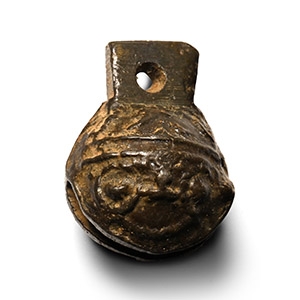
Medieval or Tudor Decorated Bronze Dress Bell
1400-1600 A.D.Sold for (Inc. bp): £20
Of small and and bulbous type; oval body with wide sounding split, within is a small pea that moves freely; the bell with a square-shaped suspension loop with file marks to both faces and a drilled, circular hole; both faces have moulded decoration comprising of lines, roundels and pellets. 5.61 grams, 14 mm
Found whilst searching with a metal detector in the Isle of Wight, Hampshire, UK. Recorded with the British Museum's Portable Antiquities Scheme Report no.IOW-B67BA3.
PAS can find no direct comparison for this bell, however it does share similarities with some hawking bells (for example DENO-127662), and animal bells (see~LEIC-88EDB8).
