
Loading, please wait...
LOT 1942
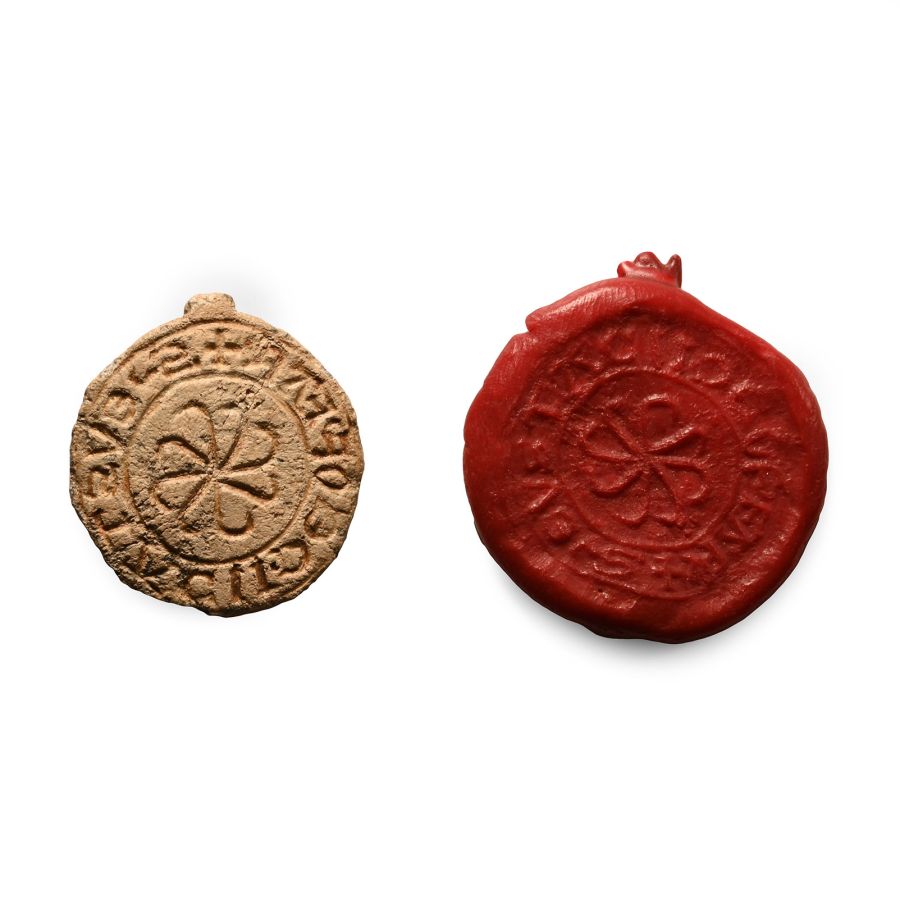
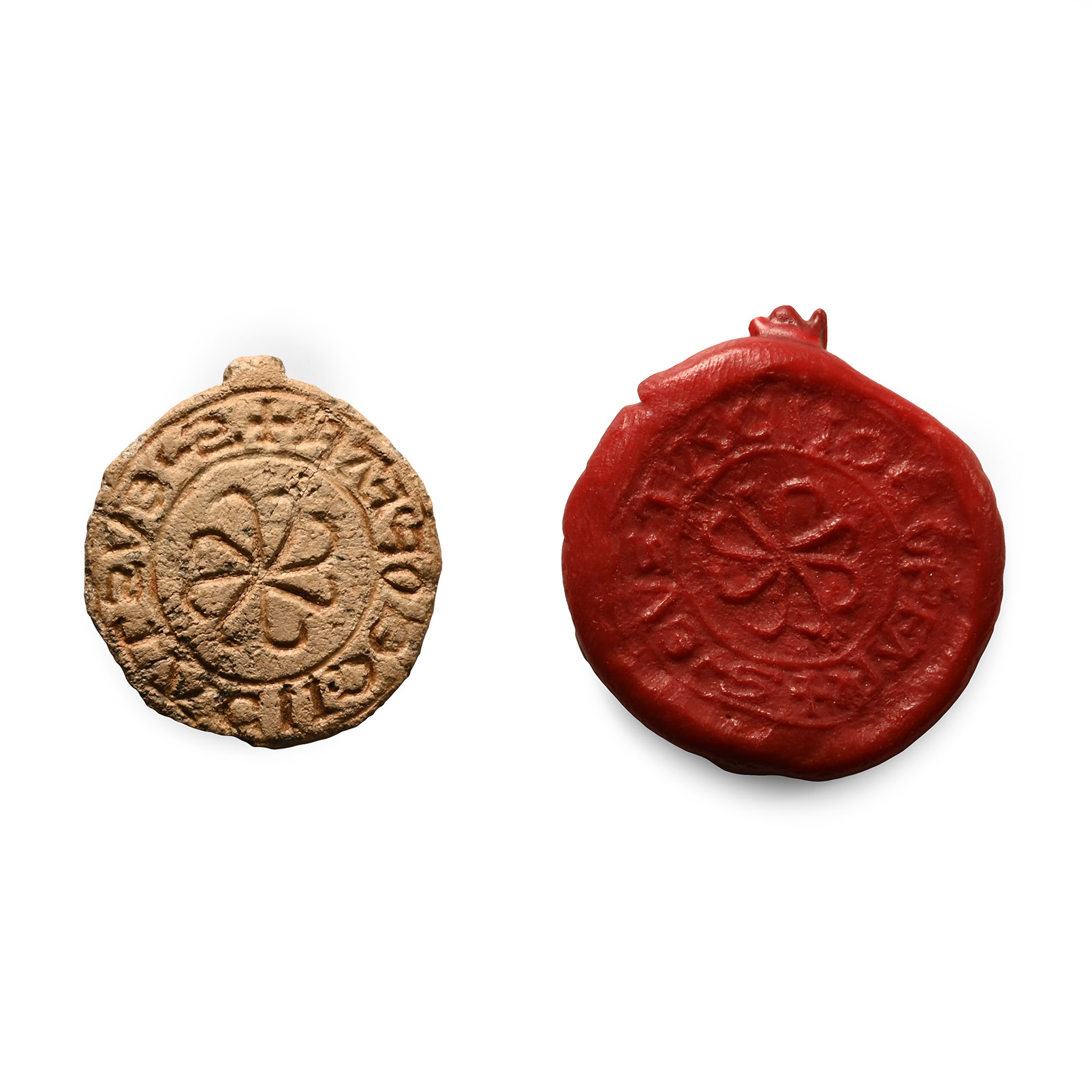
Medieval Lead Seal Matrix for Eustace of Of'far
12TH-13TH CENTURY A.D.
1 3/8 in. (18 grams, 36 mm).
Discoid in shape with central eight-petalled flower within a roundel, surrounding '+ S’ EVSTACII DE OF’FAR' seal of Eustace of Of'far legend; accompanied by an impression. [No Reserve]
ProvenanceFrom the collection of the famous author, writer and speaker, Gordon Bailey, Essex, UK; formed since 1968.
PublishedBailey, G., Detector Finds Witham, 1999, p.55 fig.18; Bailey, G., Finds identified Witham, 2000, p.26 fig.3.
FootnotesDuring the medieval period the use of seals on documents, letters and packages became widespread. Lead was cheap to use and easy to engrave, and from the late 12th until the end of 13th century seals of this type, with very conventional central designs, were important possessions amongst the lower classes.
CONDITIONTimeLine Auctions follows a vetting process to ensure the authenticity and legality of all items, reinforcing our commitment to integrity and responsible trading. Each antiquity, antique, and coin lot undergoes thorough examination by a vetting committee of at least ten external specialists, professional trade association members, scientists, and archaeologists: Our Vetting Process
AUCTIONS:
TimeLine is a leading auction house specialising in antiquities, ancient art, collectables, natural history, coins, medals, and books. Our auctions offer museums, collectors, historians, and enthusiasts the opportunity to acquire unique and historically significant pieces.
-
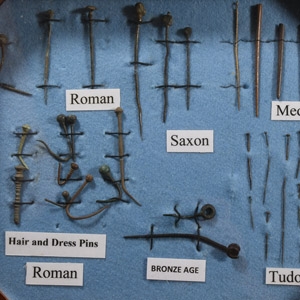
Cased Bronze Age, Medieval and Tudor 'Published' Hair and Dress Pin Collection
2nd millennium B.C.-16th century A.D.Sold for (Inc. bp): £46
Including polyhedral, hipped, biconvex and other types in a felt-lined glazed wooden display case with labels; many of these objects are published in the Detector Finds book series. 1.4 kg total, 37.5 cm including box
From the collection of the famous author, writer and speaker, Gordon Bailey, Essex, UK; formed since 1968. -
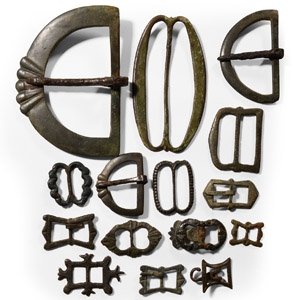
Medieval Bronze Buckle Collection
Circa 14th-16th century A.D.Sold for (Inc. bp): £20
Including double-loop, D-shaped, rectangular and other types; many of these objects are published in the Detector Finds book series. 332 grams total, 2.6-11.5 cm
From the collection of the famous author, writer and speaker, Gordon Bailey, Essex, UK; formed since 1968.
The collection is comprising spectable buckles (1350-1720 A.D.), reectangular and trapezoidal buckles (1350-1700 A.D.), buckles with a central pin bar and asymmetrical loops (1400-1500 A.D.), two piece buckles (1660-1800). The majority of buckles used on personal dress were made from non-ferrous metal, like copper-alloy. -
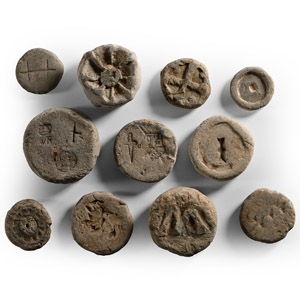
Medieval Lead Weight Collection
13th-16th century A.D.Sold for (Inc. bp): £46
Group of drum-shaped and discoid weights, some with impressed symbols or legend to one face. 1.1 kg total, 26-48 mm
From the collection of the famous author, writer and speaker, Gordon Bailey, Essex, UK; formed since 1968.
