
Loading, please wait...
LOT 1769
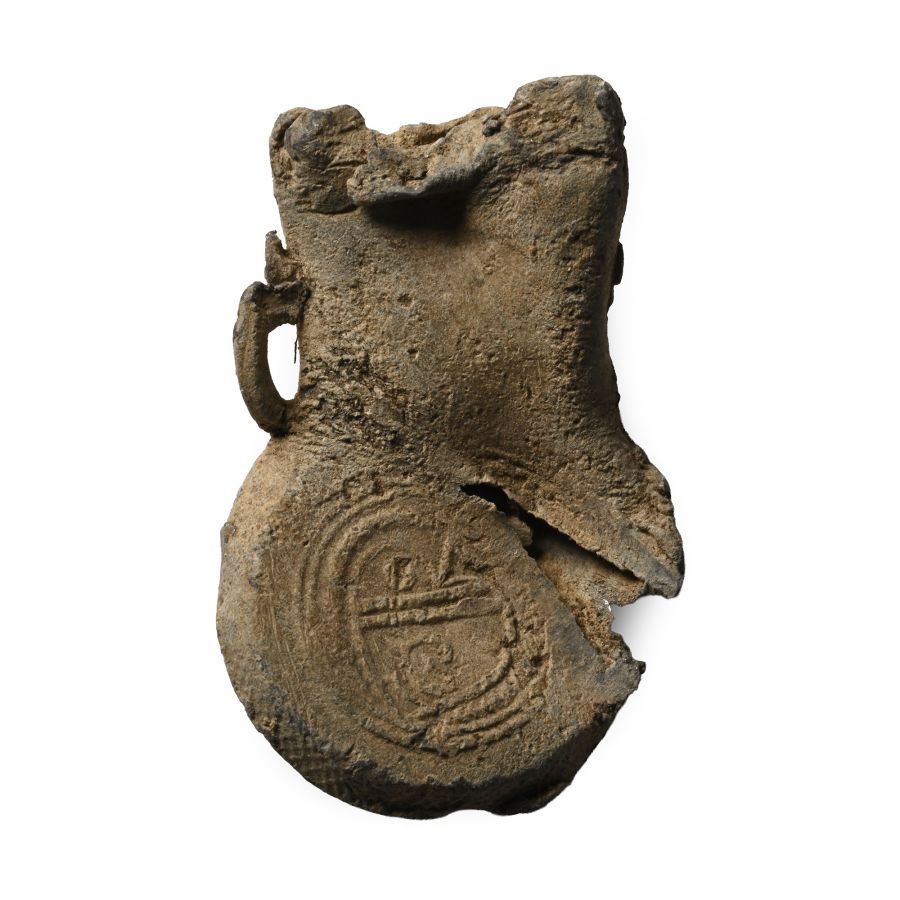
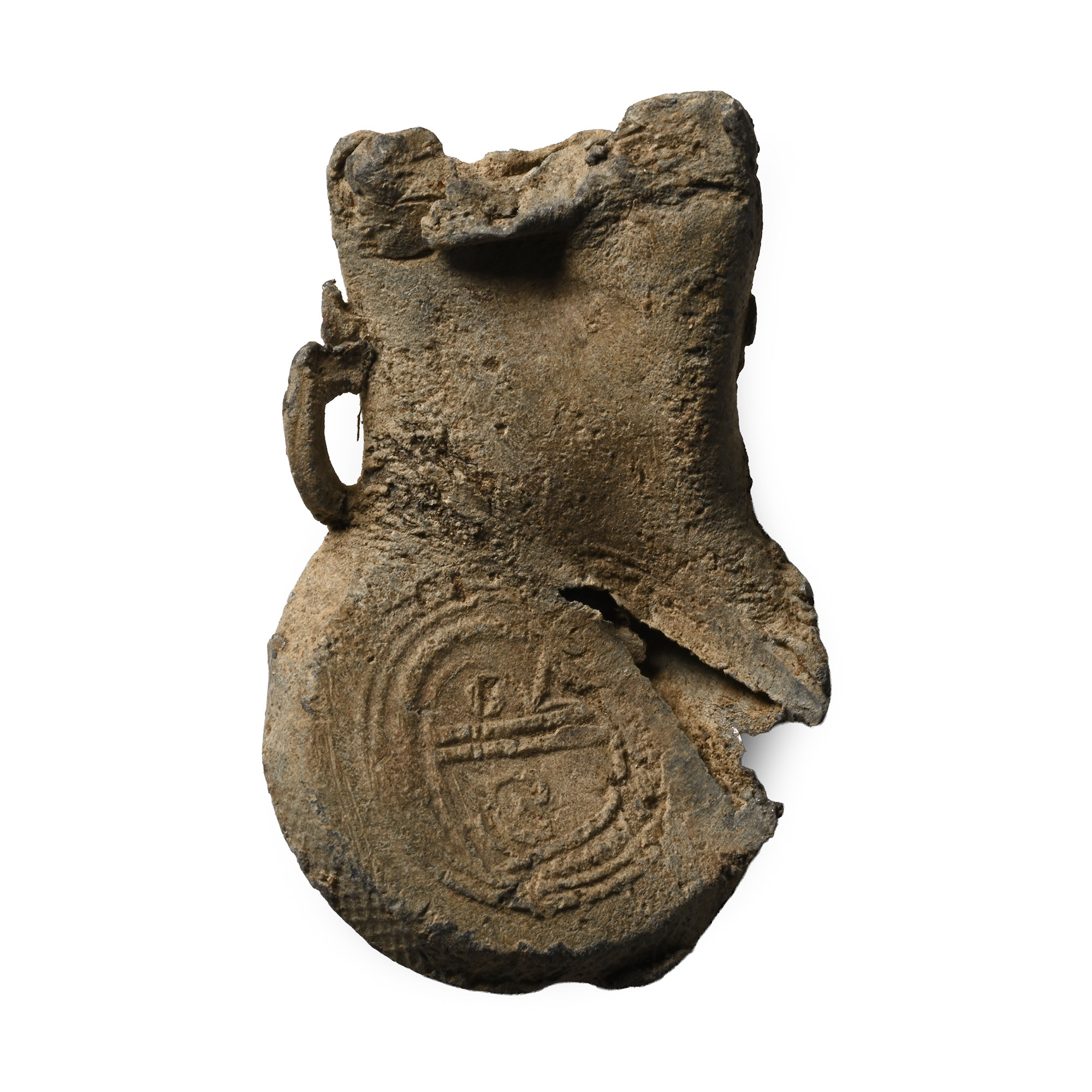
Medieval Lead Pilgrim's Holy Water Ampulla
CIRCA 15TH CENTURY A.D.
2 in. (55.1 grams, 53 mm).
With lateral loops and low-profile rosette to one side and a spiral whorl to the other. [No Reserve]
ProvenanceFound Suffolk, UK.
CONDITIONTimeLine Auctions follows a vetting process to ensure the authenticity and legality of all items, reinforcing our commitment to integrity and responsible trading. Each antiquity, antique, and coin lot undergoes thorough examination by a vetting committee of at least ten external specialists, professional trade association members, scientists, and archaeologists: Our Vetting Process
AUCTIONS:
TimeLine is a leading auction house specialising in antiquities, ancient art, collectables, natural history, coins, medals, and books. Our auctions offer museums, collectors, historians, and enthusiasts the opportunity to acquire unique and historically significant pieces.
-
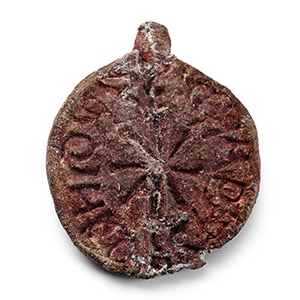
Medieval Lead Round Seal Matrix for Reginald Son of Richard
Circa 14th century A.D.Sold for (Inc. bp): £13
Discoid in plan with lug to the rim, central starburst motif and legend to the border '*S’R’GIN[..]’ (seal of Reginald (son) of Richard). 16.5 grams, 41 mm
From the late Peter Hooper Pewter and Lead collection, who was a guest lecturer at West Dean College and was a longtime member of the Pewter Society, who contributed to the Pewter Society Magazine. -
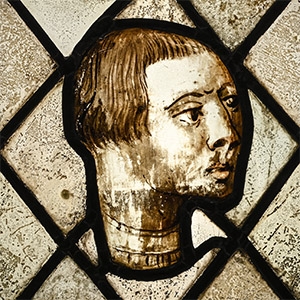
Medieval Stained Glass Head of a Man
Netherlands, Brabant, 1500-1520 A.D.Sold for (Inc. bp): £1,170
Square composite panel with brown-hued vitreous enamel and pink pigment, irregular profile bust set into the diamond quarries. 838 grams, 30.3 x 27 cm
Ancient Arms and Armour, Stained Glass, Coffrets and Furniture. Property from a New York Collection, American Art Association, New York, 23 November 1923, no.110 (as Flemish XV-XVI). The Monastery Stained Glass, 2004. Accompanied by a previous cataloguing document.
The loose, fluid brushwork and fine touches of pink sanguine pigment on this male head place him firmly in the first decades of the sixteenth century, a dating supported further by the visible hemline of the fashionable pleated shirt covering his neck. These are all characteristic features of Southern Netherlandish stained glass from this period, and parallels offered by programs such as the early sixteenth-century windows in Antwerp Cathedral, the c. 1500 glazing scheme at Sint Gummarus church in Lier just outside Antwerp, as well as at sites such as Notre Dame du Sablon in Brussels, suggest an artist working in Brabant in the early years of the century. -
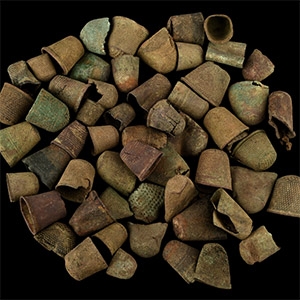
Medieval and Later Thimble Group
Circa 15th-20th century A.D.Sold for (Inc. bp): £59
Including beehive, annular and other types. 225 grams total, 13-25 mm
Found Suffolk, UK. (UK buyers only, not for export)
