
Loading, please wait...
LOT 1662
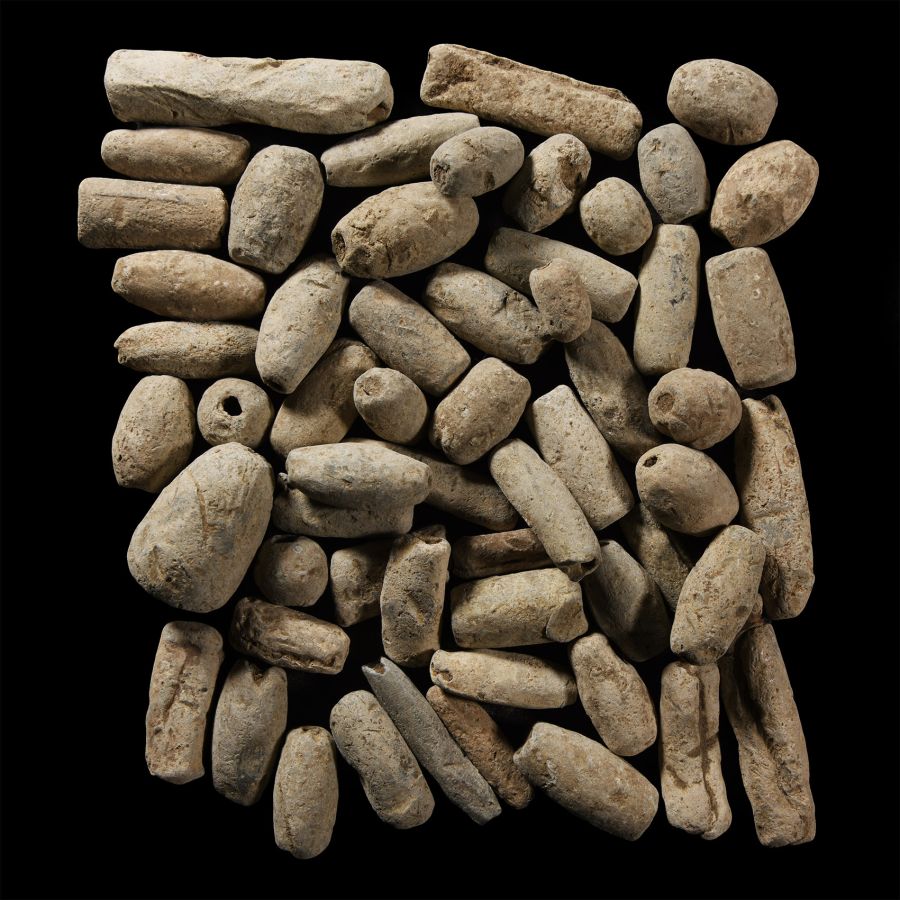
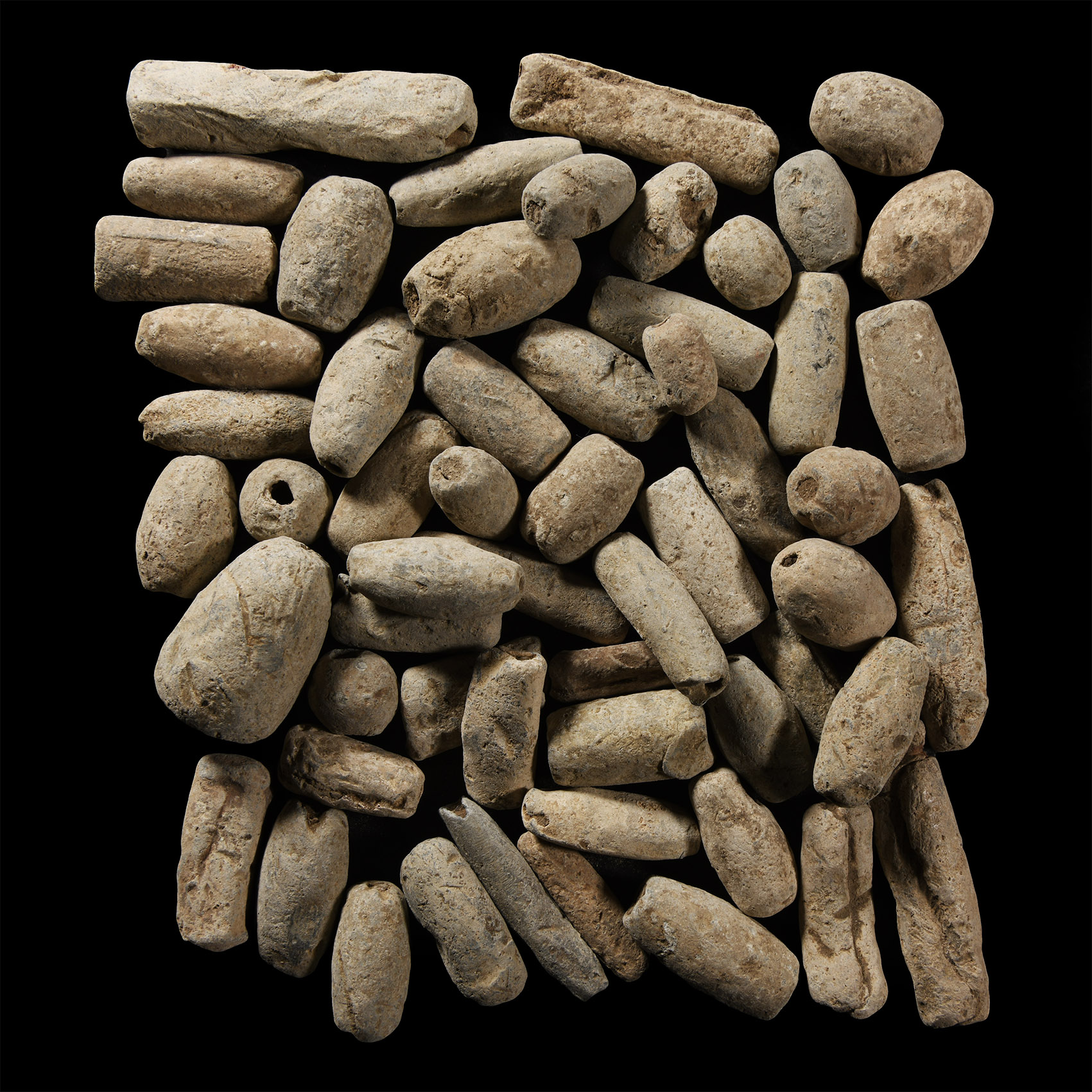
Medieval Lead Fishing Weight Group
CIRCA 14TH-16TH CENTURY A.D.
1/2 - 2 1/2 in. (2.2 kg total, 16-63 mm).
Mixed group of tubular, fusiform, oblate and other types. [57, No Reserve]
ProvenanceFound Hertfordshire, UK.
CONDITIONTimeLine Auctions follows a vetting process to ensure the authenticity and legality of all items, reinforcing our commitment to integrity and responsible trading. Each antiquity, antique, and coin lot undergoes thorough examination by a vetting committee of at least ten external specialists, professional trade association members, scientists, and archaeologists: Our Vetting Process
AUCTIONS:
TimeLine is a leading auction house specialising in antiquities, ancient art, collectables, natural history, coins, medals, and books. Our auctions offer museums, collectors, historians, and enthusiasts the opportunity to acquire unique and historically significant pieces.
-
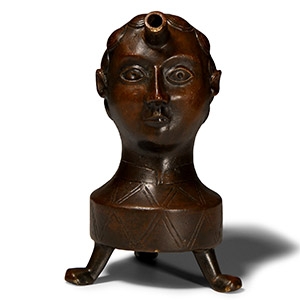
Medieval Bronze Aquamanile of a Male Bust
Northern Germany, Saxony, early 13th century A.D.Sold for (Inc. bp): £11,050
Hollow-formed vessel formed as a male bust; discoid body with chamfered shoulder bearing bands of running zigzag detailing and three splayed feet; the head with low-relief hair and rim of bosses with linear spirals, gracile facial features with lentoid eyes and slender nose, small pouting mouth; short spout to the forehead, filler-hole to top of the head with hinged cover; handle to the rear formed as a reptile with head and forepaws placed on the hair below the hinge and joining the base above one of the feet. 1.27 kg, 18 cm
Acquired on the UK art market in 2001. with Christie's, London, 6 December 2017. Private collection, Suffolk. Accompanied by copies of a previous illustrated cataloguing document with references. This lot has been checked against the Interpol Database of stolen works of art and is accompanied by search certificate no.12038-212152.
Aquamaniles in the form of a bust are a rarity compared to the quantity of zoomorphic forms known from the Middle Ages. The present piece was formed by lost-wax casting method, and is a very early example of such process for a vessel. Metallurgical analysis has shown that the piece is consistent with the suggested date. -
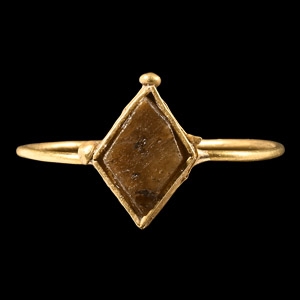
Medieval Gold Ring with Inlay
14th-16th century A.D. and laterSold for (Inc. bp): £182
Lozenge-shaped bezel with granules to the angles and inset glass cloison, with later slender hoop. 0.69 grams, 18.23 mm overall, 16.52 mm internal diameter (approximate size British J 1/2, USA 5, Europe 9.32, Japan 9)
From a gentleman's collection, Surrey, UK. -

Medieval Stained Glass with Angel Holding a Scroll
Northern France, circa 1520 A.D.Sold for (Inc. bp): £124
Irregular glass panel with painted image of a winged angel with hands folded inside a partly-unfurled scroll; mounted in a display frame. 398 grams, 29 cm
Acquired on the UK art market, 2018.
