
Loading, please wait...

LOT 1848
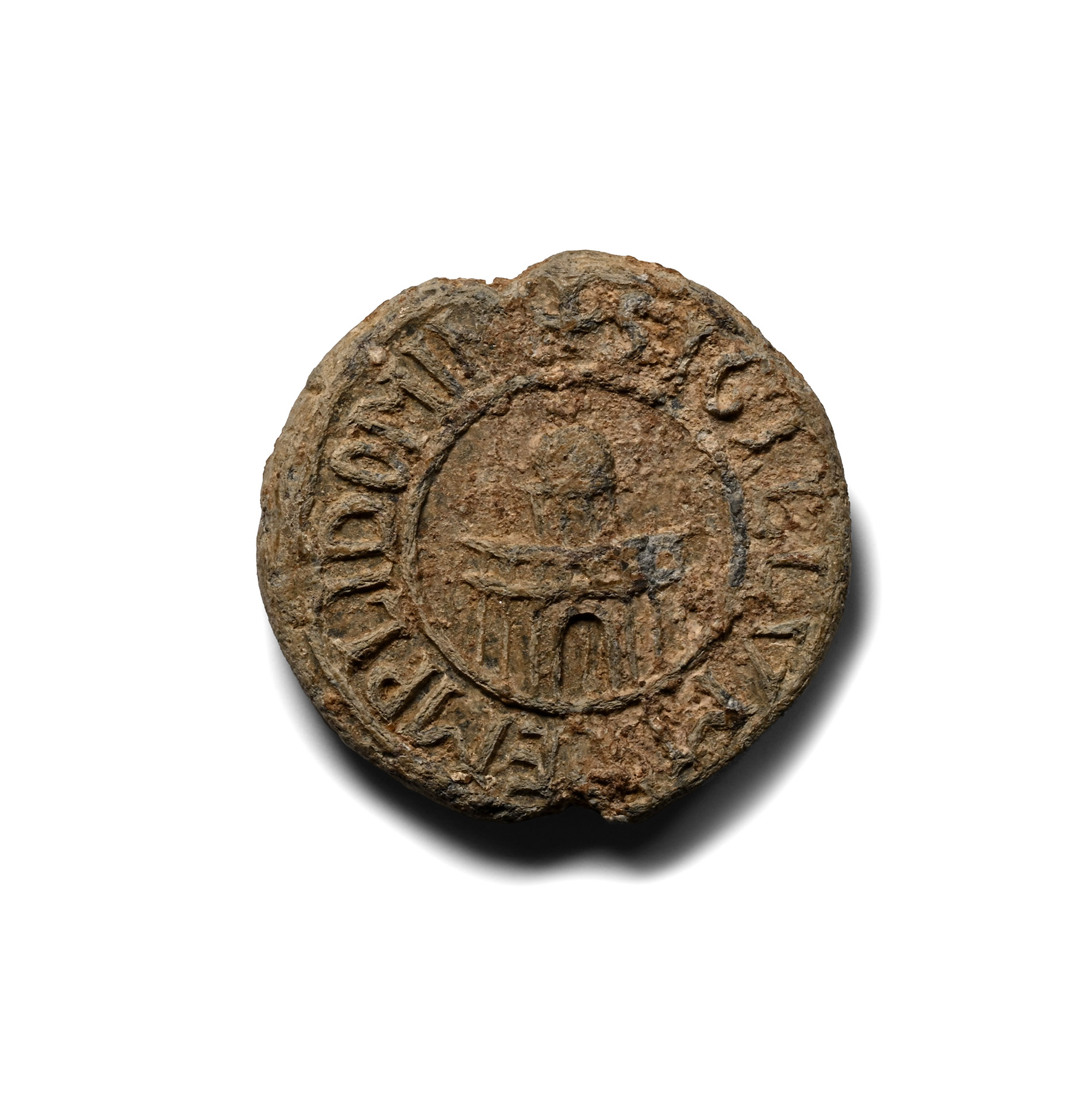
Medieval Lead Document Seal from Bury St. Edmunds
12TH-13TH CENTURY A.D.
1 in. (16.1 grams, 27 mm).
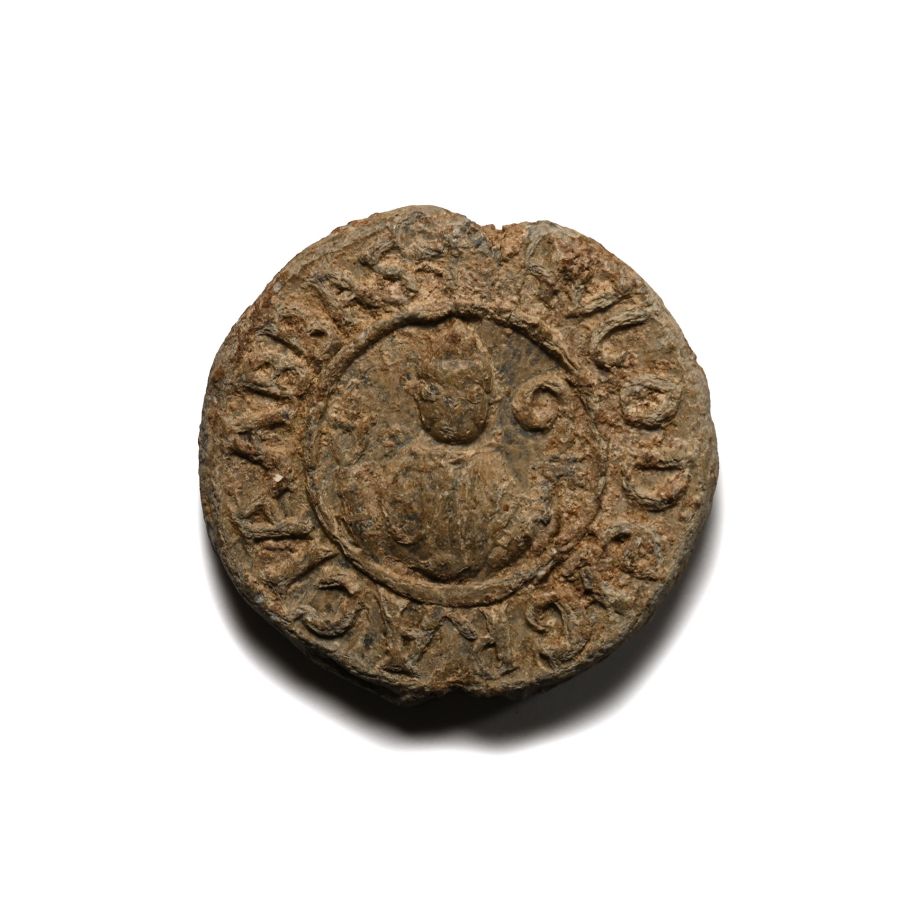
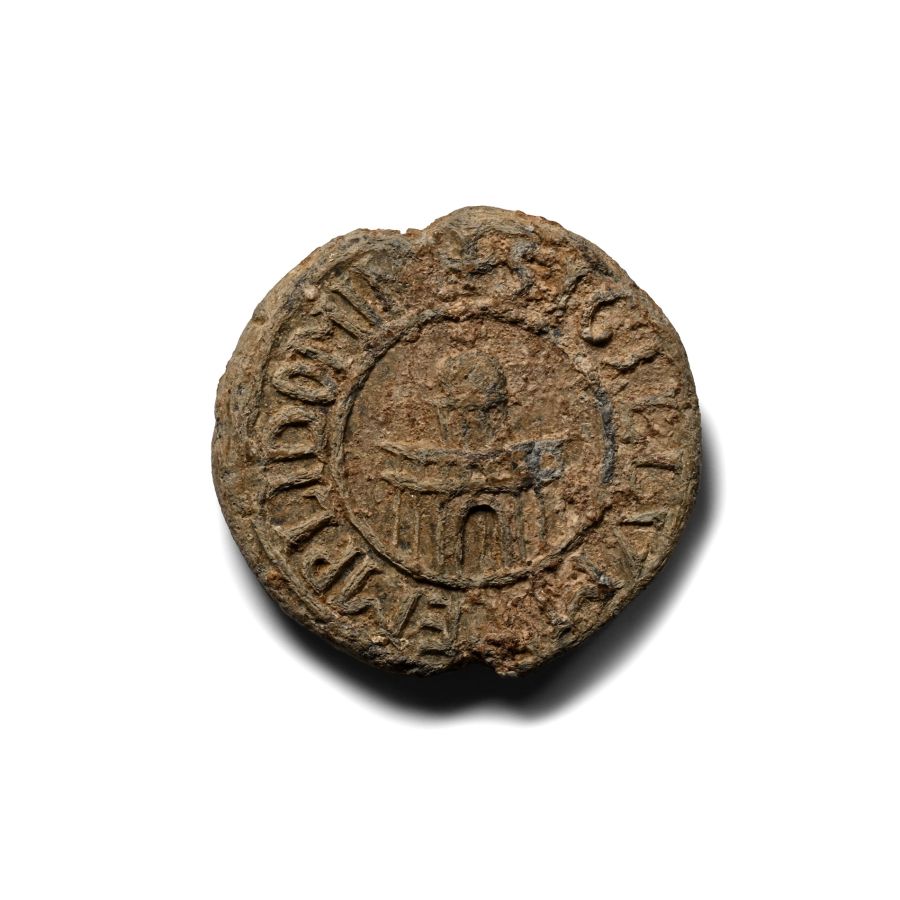
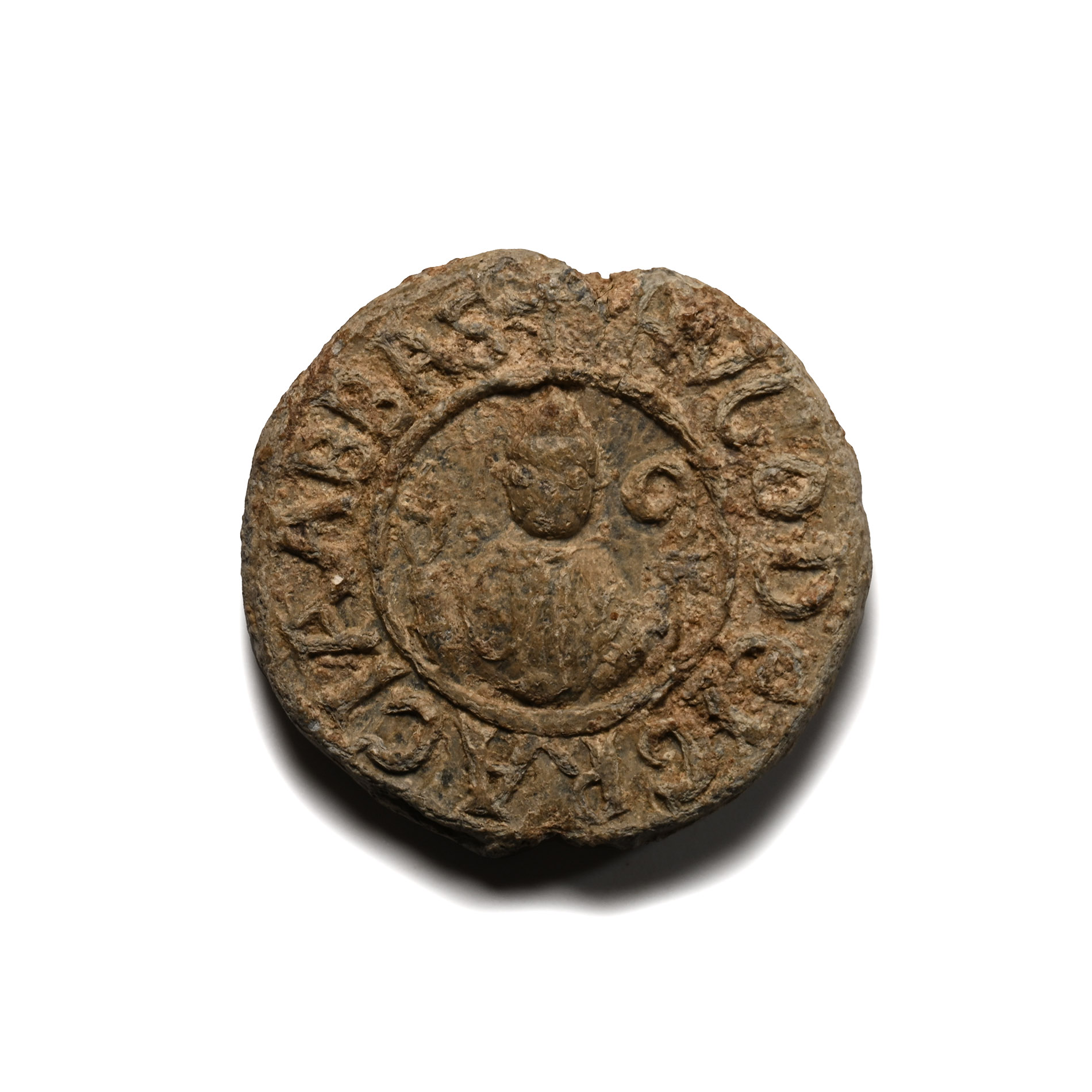
Discoid seal with designs to both faces: obverse, facing figure with crozier in left hand and right hand raised in the gesture of blessing, surrounding legen '+HVGO DEI GRACIA ABBAS' (Hugh, abbot by the grace of God); reverse, domed temple building with surrounding legend '+SIGILLVM TEMPLI DOMIN[I]' (seal of the Lord's temple). [No Reserve]
ProvenanceFound Suffolk, UK.
From an old private collection of Norfolk, UK, gentleman, formed since 1998.
Accompanied by a copy of UK Detector Finds Database (UKDFD) report no.57066.
The 'Hugo' referred to in the legend is probably the Abbot Hugh who was active from 1157 to 1180 AD. This seal provides valuable evidence
for the overall appearance of the Cathedral at Bury in the 12th century.
TimeLine Auctions follows a vetting process to ensure the authenticity and legality of all items, reinforcing our commitment to integrity and responsible trading. Each antiquity, antique, and coin lot undergoes thorough examination by a vetting committee of at least ten external specialists, professional trade association members, scientists, and archaeologists: Our Vetting Process
AUCTIONS:
TimeLine is a leading auction house specialising in antiquities, ancient art, collectables, natural history, coins, medals, and books. Our auctions offer museums, collectors, historians, and enthusiasts the opportunity to acquire unique and historically significant pieces.
-
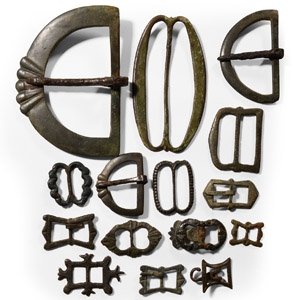
Medieval Bronze Buckle Collection
Circa 14th-16th century A.D.Sold for (Inc. bp): £20
Including double-loop, D-shaped, rectangular and other types; many of these objects are published in the Detector Finds book series. 332 grams total, 2.6-11.5 cm
From the collection of the famous author, writer and speaker, Gordon Bailey, Essex, UK; formed since 1968.
The collection is comprising spectable buckles (1350-1720 A.D.), reectangular and trapezoidal buckles (1350-1700 A.D.), buckles with a central pin bar and asymmetrical loops (1400-1500 A.D.), two piece buckles (1660-1800). The majority of buckles used on personal dress were made from non-ferrous metal, like copper-alloy. -
.jpg)
Medieval Enamelled De Bohun Bronze Knight's Heraldic Horse Harness Pendant
13th-14th century A.D.Sold for (Inc. bp): £416
Shield-shaped with the arms of de Bohun: Azure, a bend argent cotised or between six lions rampant or; accompanied by a pendant hanger. 17.8 grams total, 45-49 mm
Found Lincolnshire, UK. From an old private collection of Norfolk, UK, gentleman, formed since 1998. -
.jpg)
Medieval and Other Lead Weight Collection
Circa 15th-18th century A.D.Sold for (Inc. bp): £20
Discoid in form with rosette, raised square, incised initial 'H' and other types. 283 grams total, 27-48 mm
Ex Simmons gallery, London, UK. Ex North London collection, 1990s.
