
Loading, please wait...
LOT 1792
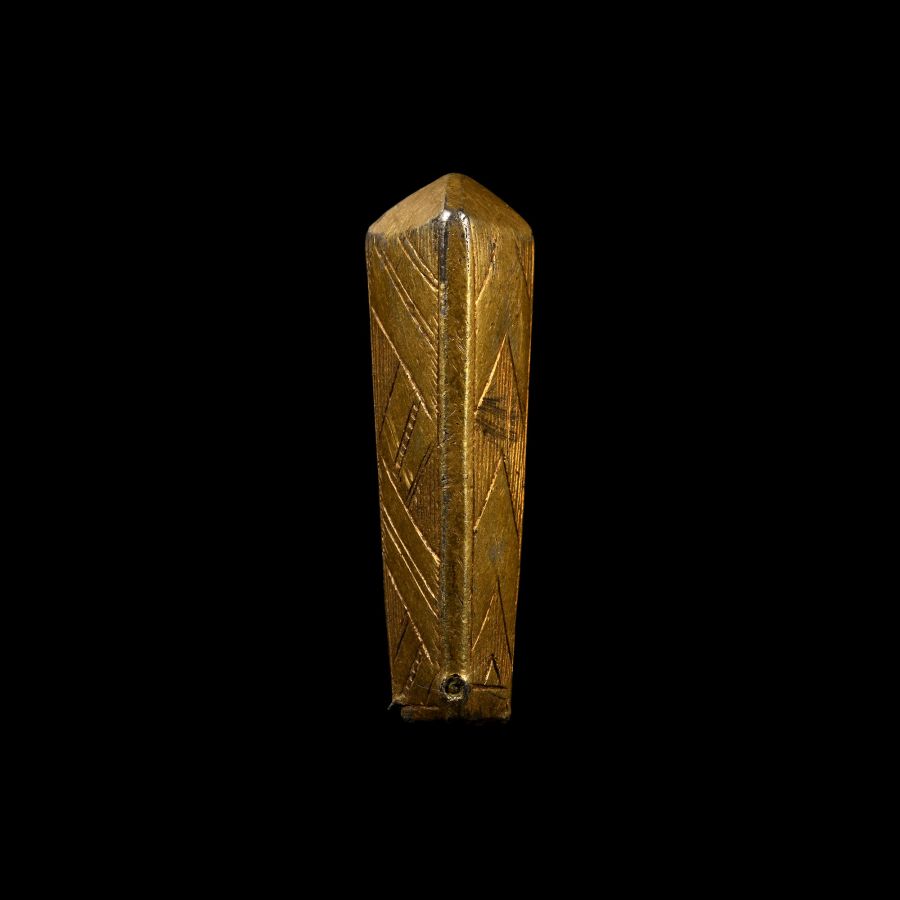
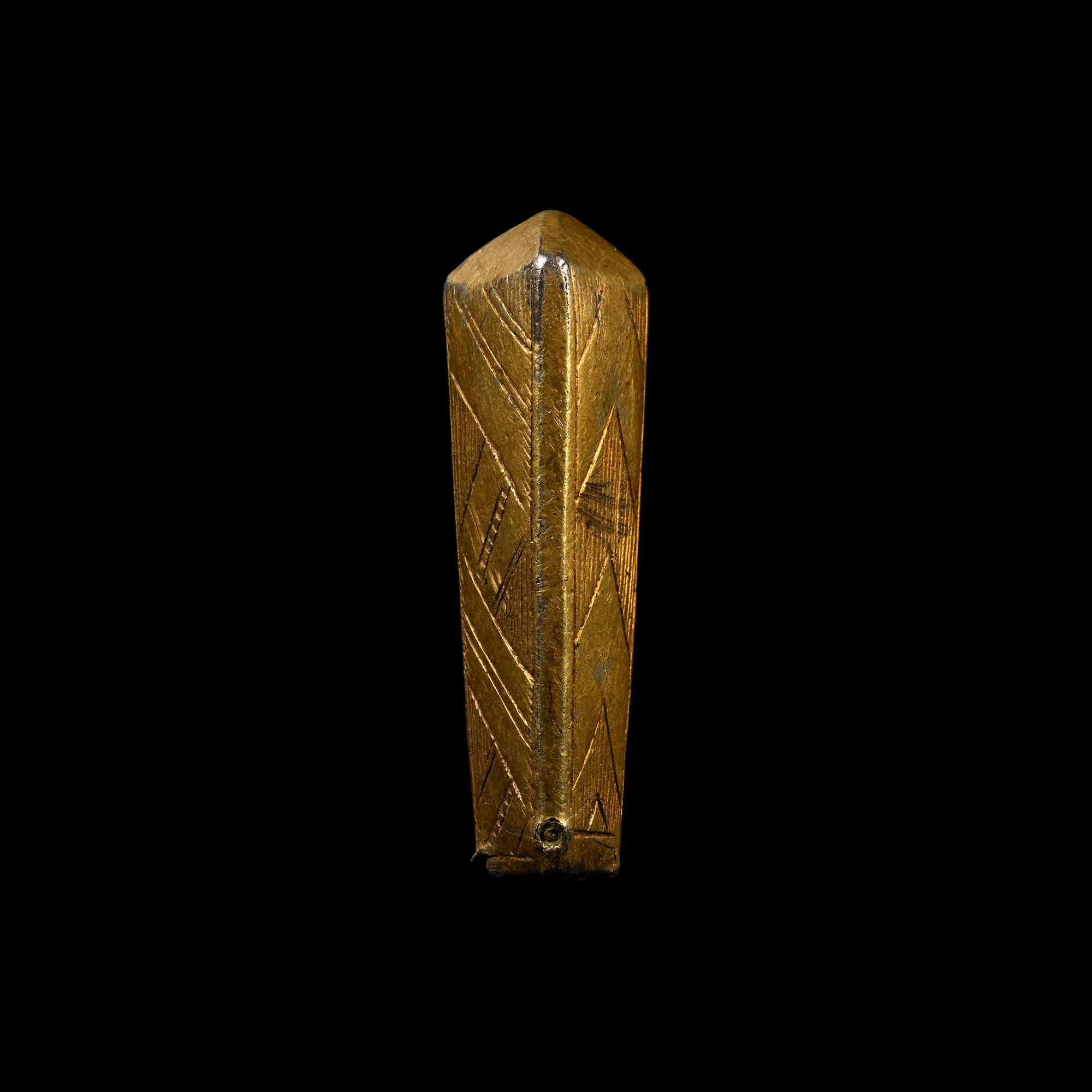
Medieval Knight's Silver-Gilt Heraldic Knife Handle
15TH-16TH CENTURY A.D.
1 5/8 in. (8.52 grams, 40 mm).
Of triangular cross-section expanding towards the pyramidal end, each side with a different decoration: two sides with different chevron motifs, one side with diagonal bands on hatched background. [No Reserve]
ProvenanceProperty of a Cambridgeshire, UK, collector.
From his private collection since the 1970s; thence by descent circa 2000.
Ex private collection of a Bedfordshire gentleman.
This lot is accompanied by an illustrated lot declaration signed by the Head of the Antiquities Department, Dr Raffaele D'Amato.
TimeLine Auctions follows a vetting process to ensure the authenticity and legality of all items, reinforcing our commitment to integrity and responsible trading. Each antiquity, antique, and coin lot undergoes thorough examination by a vetting committee of at least ten external specialists, professional trade association members, scientists, and archaeologists: Our Vetting Process
AUCTIONS:
TimeLine is a leading auction house specialising in antiquities, ancient art, collectables, natural history, coins, medals, and books. Our auctions offer museums, collectors, historians, and enthusiasts the opportunity to acquire unique and historically significant pieces.
-
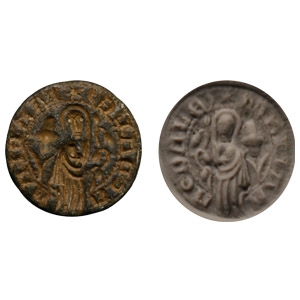
Medieval Bronze Ecclesiastical Seal Matrix
Circa 15th century ADSold for (Inc. bp): £85
Chessman type with pierced trefoil finial, motif of nimbate St Mary Magdalene holding aloft her identifying attribute, the pot of salve with which she anointed Christ's feet, surrounding Lombardic script legend '*MARIAM AGDALE (sic)'; supplied with a museum-quality impression. 12 grams, 27.6 mm
Found Suffolk, UK. This lot is accompanied by an illustrated lot declaration signed by the Head of the Antiquities Department, Dr Raffaele D'Amato. -
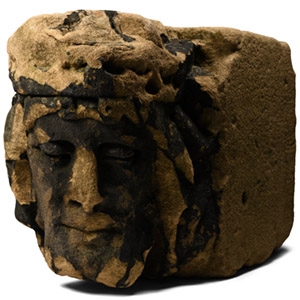
Medieval Limestone Corbel of Jesus with Crown of Thorns
Circa 14th-15th century A.D.Sold for (Inc. bp): £1,105
Rectangular corbel with head of Christ modelled in the half-round, turned slightly with the eyelids drooping and lank hair framing the face; crown of thorns to the brow. 31.9 kg, 39 cm deep
From Lancashire, UK. From a collection acquired on the UK art market. Property of a West Midlands, UK, private collector. This lot is accompanied by an illustrated lot declaration signed by the Head of the Antiquities Department, Dr Raffaele D'Amato. -
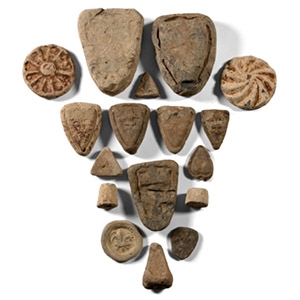
Medieval Lead Trade Weight Collection
Circa 12th-15th century A.D.Sold for (Inc. bp): £143
Including heater-shaped, conical, pyramidal and other types. 1.74 kg total, 16-67 mm
Found Yorkshire, UK. From the private collection of Robin Sykes, Yorkshire, UK, formed since the late 1990s. This lot is accompanied by an illustrated lot declaration signed by the Head of the Antiquities Department, Dr Raffaele D'Amato.
