
Loading, please wait...
LOT 1854
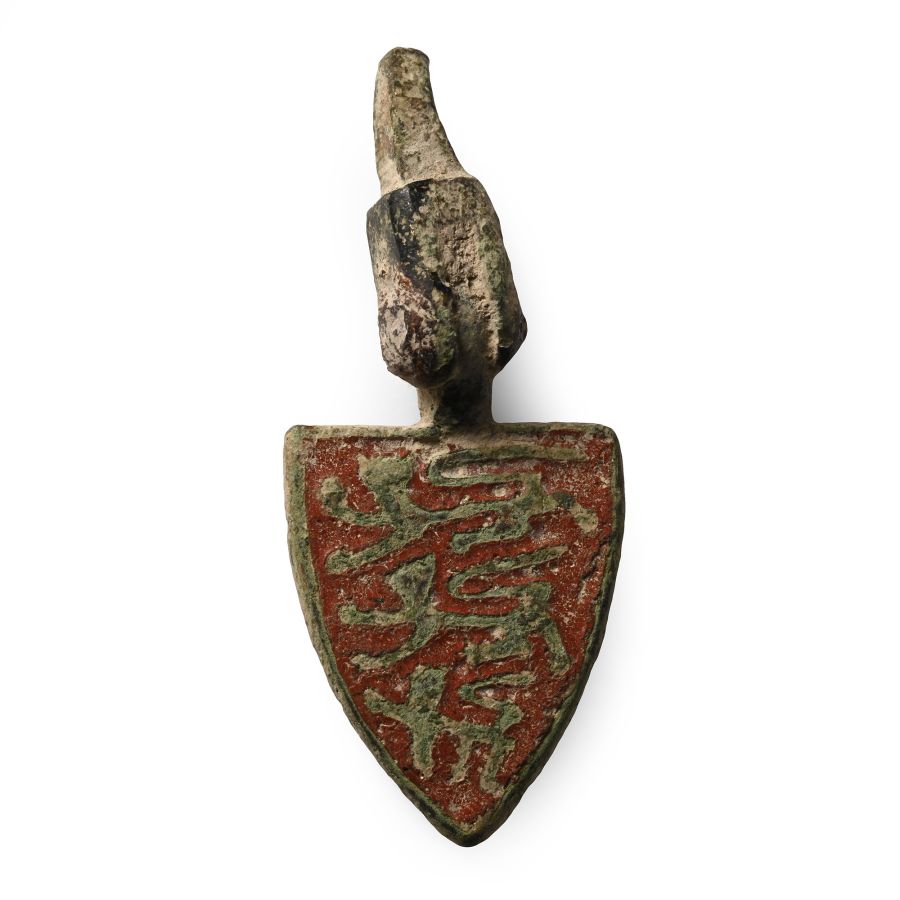
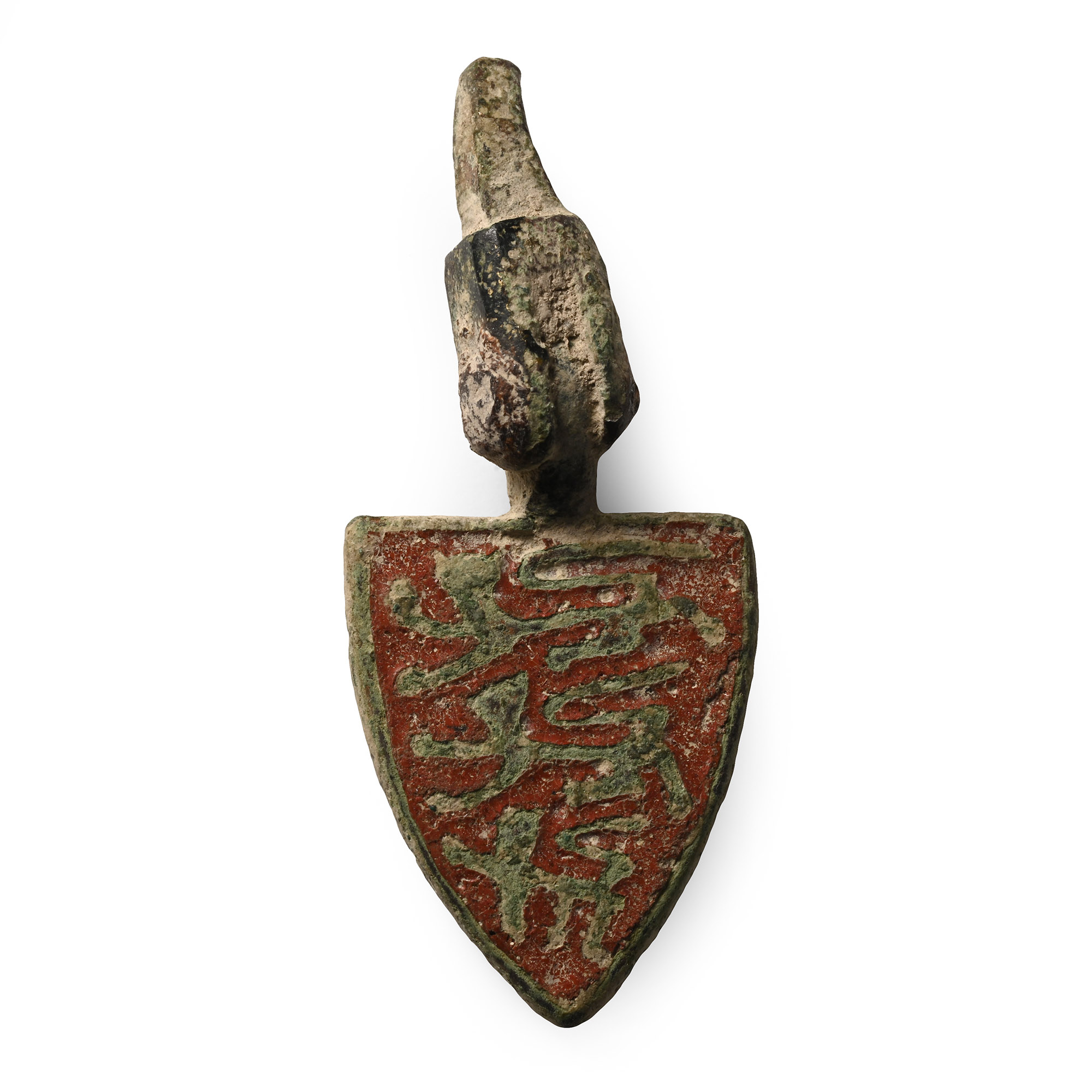
Medieval Knight's Bronze Heraldic Horse Harness Pendant with the Royal Arms of England
CIRCA 14TH CENTURY A.D.
1 1/2 in. (6.73 grams, 40 mm).
Heater-shaped with red enamel field and reversed three lions passant gardant, with hinged hanger above. [No Reserve]
ProvenanceFound West Sussex, UK.
LiteratureCf. Ashley, S., Medieval Armorial Horse Furniture in Norfolk, East Anglian Archaeology 101, Dereham, 2002, item 55, for type, and 238, for arms.
CONDITIONTimeLine Auctions follows a vetting process to ensure the authenticity and legality of all items, reinforcing our commitment to integrity and responsible trading. Each antiquity, antique, and coin lot undergoes thorough examination by a vetting committee of at least ten external specialists, professional trade association members, scientists, and archaeologists: Our Vetting Process
AUCTIONS:
TimeLine is a leading auction house specialising in antiquities, ancient art, collectables, natural history, coins, medals, and books. Our auctions offer museums, collectors, historians, and enthusiasts the opportunity to acquire unique and historically significant pieces.
LOT 1854
Medieval Knight's Bronze Heraldic Horse Harness Pendant with the Royal Arms of England
Sold for (Inc. bp): £234
-
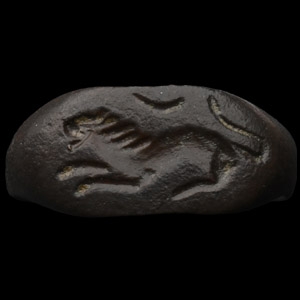
Medieval Bronze Ring with Lion
Circa 12th-15th century A.D.Sold for (Inc. bp): £130
Comprising a slender hoop and oval bezel with incuse image of a leaping lion. 2.16 grams, 19.11 mm overall, 16.29 mm internal diameter (approximate size British L 1/2, USA 6, Europe 11.87, Japan 11)
Ex German art market, 2000s. Acquired from an EU collector living in London. From the collection of a Surrey, UK, gentleman. -
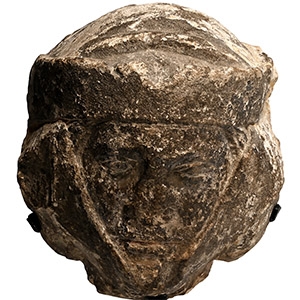
Medieval Stone Female Head
France, 14th century A.D.Estimate: £1,000 - 1,400 (+bp*)
Opening Bid: £500
Carved in the half-round with brow-band and chin-band; narrow triangular face with slit mouth and lentoid eyes; lateral bunches of hair beneath the wimple; mounted on a custom-made stand. 3.11 kg total, 24 cm high including stand
Private collection, UK. -
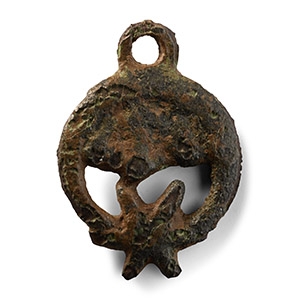
Medieval Bronze Sun, Moon and Star Retainer's Badge
14th century A.D.Sold for (Inc. bp): £20
Lancastrian retainer's badge or mount with 'sun, moon and star' emblem. 6.15 grams, 33 mm
Found Gloucestershire, UK.
The 'star and crescent' (sun, moon and star) symbols were a traditional badge of the Plantagenets during the period from Richard I to Edward I and were also popular in the 14th century.
