
Loading, please wait...
LOT 1672
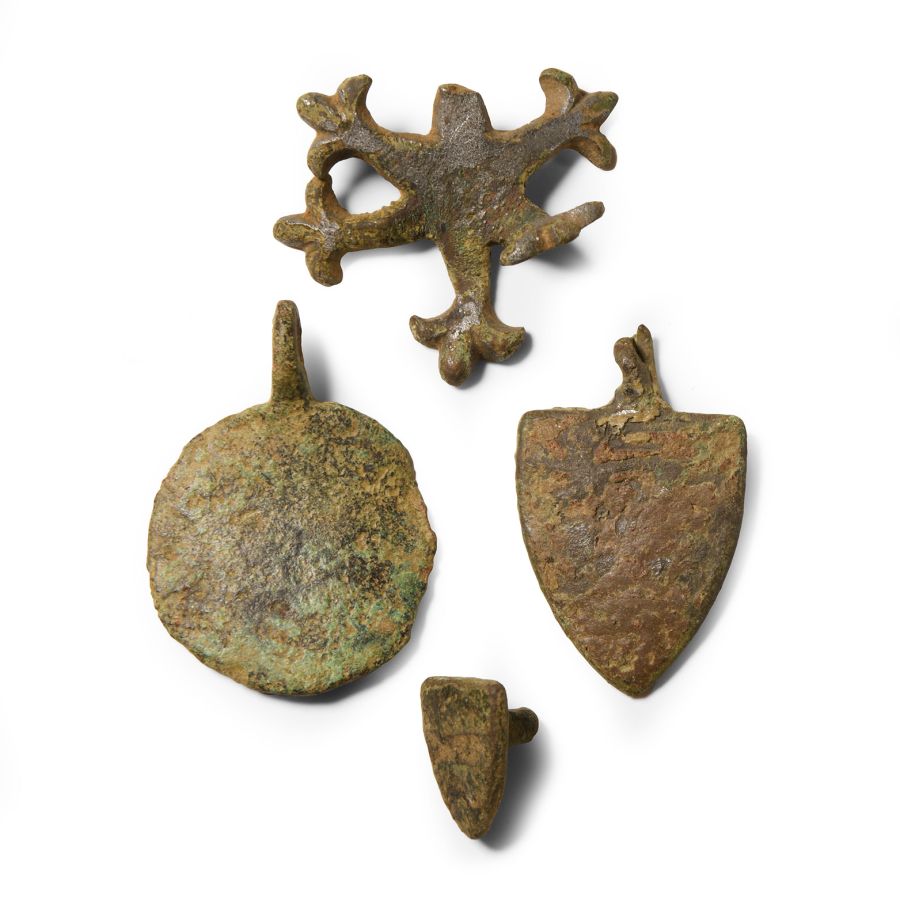
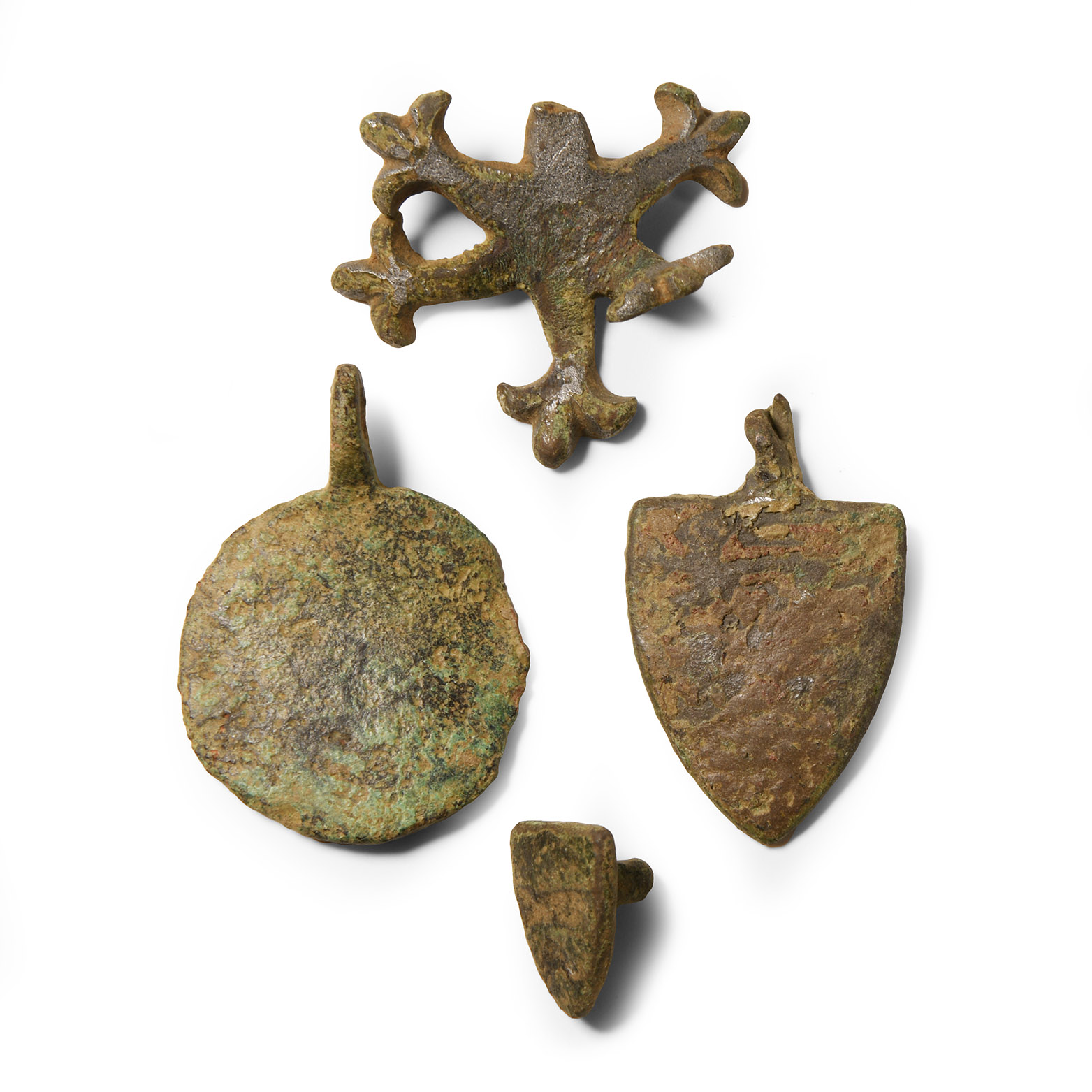
Medieval Knight's Bronze Heraldic Horse Harness Pendant and Stud Group
14TH-15TH CENTURY A.D.
5/8 - 1 3/8 in. (25.1 grams total, 15-36 mm).
Including heater-shaped, cross moline and other types. [4, No Reserve]
ProvenanceFound Suffolk, UK.
CONDITIONTimeLine Auctions follows a vetting process to ensure the authenticity and legality of all items, reinforcing our commitment to integrity and responsible trading. Each antiquity, antique, and coin lot undergoes thorough examination by a vetting committee of at least ten external specialists, professional trade association members, scientists, and archaeologists: Our Vetting Process
AUCTIONS:
TimeLine is a leading auction house specialising in antiquities, ancient art, collectables, natural history, coins, medals, and books. Our auctions offer museums, collectors, historians, and enthusiasts the opportunity to acquire unique and historically significant pieces.
LOT 1672
Medieval Knight's Bronze Heraldic Horse Harness Pendant and Stud Group
Sold for (Inc. bp): £26
-
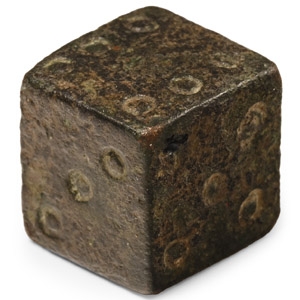
Large Medieval Bronze Gaming Dice
12th-16th century A.D.Sold for (Inc. bp): £130
Cuboid with impressed roundel markings disposed 1:6, 2:3, 4:5. 15.6 grams, 13 mm
From the important private collection of dice and gaming pieces of Colin Narbeth, London, UK, collection no.245. -
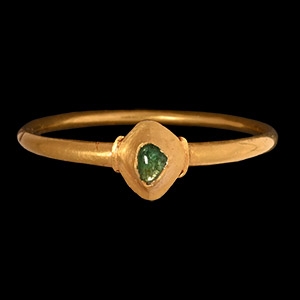
'The Frinton' Medieval Gold Bishop's Ring with Emerald
13th-14th century A.D.Sold for (Inc. bp): £2,600
Comprising a slender hoop and pie-dish bezel with flanges at the junction, D-shaped aperture with inset emerald cabochon. 1.76 grams, 24.07 mm overall, 18.96 mm internal diameter (approximate size British R, USA 8 1/2, Europe 18 3/4, Japan 18)
Found whilst searching with a metal detector near Frinton, Essex, UK, on Thursday 25th May 2023, by Jim Ridge. Accompanied by a copy of the British Museum's Portable Antiquities Scheme (PAS) report no.ESS-0840AB. Accompanied by a copy of a letter, and video from the finder explaining the circumstances of finding. This lot has been checked against the Interpol Database of stolen works of art and is accompanied by a search certificate number no.12140-214660. -
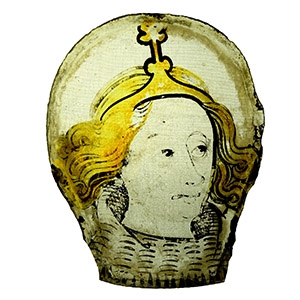
Medieval Stained Glass Panel with Head of St Michael
England, circa 1500 A.D.Sold for (Inc. bp): £845
With painted clean-shaven head wearing a gold crown with stem and star above the brow, luxuriant hair, mail gorget or collar to the throat. 28 grams, 10.6 cm
Monastery Stain Glass, 1998. Ex central London gallery.
