
Loading, please wait...
LOT 1684
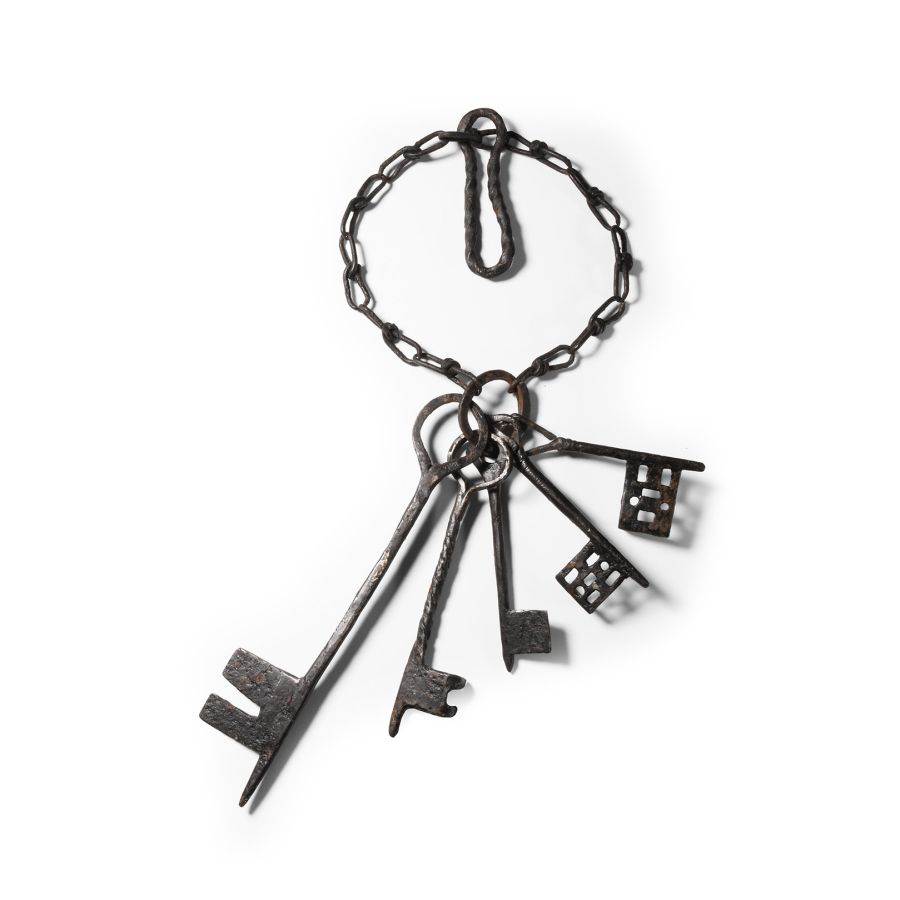
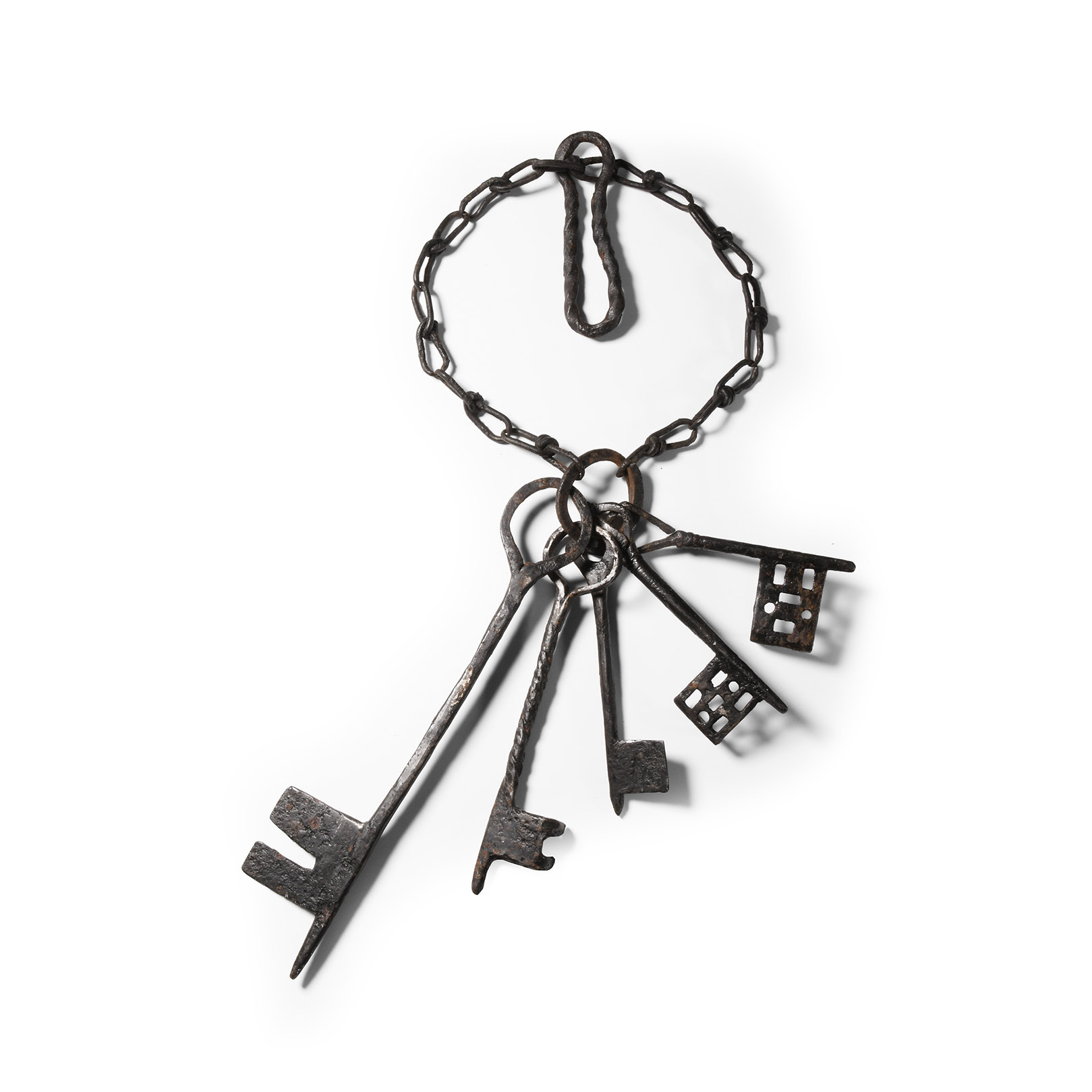
Medieval Iron Warden's Key Belt Group
12TH-14TH CENTURY A.D.
20 in. (513 grams, 51 cm).
Composed of figure-of-eight chain links, elongated suspension loop formed using a twisted iron bar above, flat-section hoop suspending five keys of various types and sizes below.
ProvenanceEx family collection, formed in the late 1940s-1950s; thence by descent.
Acquired from TimeLine Auctions, 2018, lot 3017.
The Kusmirek Collection, UK.
TimeLine Auctions follows a vetting process to ensure the authenticity and legality of all items, reinforcing our commitment to integrity and responsible trading. Each antiquity, antique, and coin lot undergoes thorough examination by a vetting committee of at least ten external specialists, professional trade association members, scientists, and archaeologists: Our Vetting Process
AUCTIONS:
TimeLine is a leading auction house specialising in antiquities, ancient art, collectables, natural history, coins, medals, and books. Our auctions offer museums, collectors, historians, and enthusiasts the opportunity to acquire unique and historically significant pieces.
-
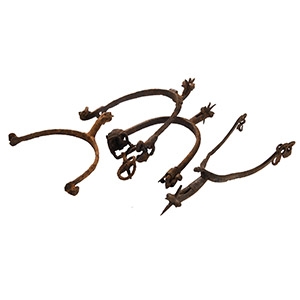
Medieval Iron Rowel Spur Collection
Circa 13th-16th century A.D.Estimate: £100 - 140 (+bp*)
Opening Bid: £40
Comprising examples of various types, including some retaining the rowel, buckle and other fitting elements. 249 grams total, 11.5-15 cm
Acquired 1990s-early 2000s. East Anglian private collection.
The early rowel spurs had short necks and small four-six or seven point star rowels, while four rowels were uncommon. After c.1350 the multipoint rowel became voguish though the former shapes continued. -
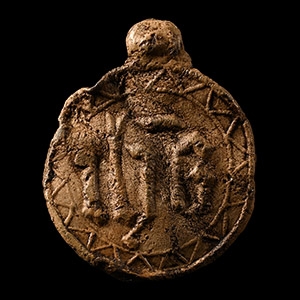
Medieval Lead Saint Margaret of Antioch Pilgrim's Badge
14th-15th century A.D.Sold for (Inc. bp): £33
Discoid plaque with image of crowned St Margaret to obverse, 'ihs' monogram to reverse in a segmented ring border. 8.02 grams, 33 mm
Found near Ketsby, Lincolnshire, UK.
Attributed to the shrine at Ketsby, Lincolnshire, England and found nearby. -
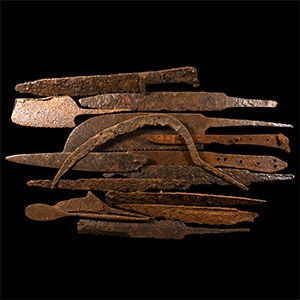
Medieval Iron Knife Blade Group
14th-16th century A.D.Sold for (Inc. bp): £33
Comprising domestic, hunting and butcher's knife blades, sickles and others. 2.9 kg total, 18-41.5 cm
Acquired 1990s-early 2000s. East Anglian private collection.
