
Loading, please wait...
LOT 1771
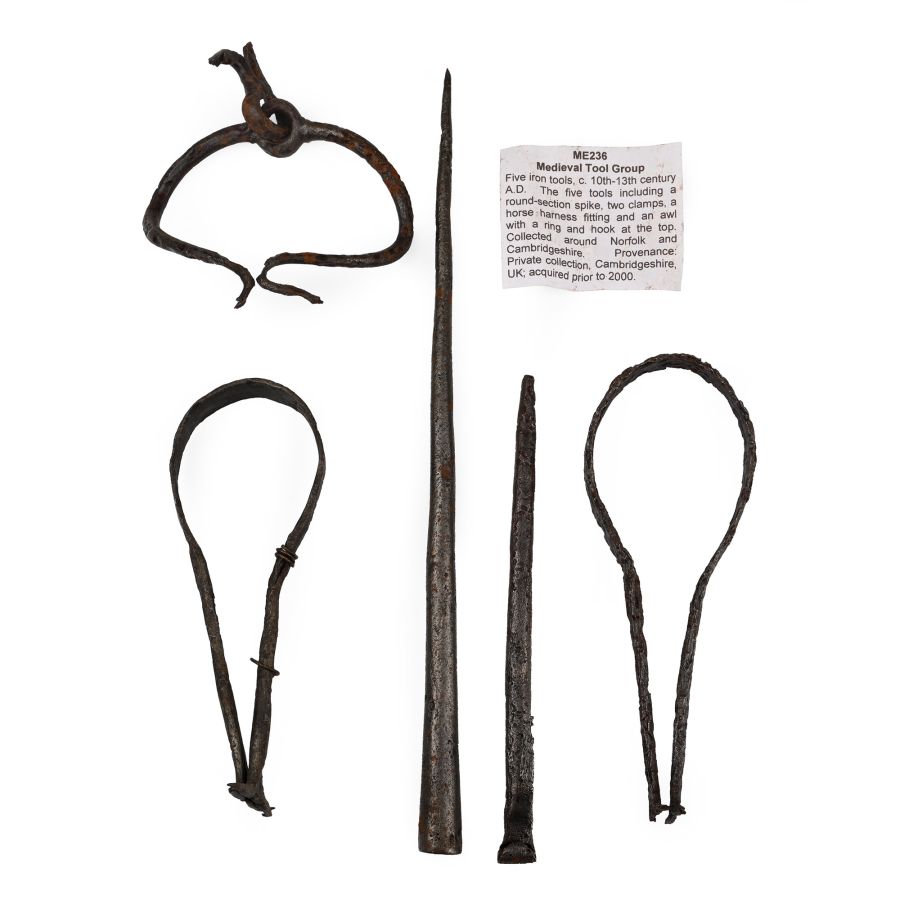
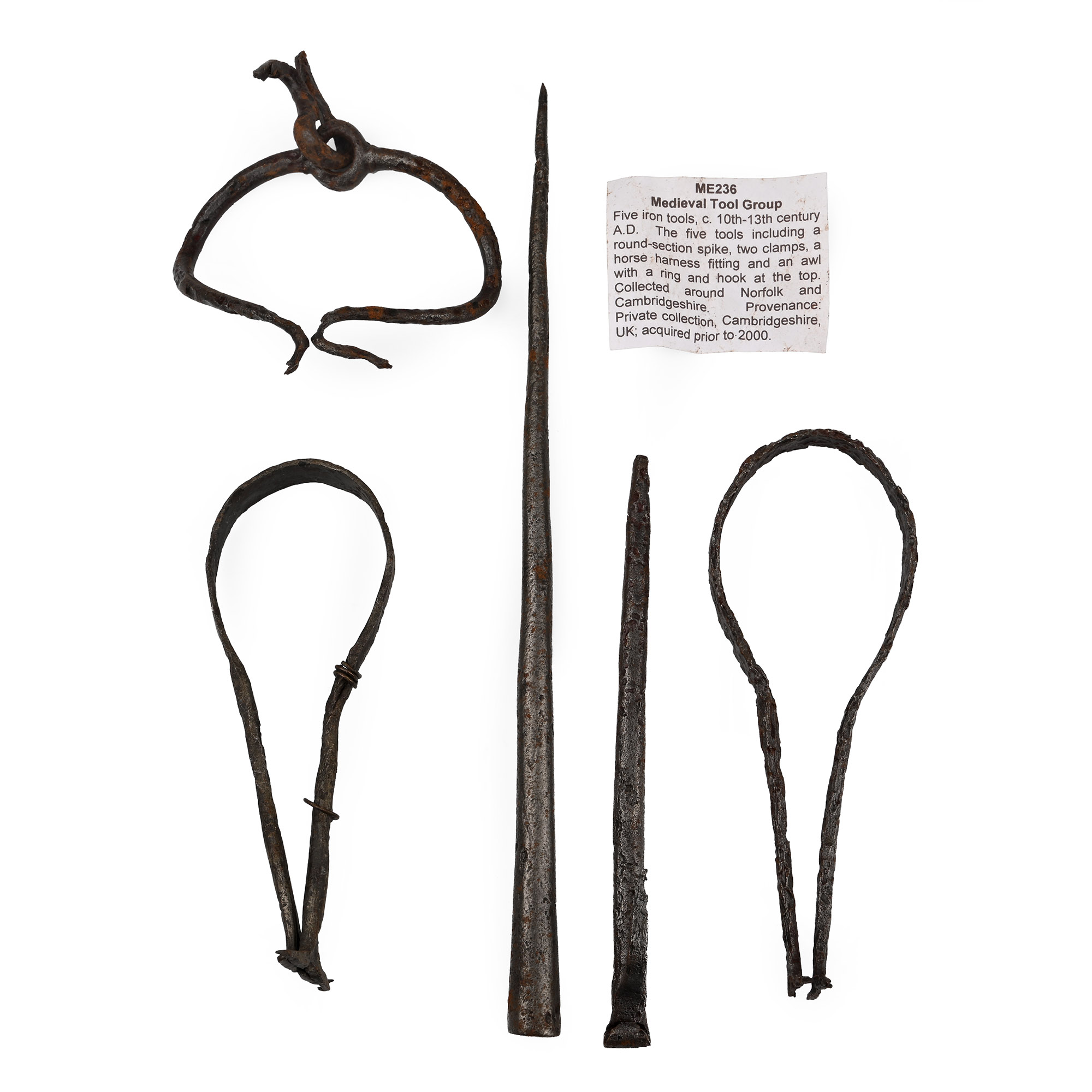
Medieval Iron Tool Collection
10TH-13TH CENTURY A.D.
4 1/8 - 9 7/8 in. (260 grams total, 10.5 - 25 cm).
Including U-shaped clamps, an awl and other items. [5, No Reserve]
ProvenanceAcquired prior to 2000.
From a private Cambridgeshire, UK, collection.
From the property of a late Lincolnshire, UK, gentleman.
TimeLine Auctions follows a vetting process to ensure the authenticity and legality of all items, reinforcing our commitment to integrity and responsible trading. Each antiquity, antique, and coin lot undergoes thorough examination by a vetting committee of at least ten external specialists, professional trade association members, scientists, and archaeologists: Our Vetting Process
AUCTIONS:
TimeLine is a leading auction house specialising in antiquities, ancient art, collectables, natural history, coins, medals, and books. Our auctions offer museums, collectors, historians, and enthusiasts the opportunity to acquire unique and historically significant pieces.
-
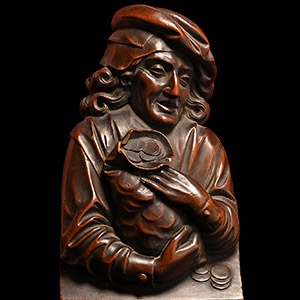
Medieval Bas Relief Representing a Gentleman Illustrating an Allegory of Avarice
Netherlands, 16th century A.D.Estimate: £2,000 - 3,000 (+bp*)
Opening Bid: £833
Carved in the half-round, clean-shaven male figure wearing a floppy chaperon hat, clutching a bulging sack of coins to his chest, with some stray coins on the surface of the table below; mounted on a velvet-covered board in a carved wooden frame. 694 grams, 33.2 x 27.1 cm
Private collection, Spain, until 2024. This lot has been checked against the Interpol Database of stolen works of art and is accompanied by search certificate number no.12992-246434. -
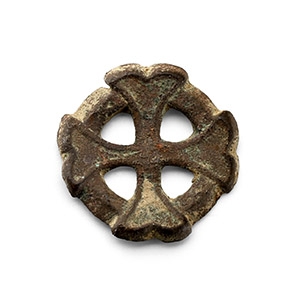
Medieval Bronze Knight's Holy Sepulchre Badge
Circa 13th-14th century A.D.Sold for (Inc. bp): £78
Formed as an expanding cross within a circular border with punched-point border. 0.63 grams, 16 mm
Found East Anglia, UK.
The 'Equestrian Order of the Holy Sepulchre of Jerusalem' was an order of knighthood under the protection of the Pope, formed around 1099 AD by Duke Godfrey of Bouillon, the leader of the First Crusade. It was established for the protection of pilgrims travelling to the Holy Land and was recognised by a Papal Bull in about 1113 AD. -
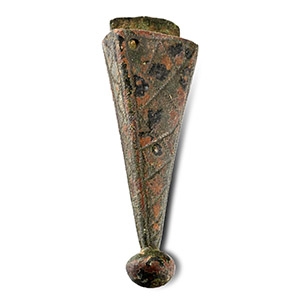
Medieval Bronze Dagger Chape
Circa 13th-14th century A.D.Sold for (Inc. bp): £39
Triangular in section, tapering to a carinated bulb at the apex; mouth pierced below the rim and one rivet in situ, reverse with raised tab at the mouth; obverse with tremolier-style lozenges, undulating tremolier-style band to the narrow lower face. 14.9 grams, 54 mm
Found Lincolnshire, UK.
