
Loading, please wait...
LOT 1481
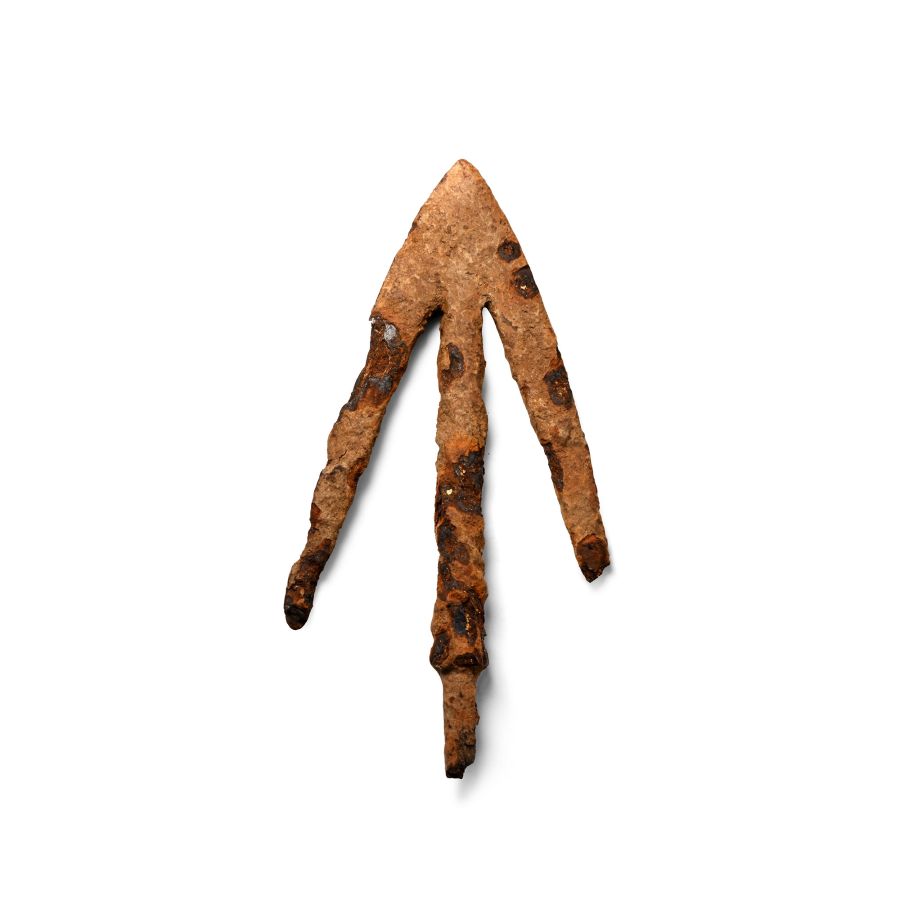
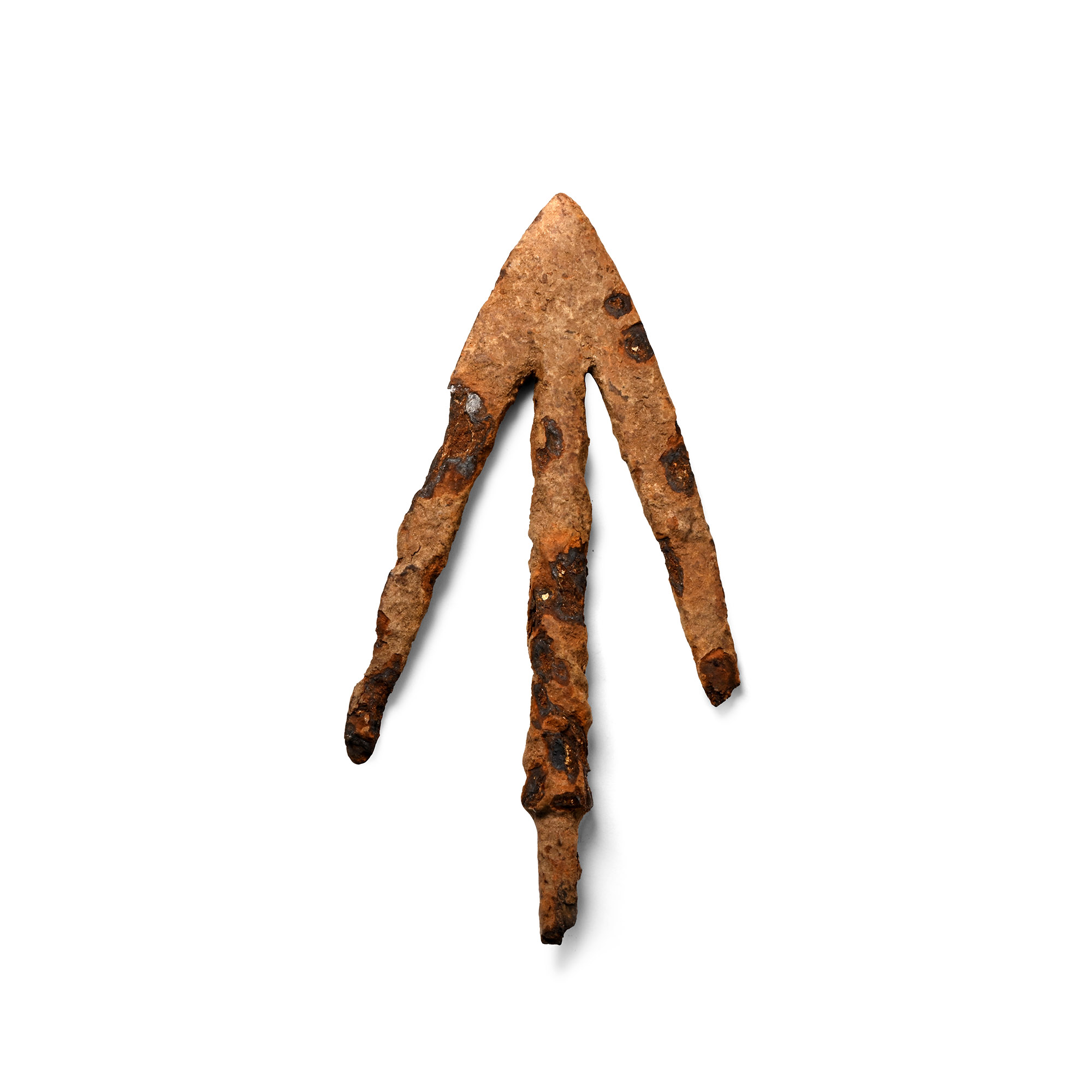
Medieval Iron Swallow-Tailed Arrowhead
10TH-14TH CENTURY A.D.
3 1/4 in. (17.6 grams, 84 mm).
With narrow curved edges and stepped tang. [No Reserve]
ProvenanceFrom the private collection of author and historian Dr DeWitt Bailey, one of the global authorities on the confederate army in the US civil war; thence by descent to his grandson.
LiteratureSee Jessop, O., Medieval Arrowheads, Finds Research Group datasheet 22, Lincoln, 1997.
CONDITIONTimeLine Auctions follows a vetting process to ensure the authenticity and legality of all items, reinforcing our commitment to integrity and responsible trading. Each antiquity, antique, and coin lot undergoes thorough examination by a vetting committee of at least ten external specialists, professional trade association members, scientists, and archaeologists: Our Vetting Process
AUCTIONS:
TimeLine is a leading auction house specialising in antiquities, ancient art, collectables, natural history, coins, medals, and books. Our auctions offer museums, collectors, historians, and enthusiasts the opportunity to acquire unique and historically significant pieces.
-
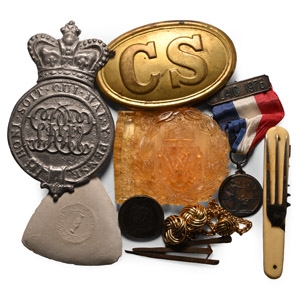
Mixed Military and Other Artefact Collection
20th century A.D.Sold for (Inc. bp): £33
Including tailor's chalk, French military medal with ribbon and plate 'Mlaic 1976', square-section clout nails, bone-handled folding fork and corkscrew and other items. 415 grams total, 3.3-10.9 cm
From the private collection of author and historian Dr DeWitt Bailey, one of the global authorities on the confederate army in the US civil war; thence by descent to his grandson. -
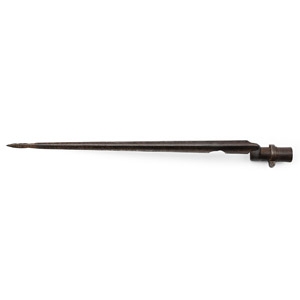
US Confederate Bayonet
19th century A.D.Sold for (Inc. bp): £78
Comprising a tubular socket for fixing to a muzzle of a weapon, with a separate collar, long tapering triangular blade with a raised rib on the underside and 'US' stamp at the base. 320 grams, 52.5 cm
From the private collection of author and historian Dr DeWitt Bailey, one of the global authorities on the confederate army in the US civil war; thence by descent to his grandson. -
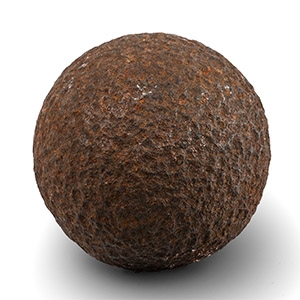
Civil War or Later Iron Cannonball
17th century A.D. or laterSold for (Inc. bp): £124
Rough-cast cannonball for a minion-type cannon, approximately 3 pounds in weight and 2 7/8 inches diameter. 1.39 kg, 70 mm
From the collection of a Buckinghamshire, UK, collector established from the earlier 1960s.
