
Loading, please wait...


LOT 1370
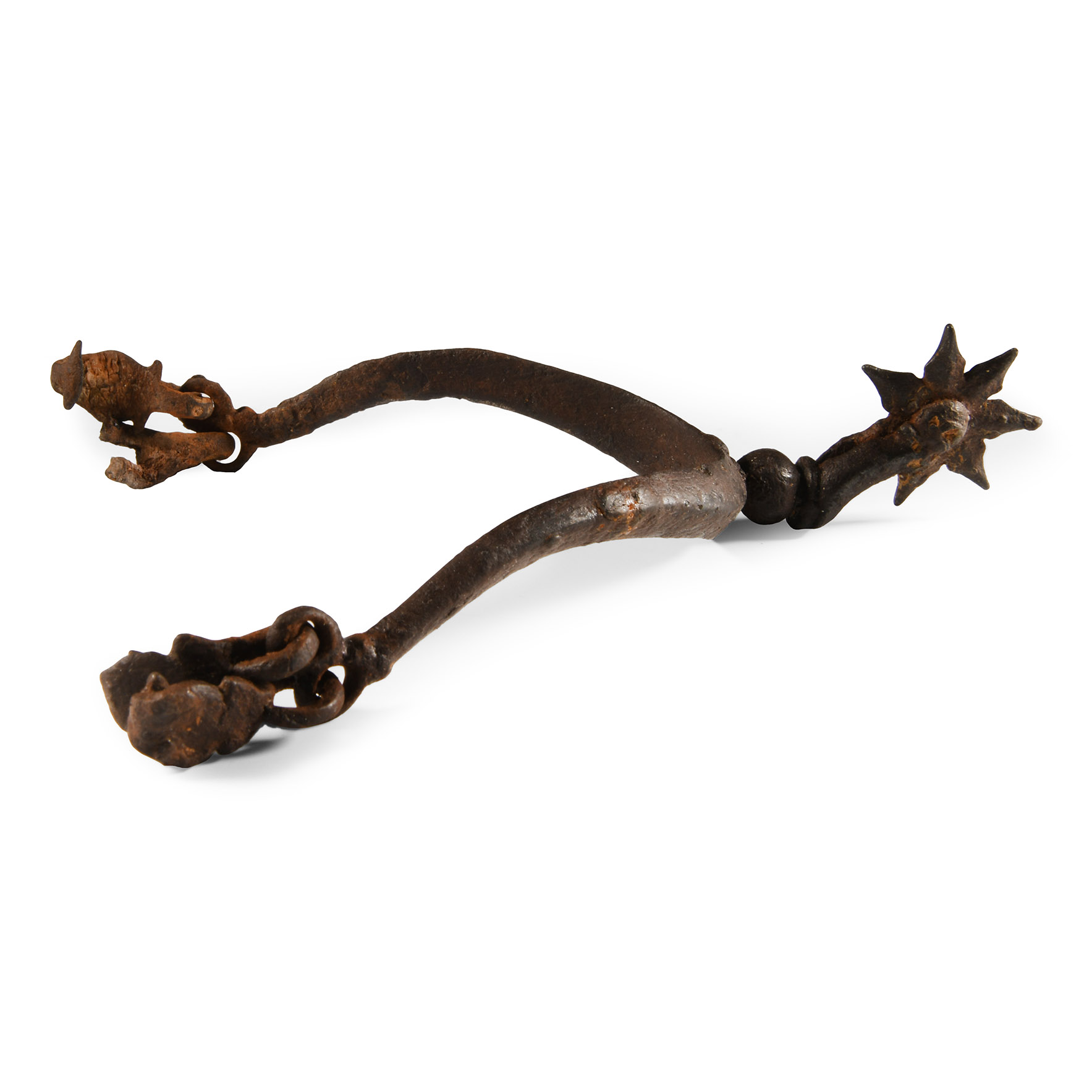
Medieval Iron Spur with Rowel
CIRCA 14TH CENTURY A.D.
5 1/4 in. (70 grams, 13.5 cm).
Comprising a U-shaped shank with carinated outer face, locket to each finial, ball and curved arms supporting a seven-pointed rowel. [No Reserve]
ProvenancePrivate collection, UK, formed 1980s-1990s.
LiteratureCf. similar specimen in the British Museum, inventory no.1915,1208.187, dated 1340-1400 A.D.
CONDITIONTimeLine Auctions follows a vetting process to ensure the authenticity and legality of all items, reinforcing our commitment to integrity and responsible trading. Each antiquity, antique, and coin lot undergoes thorough examination by a vetting committee of at least ten external specialists, professional trade association members, scientists, and archaeologists: Our Vetting Process
AUCTIONS:
TimeLine is a leading auction house specialising in antiquities, ancient art, collectables, natural history, coins, medals, and books. Our auctions offer museums, collectors, historians, and enthusiasts the opportunity to acquire unique and historically significant pieces.
-
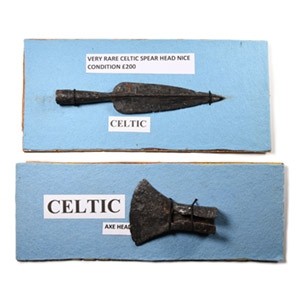
Iron Age Celtic Iron Axe and Spearhead Displays
Circa 2nd century B.C.-1st century A.D.Sold for (Inc. bp): £234
Comprising a spearhead with leaf-shaped blade and raised triangular mid-rib, short tapering open socket with inside wood remains, and a forged axe with folded rectangular-section open socket and flared crescent-edge blade. 791 grams total, 11.2-22.5 cm
From the collection of the famous author, writer and speaker, Gordon Bailey, Essex, UK; formed since 1968.
The Celtic warrior used a light javelin to throw and a heavier thrusting spear at close quarters. An iron spearhead of identical shape but with bronze decoration was recovered from the Thames and dated to the late Iron Age. -
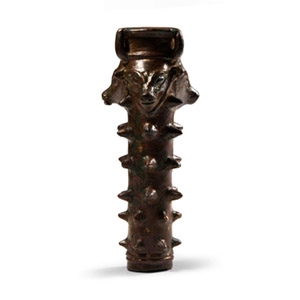
Elamite Spiked Bronze Macehead with Bulls
Late 2nd-early 1st millennium B.C.Estimate: £1,800 - 2,400 (+bp*)
Opening Bid: £1,000
With three adjoining bull heads in high relief to the top, with three ears and three horns serving all the three heads; the horns curving towards the rim of the the closed top; the shaft adorned with vertical rows of pointed spikes; hollow socket tube with ring collar at the base. 349 grams, 14.5 cm
with a London, UK gallery, 1971-early 2000s. Accompanied by an academic report by Dr Raffaele D'Amato. This lot has been checked against the Interpol Database of stolen works of art and is accompanied by search certificate number no.11997-22061. -
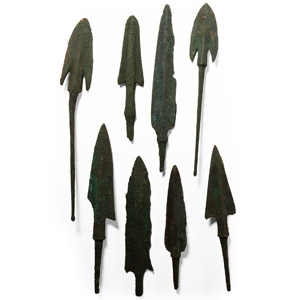
Luristan Bronze Arrowhead Collection
14th-10th century B.C.Sold for (Inc. bp): £117
Two with a sturdy square-section tang, narrow barbed head with midrib; the others with triangular or foliate blades; each with a raised midrib and a short tang. 212 grams total, 10.1-16.2 cm
Ex London collection, formed 1990-2000.
Although some of them are different in shape, these arrowheads are apparently related types of a polythetic group. Two basic deltoid forms are represented: one has a sharp, flat blade, the ends of which extend to form wings or barbs, and a prominent midrib extending into a long tang that often has a stop; the blade shape varies from deltoid to more manifestly triangular. The other form has no barbs, but it has a prominent midrib extending to the tang, and a narrow leaf-shaped blade.
