
Loading, please wait...
LOT 1445
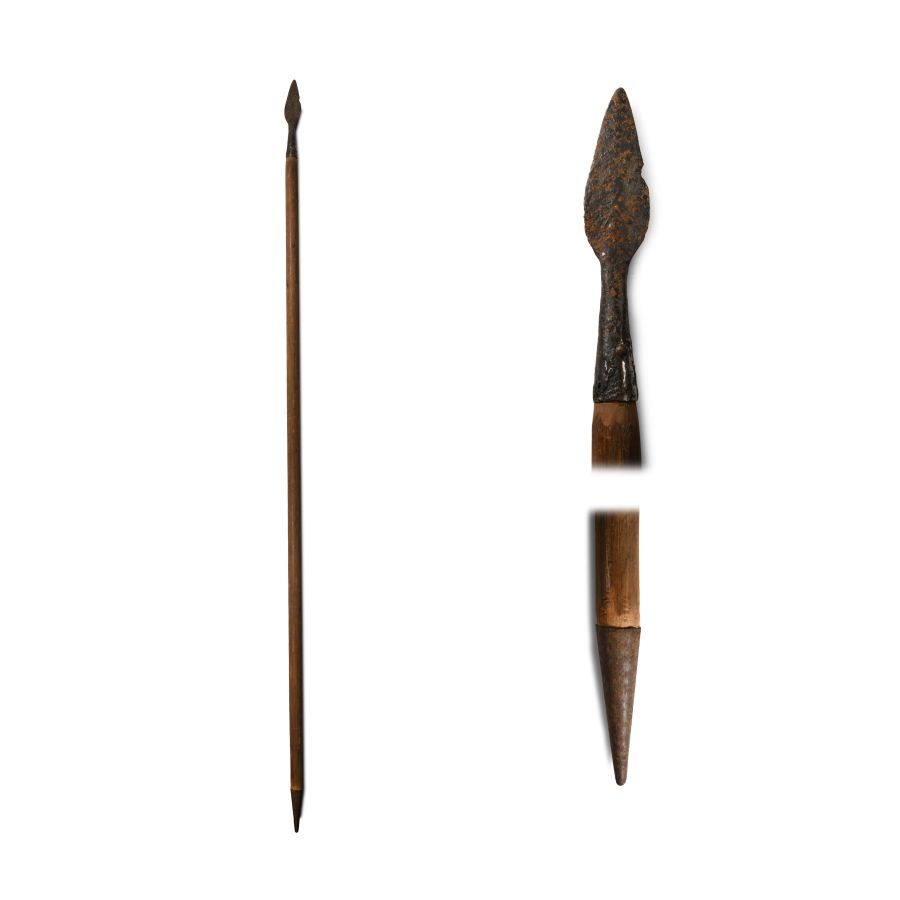
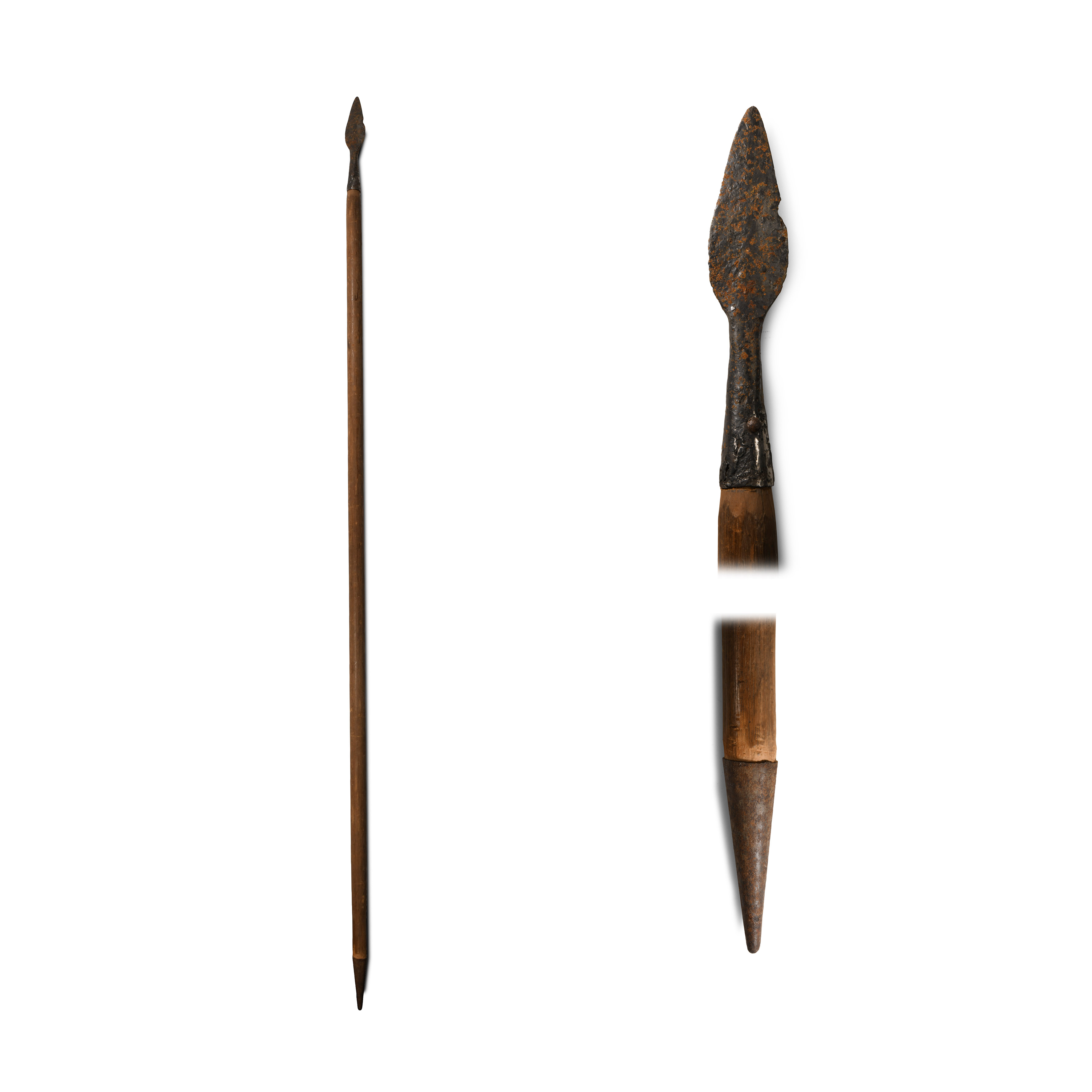
Medieval Iron Spear with Replacement Shaft
14TH-16TH CENTURY A.D. AND LATER
63 1/2 in. (664 grams, 161.5 cm).
With split socket and small lozenge-shaped head, lentoid in section; conical ferrule; wooden shaft replaced. [No Reserve]
ProvenanceFrom the collection of the famous author, writer and speaker, Gordon Bailey, Essex, UK; formed since 1968.
CONDITIONTimeLine Auctions follows a vetting process to ensure the authenticity and legality of all items, reinforcing our commitment to integrity and responsible trading. Each antiquity, antique, and coin lot undergoes thorough examination by a vetting committee of at least ten external specialists, professional trade association members, scientists, and archaeologists: Our Vetting Process
AUCTIONS:
TimeLine is a leading auction house specialising in antiquities, ancient art, collectables, natural history, coins, medals, and books. Our auctions offer museums, collectors, historians, and enthusiasts the opportunity to acquire unique and historically significant pieces.
-
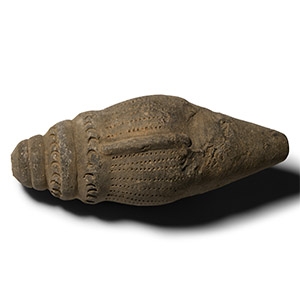
Turco-Mongol 'Greek Fire' Ceramic Fire Bomb or Hand Grenade
13th-15th century A.D.Sold for (Inc. bp): £156
A hollow vessel with cylindrical body, short neck and domed mouth, four raised lugs to the body, bands of impressed dots in-between, raised neck with impressed crescents; intended to be filled with explosive liquid and a wick, and used as a hand grenade. 357 grams, 14.7 cm
From a specialist collection of militaria, London, UK, collected 1990s onwards.
This was a type of ceramic fire grenade, similar to the ones used by the Eastern Romans but of Turco-Mongol type. Apart from the use of manual flame-throwers, special corps of soldiers employed terracotta grenades, in the form of small jars, abundantly evidenced in archaeological excavations. -
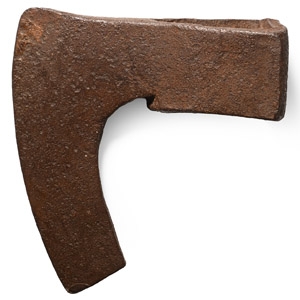
Medieval Iron Long Bearded Axehead
Circa 14th-16th century A.D.Sold for (Inc. bp): £117
With a narrow curving blade and a tongue-shaped socket. 420 grams, 11.2 cm
Ex Californian collection, USA, 1980s. -
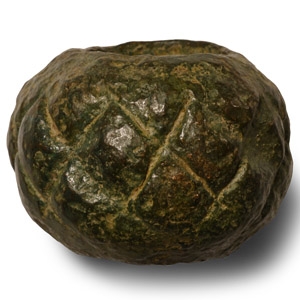
Medieval Bronze Macehead
Circa 12th-15th century A.D.Sold for (Inc. bp): £78
Spherical in profile with very broad vertical socket, lattice-pattern to the sidewall forming low studs. 262 grams, 50 mm
Private collection, Arundel, West Sussex, UK, 1975-late 1990s.
