
Loading, please wait...
LOT 1047
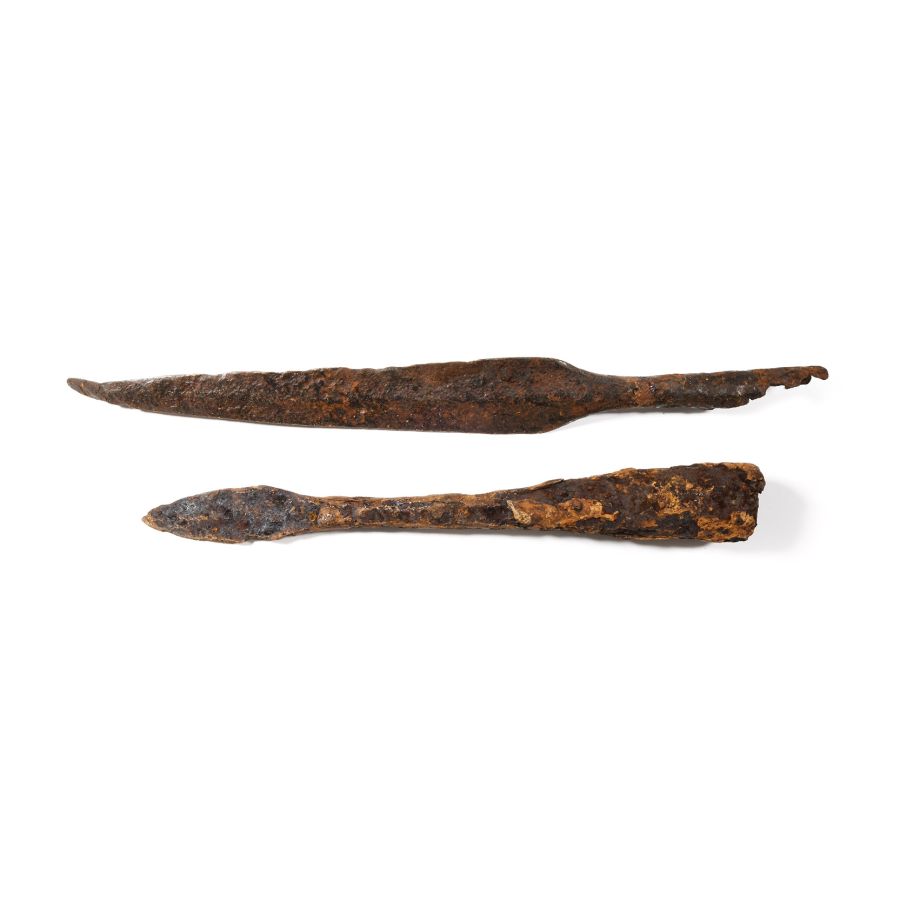
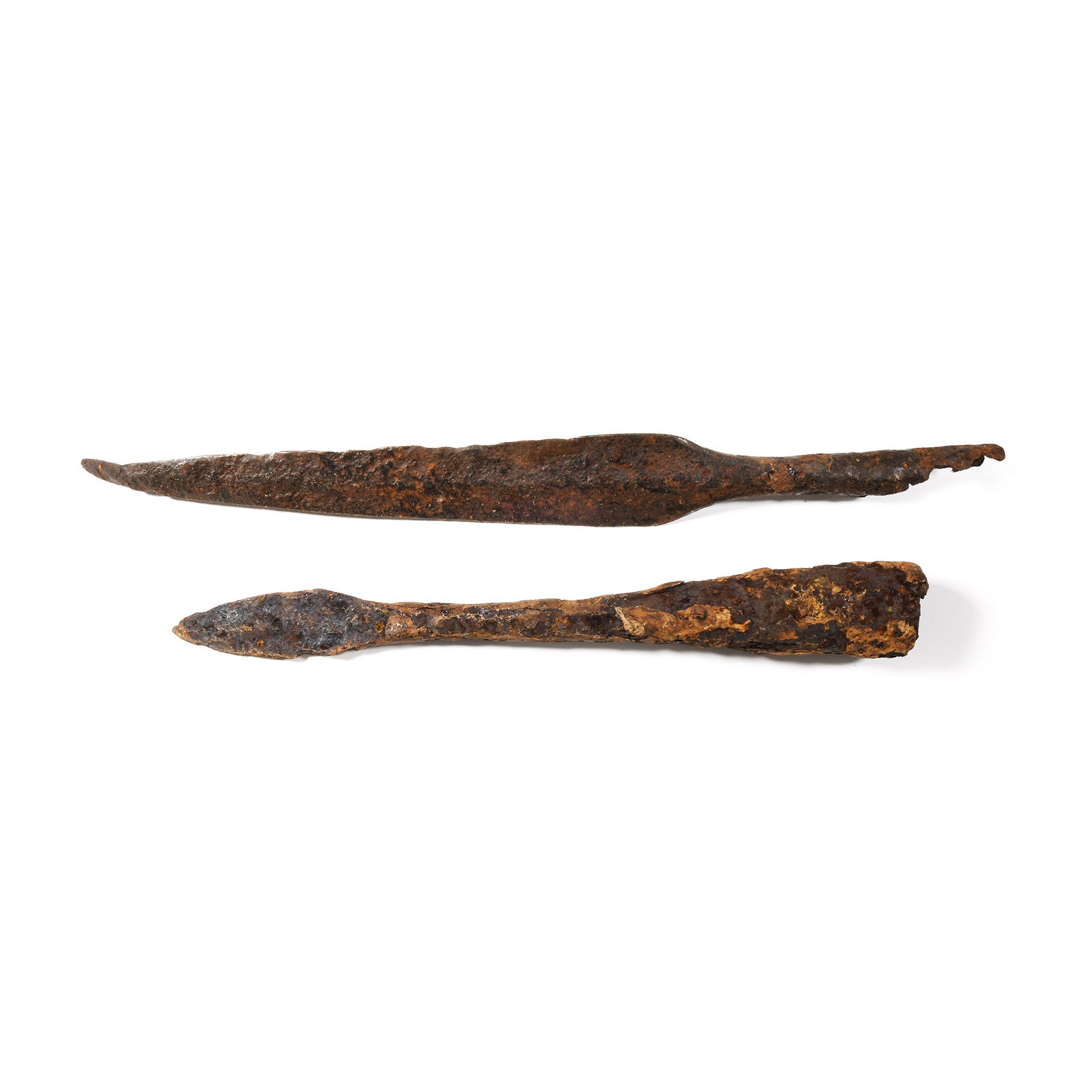
Medieval Iron Spear Group
CIRCA 15TH CENTURY A.D.
10 7/8 - 13 3/4 in. (480 grams total, 27.5-35 cm).
With conical sockets, one with foliate head, the other with long triangular head. [2, No Reserve]
ProvenanceUK private collection, 1990s.
Acquired from a provincial auction.
Cf. Gilliot, C., Weapons and Armours, Bayeux, 2008, p,173, for similar.
FootnotesThe spear was one of the many weapons of infantrymen and peasants during the Middle Ages. Götz von Berlichingen, who in 15th century A.D. was appointed as the leader of the peasants revolting against the noblemen, was recorded saying that ‘I beheld myself, suddenly encompassed with muskets, spears, and halberds, pointed at me. They cried that I should be their captain, in whether I would or not’.
CONDITIONTimeLine Auctions follows a vetting process to ensure the authenticity and legality of all items, reinforcing our commitment to integrity and responsible trading. Each antiquity, antique, and coin lot undergoes thorough examination by a vetting committee of at least ten external specialists, professional trade association members, scientists, and archaeologists: Our Vetting Process
AUCTIONS:
TimeLine is a leading auction house specialising in antiquities, ancient art, collectables, natural history, coins, medals, and books. Our auctions offer museums, collectors, historians, and enthusiasts the opportunity to acquire unique and historically significant pieces.
-
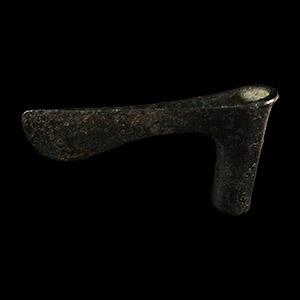
Luristan Bronze Axehead
2nd-1st millennium B.C.Estimate: £200 - 300 (+bp*)
Opening Bid: £111
Composed of a roughly cylindrical socket, slightly scooper upper and lower cheek edges and convex cutting edge. 274 grams, 15 cm
Ex Alexander Cotton collection, Hampshire, UK, 1980s. -
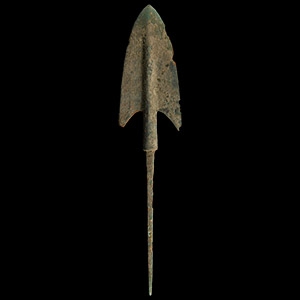
Luristan Bronze Barbed Arrowhead
2nd-1st millennium B.C.Sold for (Inc. bp): £46
Formed with a midrib and tapering rectangular-section tang. 31 grams, 15.5 cm
Acquired 1980-2015. Ex Abelita family collection. -
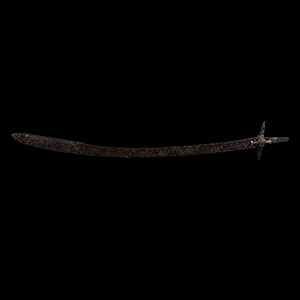
Turkish Iron Sabre
15th century A.D.Sold for (Inc. bp): £585
Comprising a cross-shaped hand guard, the blade with a slight curvature widening towards the point; mounted on a custom-made wall mount. 1.35 kg total, 95 cm including stand
Still-homogenous blade structure, pitting and traces of surface material losses due to the permanence in water; presence of many battle nicks on the cutting part of the blade.
Private collection, Munich, Germany, 1970s. Private collection, London, UK, 2014, acquired from the above.
The Turkish sabres from 15th century, had hilts similar to Omayyad and Abbasid's swords. The blades were long and heavy and were most probably used for swinging cuts, and were particularly convenient for point-thrusts when fighting on foot.
