
Loading, please wait...
LOT 1147
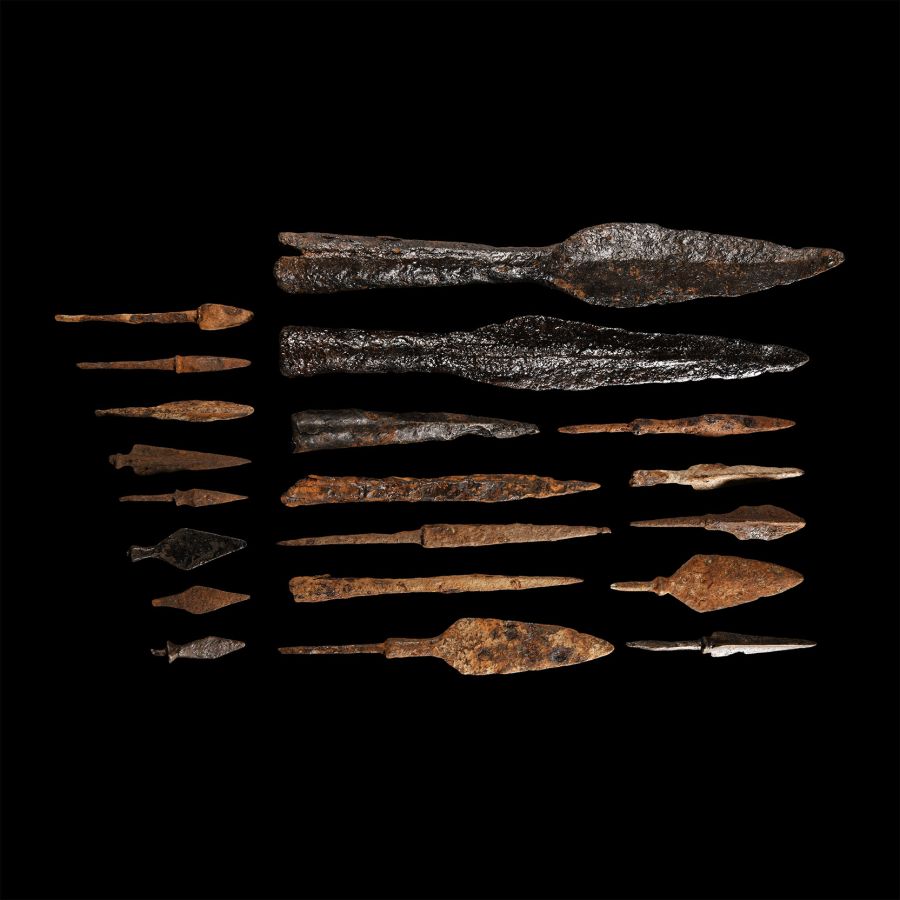
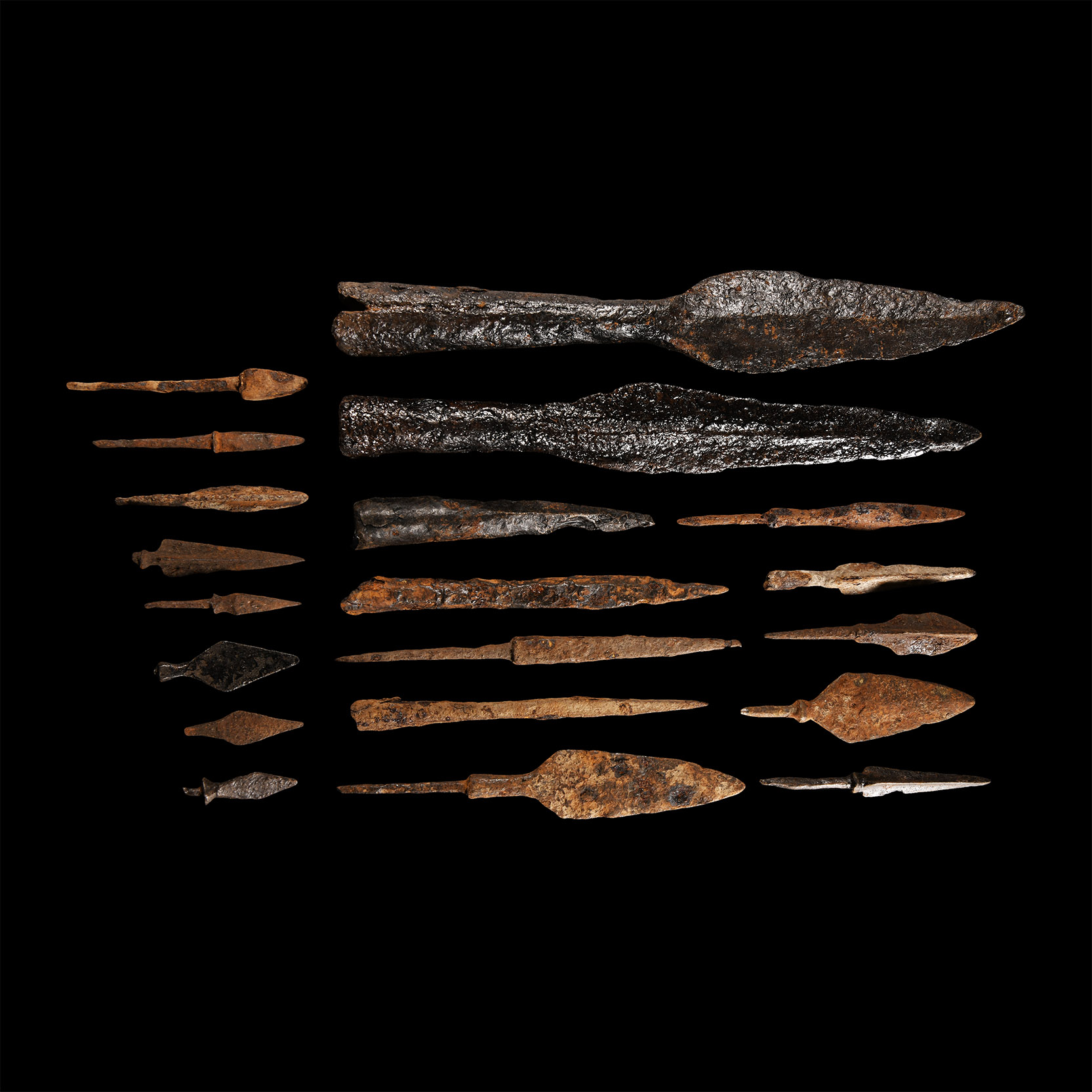
Medieval Iron Spear and Arrowhead Group
CIRCA 10TH-15TH CENTURY A.D.
1 1/4 - 7 7/8 in. (408 grams total, 3.3-20 cm).
Mainly comprising socketted spearheads and tanged arrowheads of various types, including conical, triangular-section, bodkin and lanceolate types. [18, No Reserve]
ProvenanceUK private collection, 1990s.
Acquired from a provincial auction.
TimeLine Auctions follows a vetting process to ensure the authenticity and legality of all items, reinforcing our commitment to integrity and responsible trading. Each antiquity, antique, and coin lot undergoes thorough examination by a vetting committee of at least ten external specialists, professional trade association members, scientists, and archaeologists: Our Vetting Process
AUCTIONS:
TimeLine is a leading auction house specialising in antiquities, ancient art, collectables, natural history, coins, medals, and books. Our auctions offer museums, collectors, historians, and enthusiasts the opportunity to acquire unique and historically significant pieces.
-
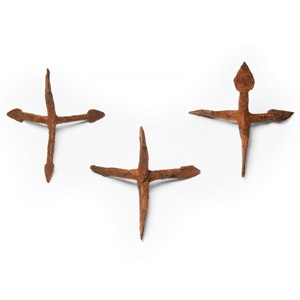
Byzantine Iron Anti-Cavalry Caltrop Trivoloi Group
11th-14th century A.D.Sold for (Inc. bp): £169
Comprising three caltrops, hand-forged with square-section in the form of four welded arrowheads. 34 grams total, 50 mm each
Acquired on the German art market around 2000. From the collection of Surrey, UK, gentleman.
Caltrops were a kind of 'landmine' of the ancient world an mentioned in the Classical period. Nevertheless, they turned into real military weapons only in Dark Ages. Their systematic and wide use by the Eastern Romans, who called it tribolos, is noticeable. In 1082, Emperor Alexios Komnenos used caltrops against the Norman cavalry in the Balkans. Anna Komnena tells us in detail of her father’s intentions: ‘He marched against Bohemond with a new idea for victory. He had iron caltrops made and since he expected the battle to take place on the next day, the evening before scattered them over the plain between the two armies at the point where he guessed that the Kelts (the Normans) would make a heavy cavalry attack. The plan was to frustrate the first and irresistible charge when the caltrops pierced the horses’ hooves.’ Unfortunately for the Romans the Normans avoided battle on the ‘minefield’, outflanked the enemy and gained victory. -
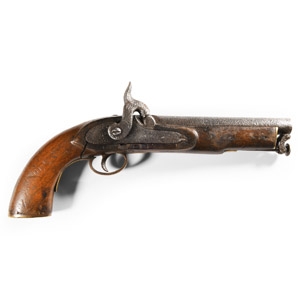
Newland Pattern Percussion Tower Pistol
19th century A.D.Sold for (Inc. bp): £234
About 5/8" bore pistol with 19cm (7½") barrel, the percussion lockplate marked 'TOWER' fitted with captive ramrod, full wood stock and butt (cracked) with brass butt cap, fore-end, ferrule and trigger guard and steel belt hook; action working. 1.17 kg, 35.5 cm
Acquired from Mostly Boxes, Northern Ireland. The Kusmirek Collection, UK. Accompanied by a Mostly Boxes invoice.
Sold as an exempt item under Section 58 (2) of the Firearms Act, 1968, to be held as a curiosity or ornament. No license required but buyer must be over 18 years of age. Overseas bidders should note that, due to UK regulations governing export of all firearms, overseas buyers will need to make arrangements for shipping this lot out of the UK directly, by air freight, with a specialist company or agent. -
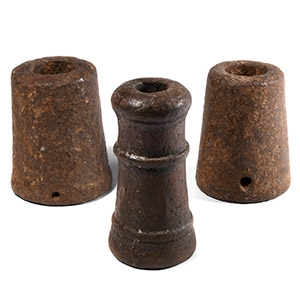
Medieval Iron Hand Cannon Collection
15th century A.D.Sold for (Inc. bp): £572
Each comprising a touch hole to base. 5.6 kg total. 9.5-12 cm
Acquired 1990s-early 2000s. East Anglian private collection.
At the beginning of the 14th century, among the infantry troops of the Western Middle Ages, developed the use of manual cannons (such as the Italian schioppetti, spingarde, and the German Fusstbusse). The new weapon had, compared to the bow and the crossbow, the advantage of not needing any particular care, of being manufactured more quickly and of being cheaper.
