
Loading, please wait...


LOT 0308
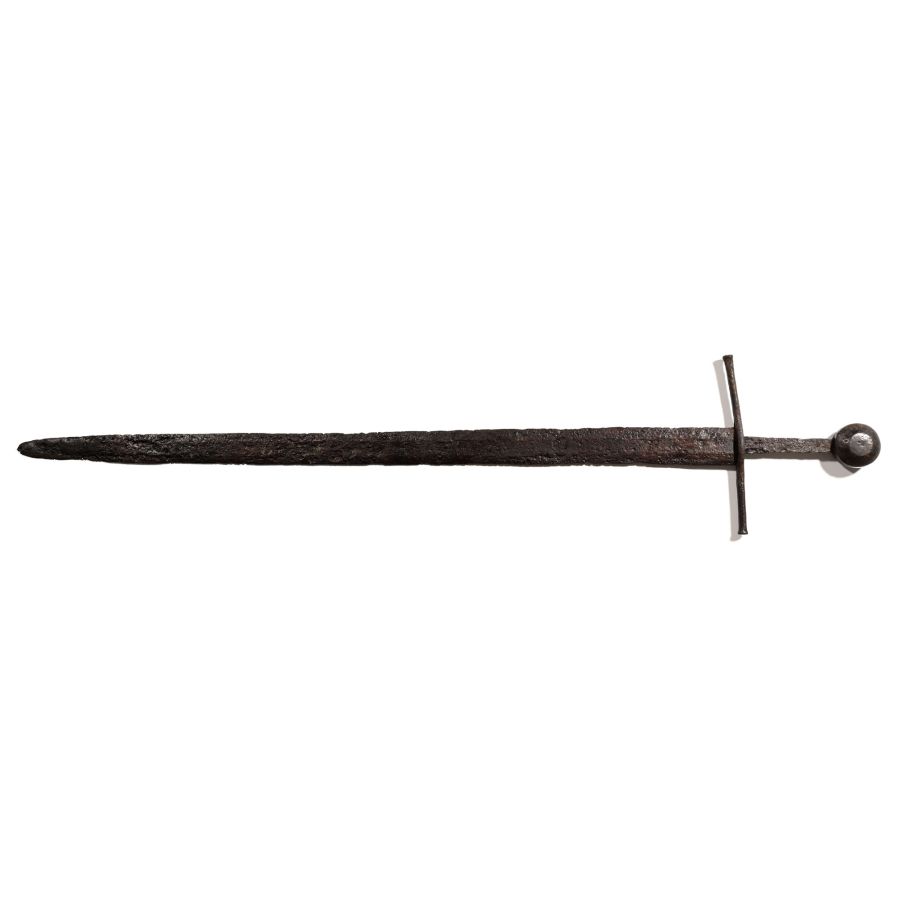
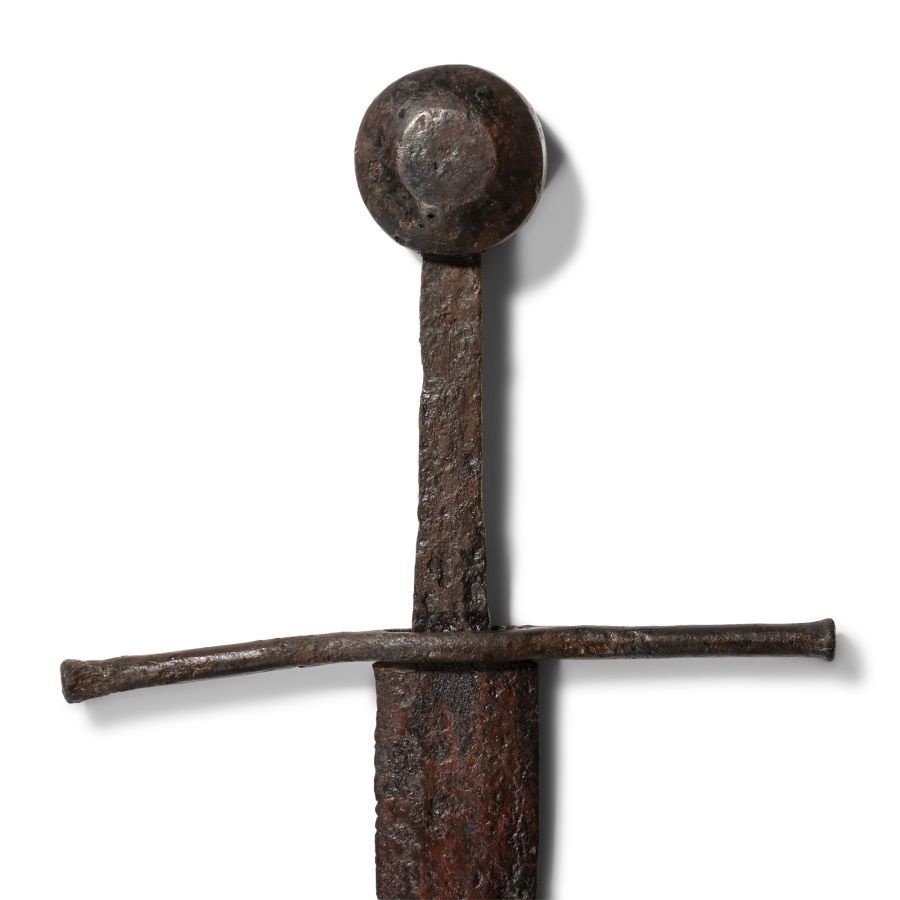
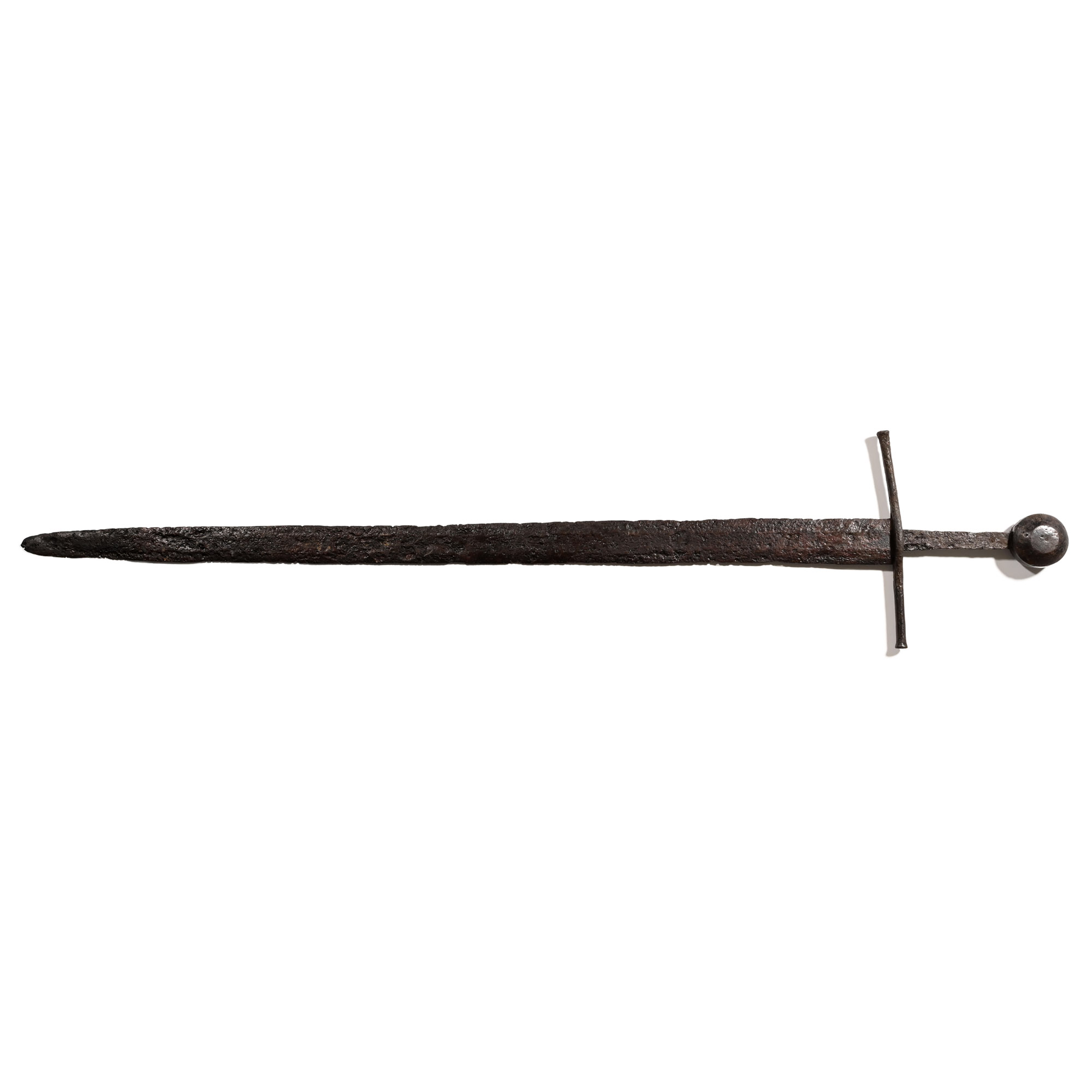
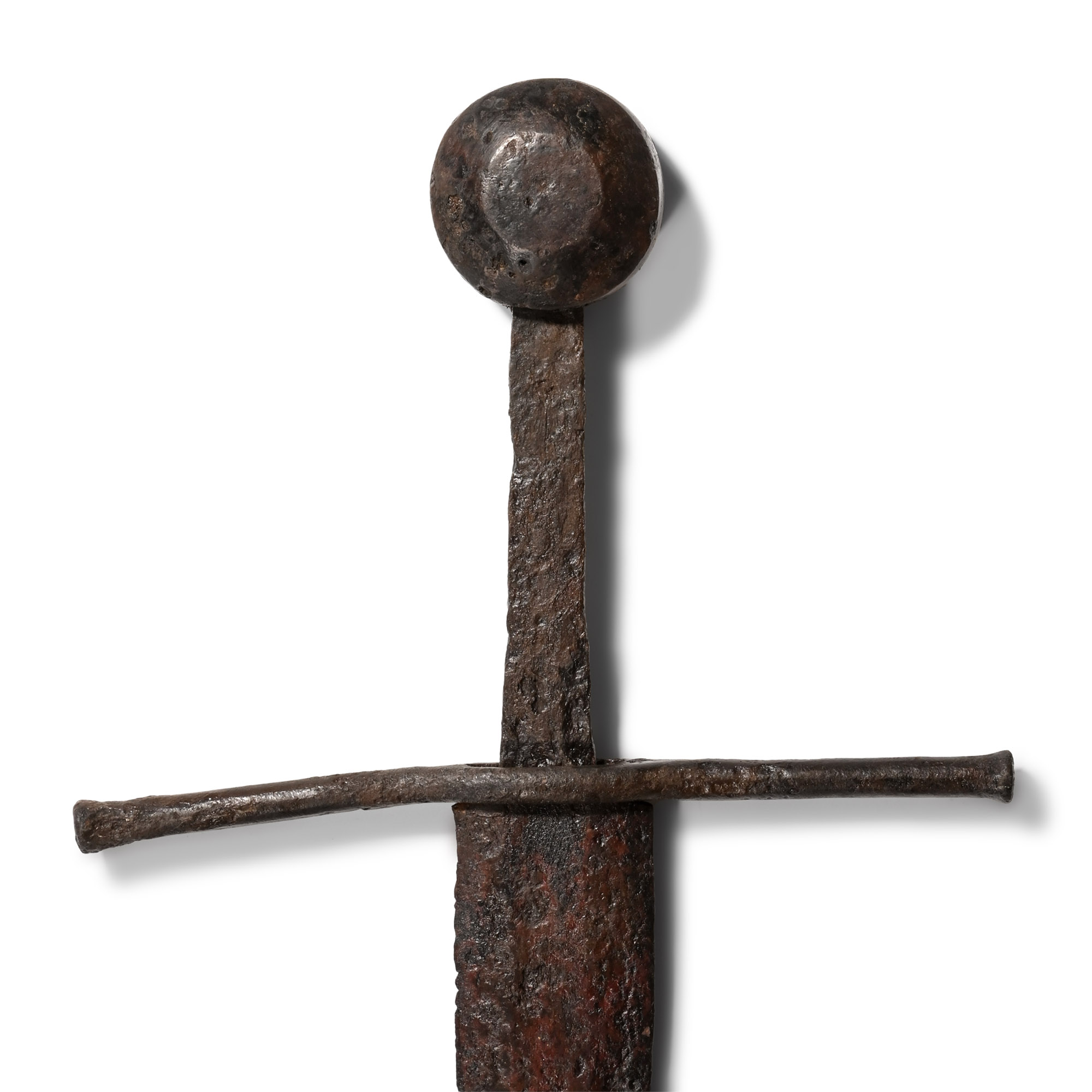
Medieval Iron Single-Handed Sword
LATE 11TH-13TH CENTURY A.D.
39 3/4 in. (1.2 kg, 1.01 m).
Double-edged tapering blade with rounded point, shallow fuller and a parallel-sided lower guard (cross style 2), the grip gently tapering, discoid pommel of type I with chamfered sides.
ProvenanceFrom the private collection of a London gentleman, from his grandfather's collection formed before the early 1970s.
Accompanied by an academic report by Dr Raffaele D'Amato.
This lot has been checked against the Interpol Database of stolen works of art and is accompanied by search certificate number no.12177-221435.
See Oakeshott, E., The sword in the Age of the Chivalry, Woodbridge, 1964 (1997); Dufty, A.R., European swords and daggers at the Tower of London, London, 1974; Oakeshott, E., Records of the Medieval Sword, Woodbridge, 1991.
FootnotesThe sword belongs to the type of ‘war swords’, although it is challenging to establish if it belongs to the type XI or type XII of Oakeshott's classification. It corresponds well with an English sword of type XI kept in the Tower Armoury (Dufty, 1974, plate 2, letter a), found in a peat bog near Newbury; but it also presents many characteristics of swords of type XII: it presents similarity to two swords excavated by Dr Jorma Leppaaho in 1950, from late Viking graves, one having a cross guard identical to our specimen and the other an identical pommel (Oakeshott, 1991, p.69, lett. V and VI); and another similar specimen is (a water find from Denmark) preserved in the Nationalmuseet of Copenhagen. In general the taper of the blade points more to the nature of the XII typology.
CONDITIONTimeLine Auctions follows a vetting process to ensure the authenticity and legality of all items, reinforcing our commitment to integrity and responsible trading. Each antiquity, antique, and coin lot undergoes thorough examination by a vetting committee of at least ten external specialists, professional trade association members, scientists, and archaeologists: Our Vetting Process
AUCTIONS:
TimeLine is a leading auction house specialising in antiquities, ancient art, collectables, natural history, coins, medals, and books. Our auctions offer museums, collectors, historians, and enthusiasts the opportunity to acquire unique and historically significant pieces.
-
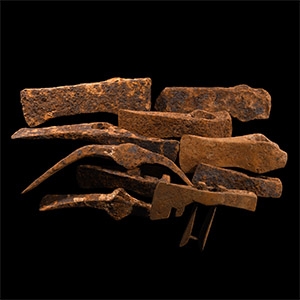
Viking Age and Later Iron Axehead Group
10th-18th century A.D.Sold for (Inc. bp): £130
Mainly comprising socketted axeheads and adzes, together with other items; including at least one stamped with maker's marks. 9.5 kg total, 14.5-28.5 cm
Acquired 1990s-early 2000s. East Anglian private collection.
An axe similar to those of our group was found in the fortified camp of Péran, in Brittany, among the objects that emerged from a conflagration due to the attack of Alain Barbetorte's Bretons on a Viking camp, in 936 A.D. These axes were certainly work tools, although in case of necessity they could also serve as improvised weapons. -
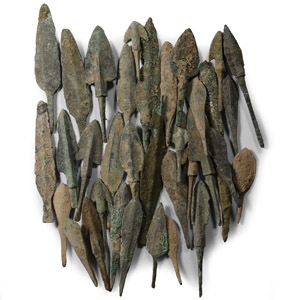
Mesopotamian Bronze Arrowhead Collection
Circa 1800-900 B.C.Sold for (Inc. bp): £247
Including leaf-shaped, barbed, and other small types. 330 grams total, 44-90 mm
Ex London, UK, collection, 1990s.
Paddle-shaped arrowheads with a flat, comparatively wide mid-rib and the blade shaped to a point were typical of Old Babylonian Empire. The shoulders were pronounced and the arrowhead had a rectangular section tapering tang. -
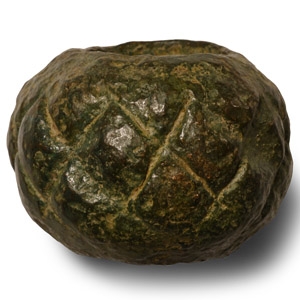
Medieval Bronze Macehead
Circa 12th-15th century A.D.Sold for (Inc. bp): £78
Spherical in profile with very broad vertical socket, lattice-pattern to the sidewall forming low studs. 262 grams, 50 mm
Private collection, Arundel, West Sussex, UK, 1975-late 1990s.
