
Loading, please wait...
LOT 0267
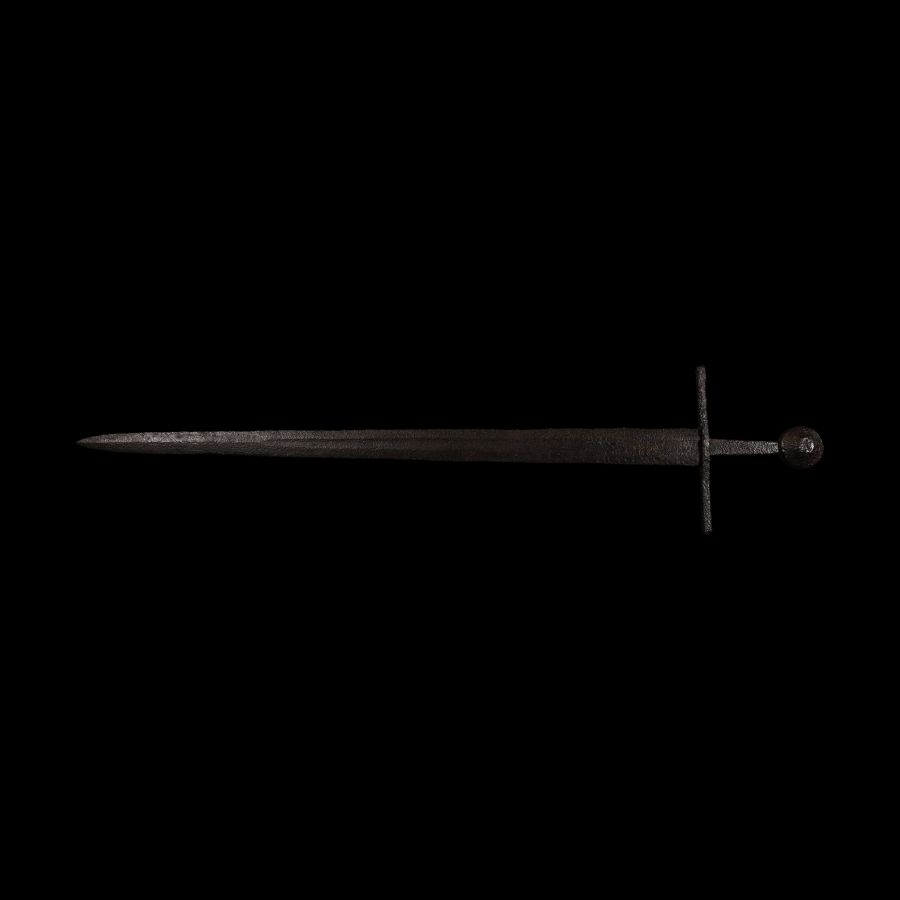
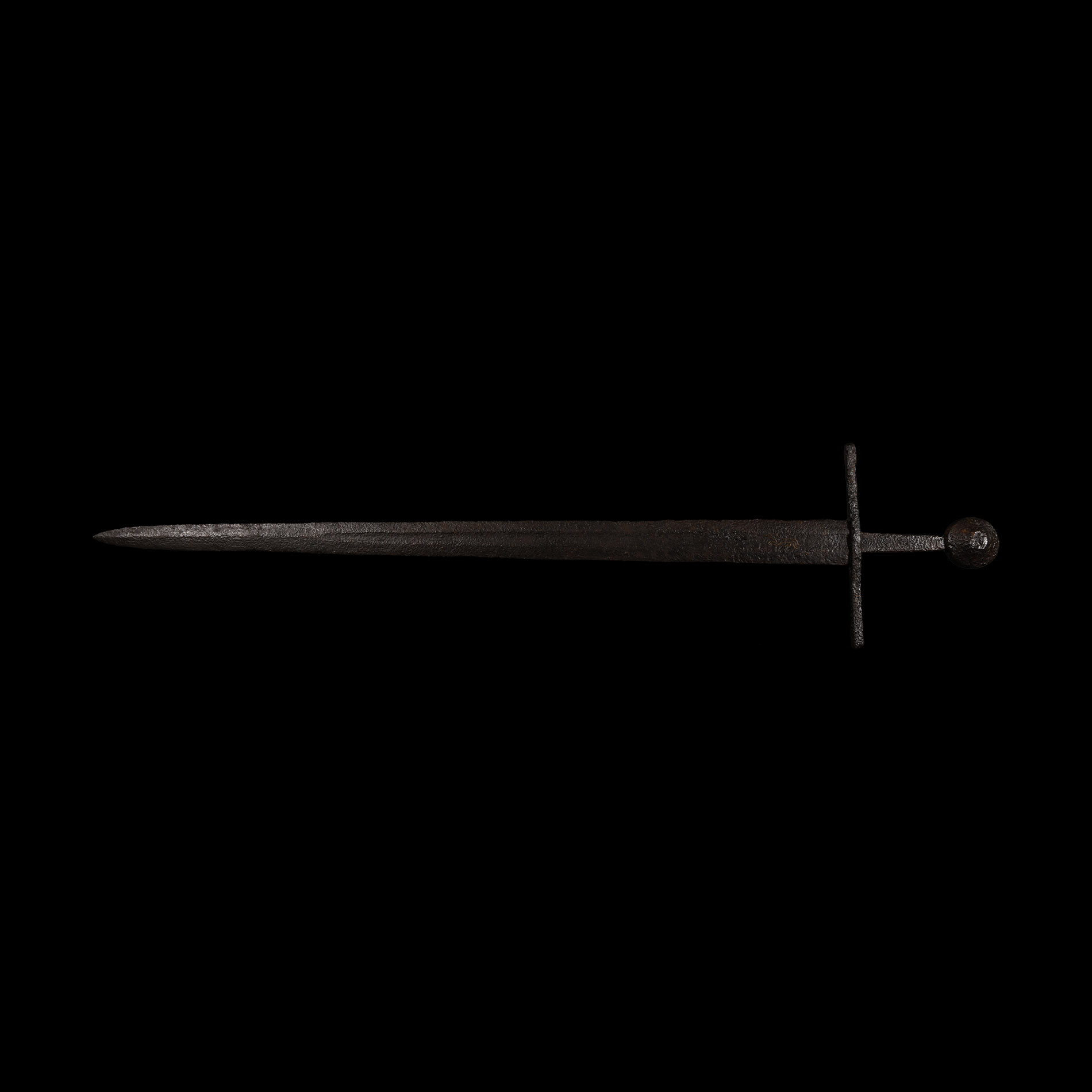
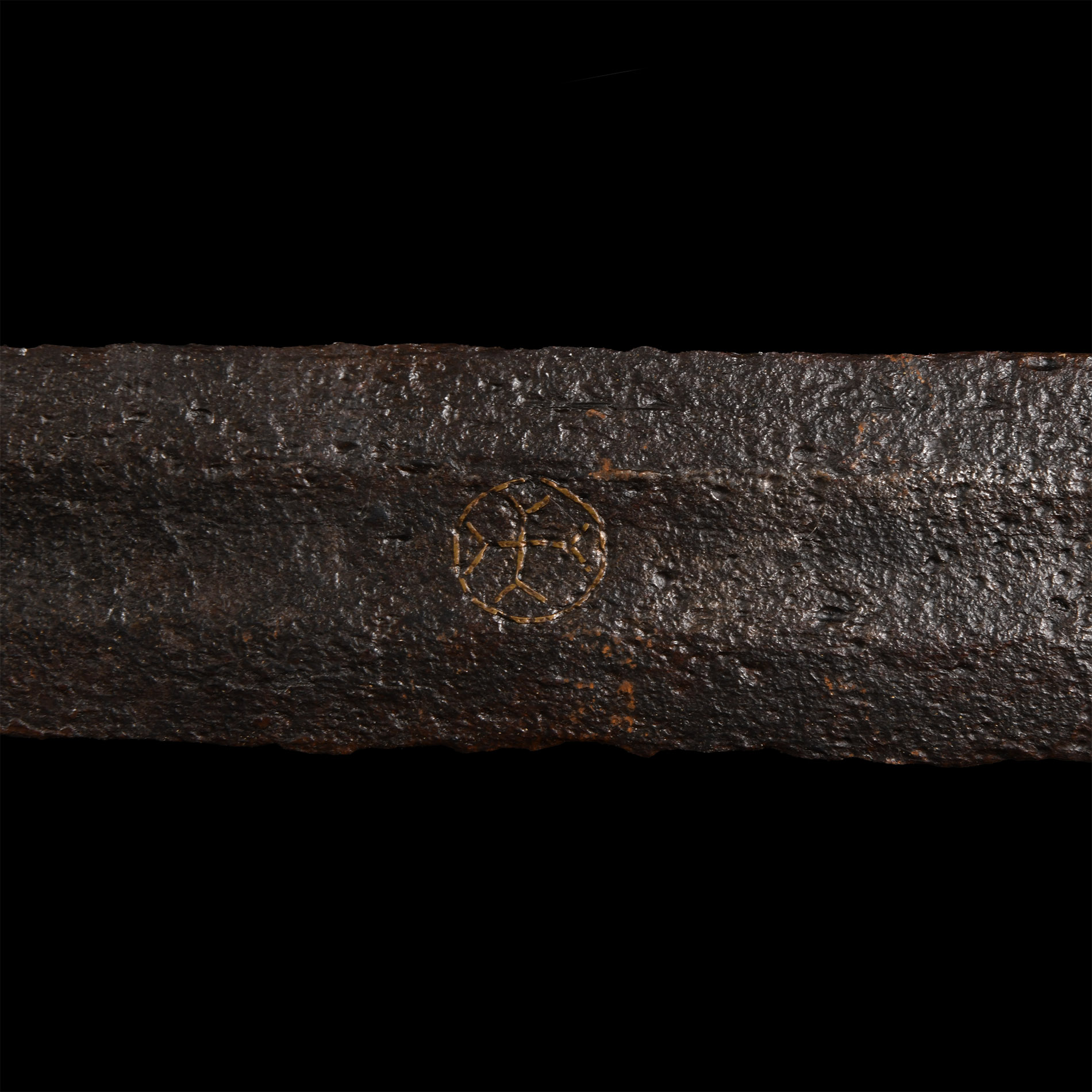
Medieval Iron Single-Handed Sword
LATE 13TH-EARLY 14TH CENTURY A.D.
37 3/8 in. (1.39 kg, 95 cm).
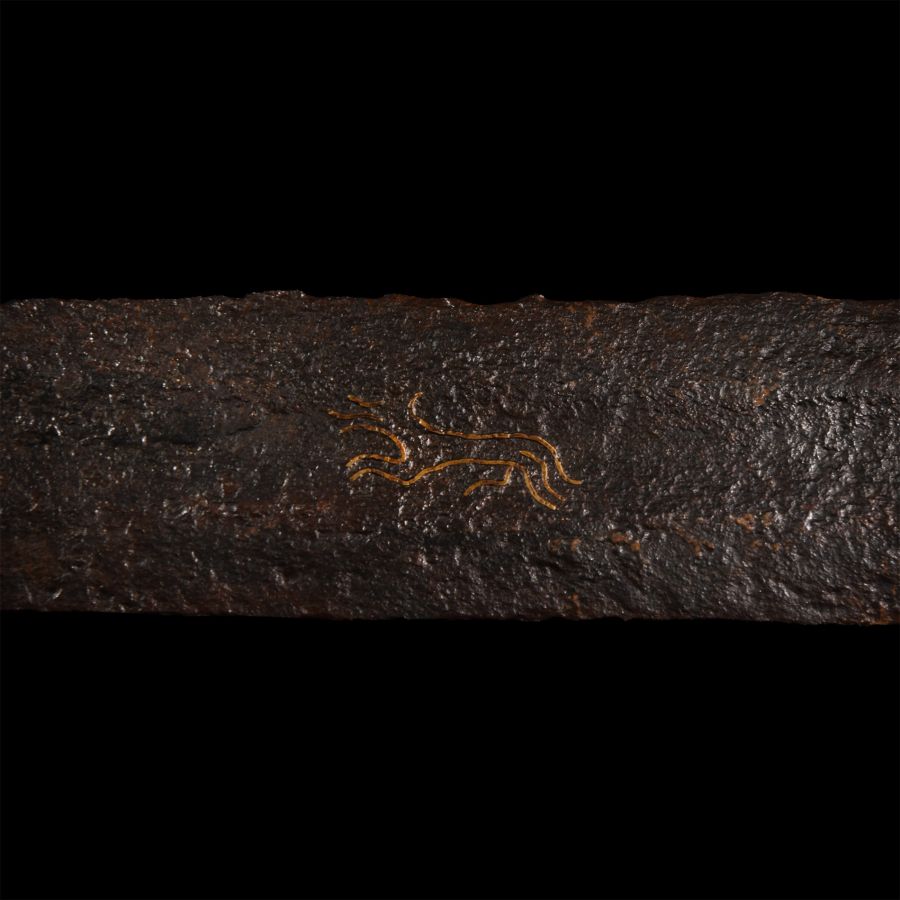
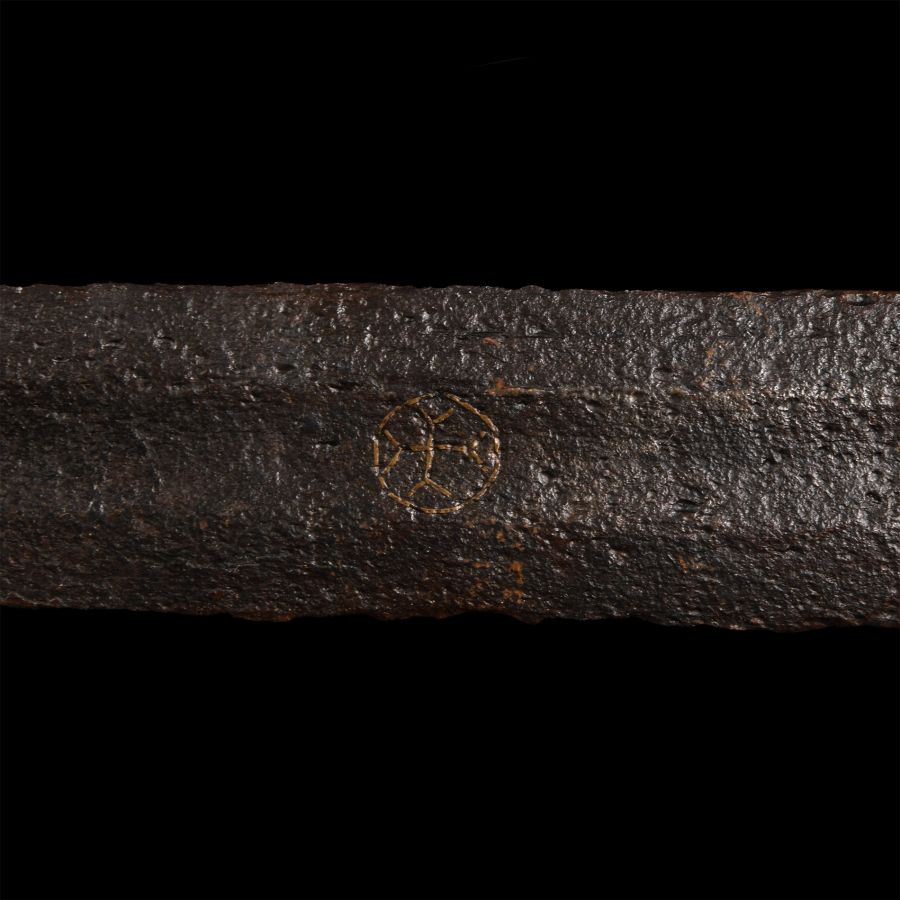
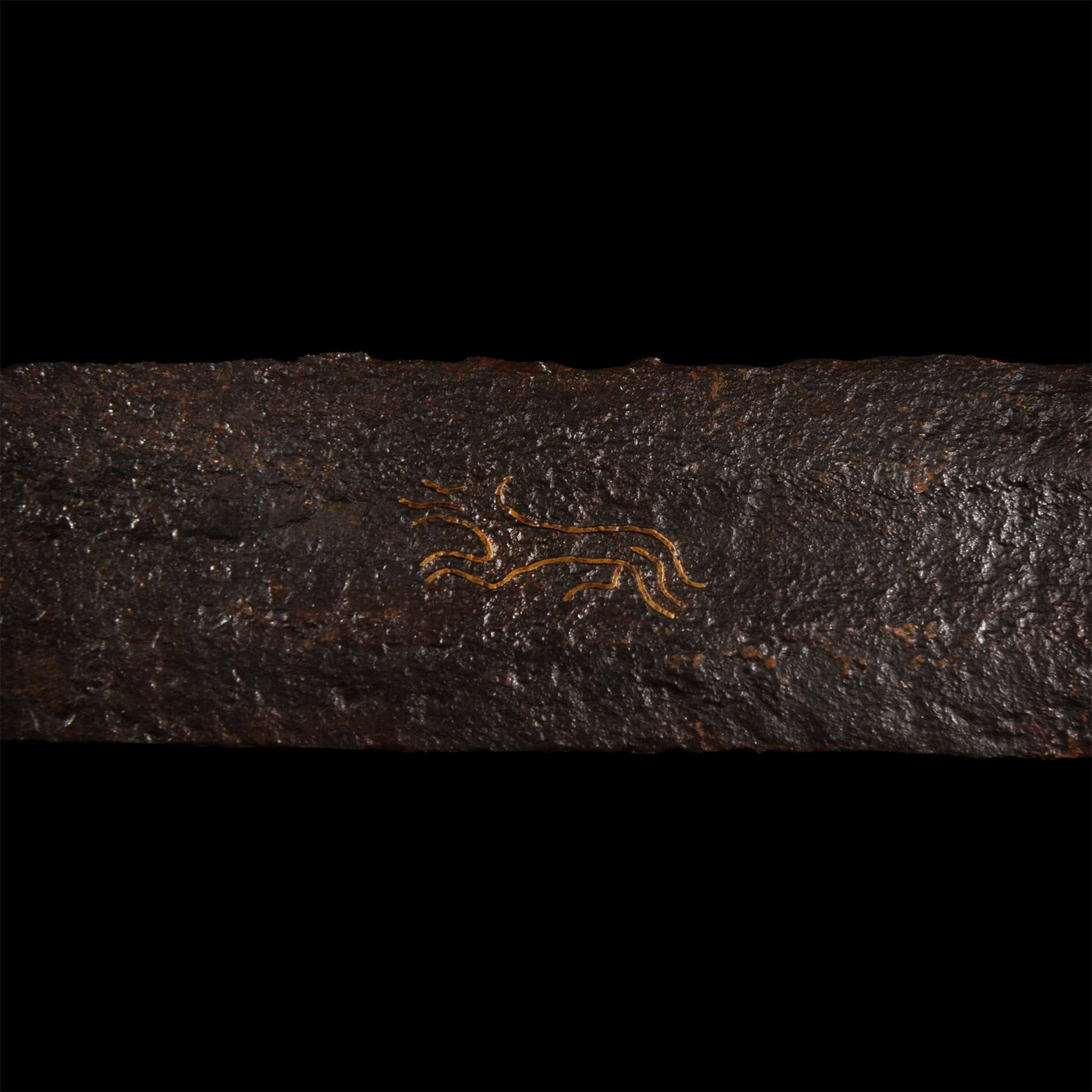
Of Oakeshott Type XII or XIII with a double-edged, well-balanced tapering blade, shallow fullers and a parallel-sided straight lower guard of cross style 2; medium tang and disc pommel of type K with chamfered sides; the blade with later inlaid markings, one side with Passau wolf, the other side with cross within a circle; cleaned and conserved.
ProvenanceAcquired 1990s-early 2000s.
East Anglian private collection.
Accompanied by an academic report by Dr Raffaele D'Amato.
See Oakeshott, E., The Sword in the Age of the Chivalry, Woodbridge, 1964 (1994); Oakeshott, E., Records of the Medieval Sword, Woodbridge, 1991; Aleksić, M., Mediaeval Swords from Southeastern Europe, material from 12th to 15th century AD, Beograd, 2007.
FootnotesThe sword’s blade presents analogies with a sword of type XIIIa (Aleksic, 2007, pl.7,1) sharing the same type of pommel and the same length of the fuller. The sword, found in the Danube near the village Visnjica, is now in the City Museum, Belgrad, and presents a cross and a wolf impressed on the blade and inlaid with a yellow metal.
CONDITIONTimeLine Auctions follows a vetting process to ensure the authenticity and legality of all items, reinforcing our commitment to integrity and responsible trading. Each antiquity, antique, and coin lot undergoes thorough examination by a vetting committee of at least ten external specialists, professional trade association members, scientists, and archaeologists: Our Vetting Process
AUCTIONS:
TimeLine is a leading auction house specialising in antiquities, ancient art, collectables, natural history, coins, medals, and books. Our auctions offer museums, collectors, historians, and enthusiasts the opportunity to acquire unique and historically significant pieces.
-
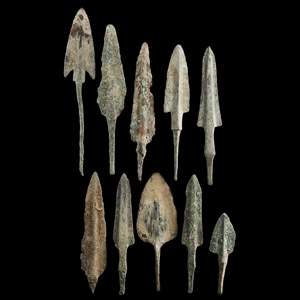
Luristan Bronze Arrowhead Group
2nd-1st millennium B.C.Estimate: £150 - 200 (+bp*)
Opening Bid: £80
Composed of tanged arrowheads of leaf-shaped and barbed types, most with midribs. 182 grams total, 6.4-12 cm
Acquired 1990s. From the collection of a late Japanese weaponry collector. -
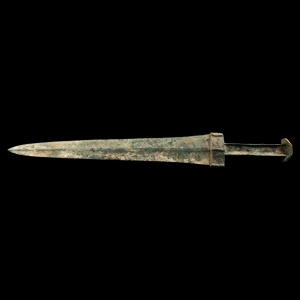
Luristan Bronze Dagger
2nd-1st millennium B.C.Estimate: £300 - 400 (+bp*)
Opening Bid: £160
Comprising a narrow double-edged blade, triangular in profile with raised midrib, rectangular guard with flanges, rectangular grip with lateral flanges to accept an organic grip, curved integral finial. 312 grams, 43 cm
Ex German collection, Cologne, 1980-1990s.
This weapon is typical of the cemeteries dating to the local Late Bronze Age (1300-1000 B.C.). The blade is still triangular but the crescentic pommel is reduced and flanged to be filled with organic material such as bone or wood. -
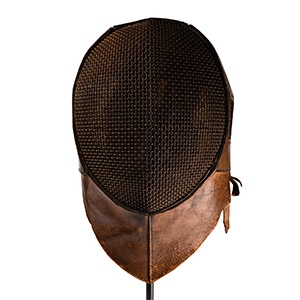
British Leather Fencing Helmet
Circa 1890-1920s A.D.Estimate: £250 - 350 (+bp*)
Opening Bid: £83
By Lillywhite Frowd Co of London, fitted with neck fringe, stamped buckled securing strap and wire mesh face and ear panels, padded lining internally marked 'broad arrow-over-67' so likely a military issue. 2.0 kg, 39 cm
Acquired from Manfred Schotten Antiques, 2016. The Kusmirek Collection, UK. Accompanied by a copy of Manfred Schotten invoice and listing.
Although masks/helmets of this general form are typically associated with sword fencing, this example is of very heavy construction so possibly for use in protecting while training with a heavier weapon than a foil or epee.
