
Loading, please wait...
LOT 1900
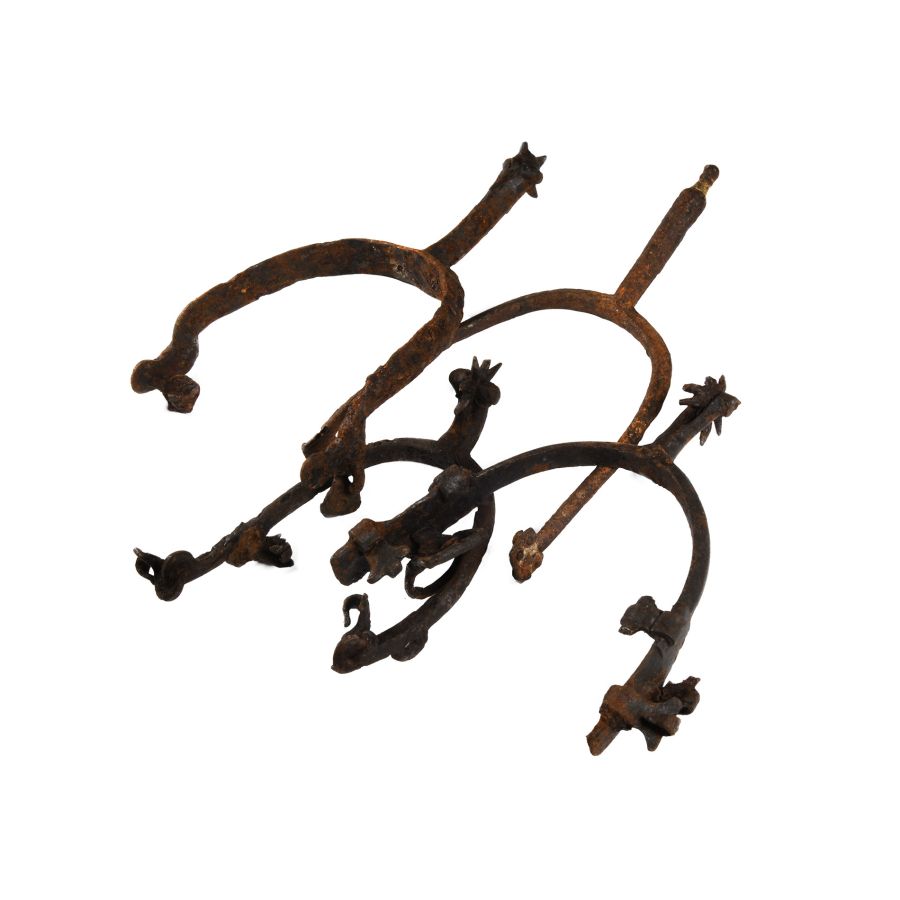
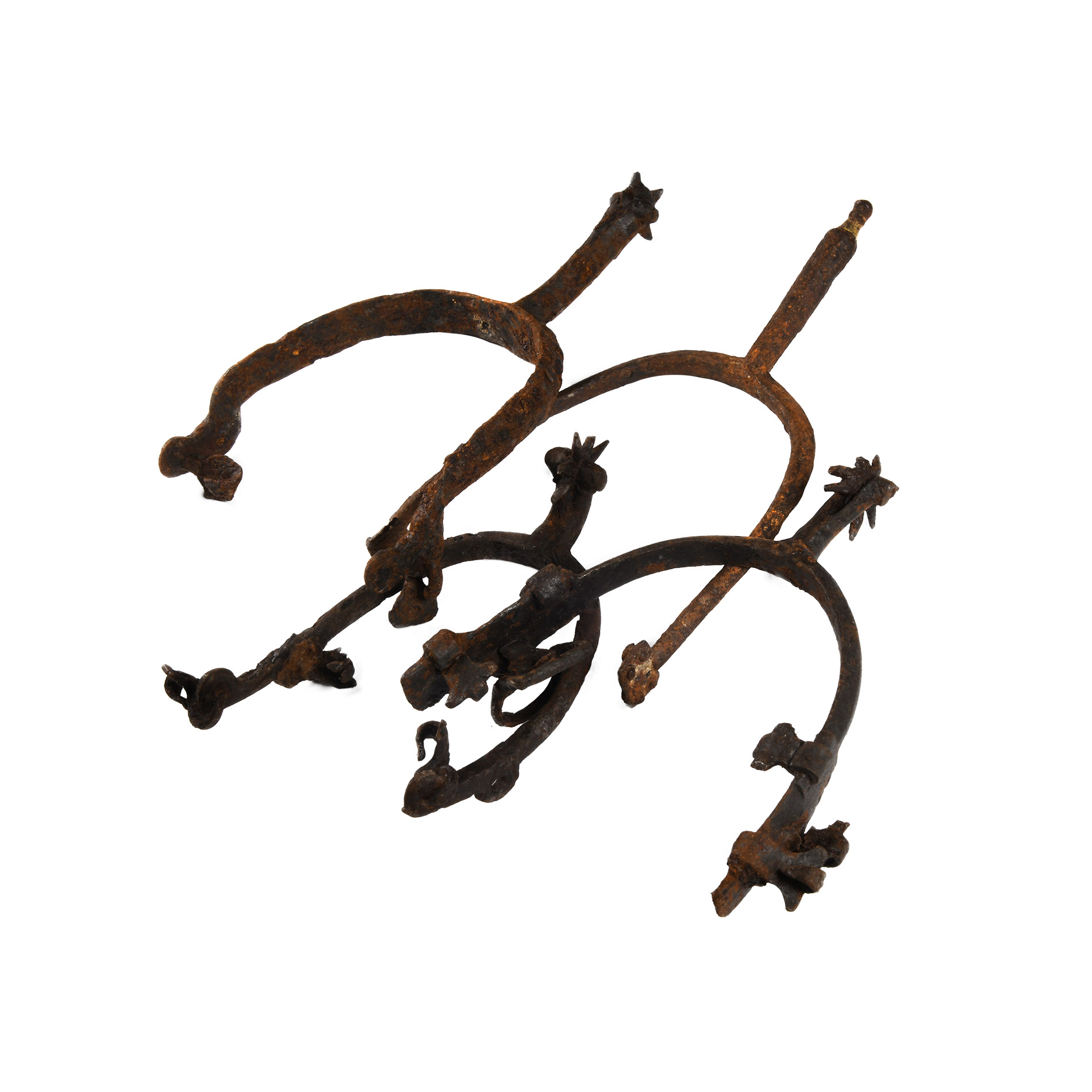
Medieval Iron Rowel Spur Collection
CIRCA 14TH-16TH CENTURY A.D.
5 1/4 - 6 in. (313 grams total, 13.3-15.3 cm).
Comprising spurs of various sizes; including examples retaining rowels and buckles. [3, No Reserve]
ProvenanceAcquired 1990s-early 2000s.
East Anglian private collection.
Cf. similar specimen in the British Museum, inventory no.1856,0701.2525, dated 1250-1350 A.D.
FootnotesEarly in 16th century, fashion of spurs changed and the spur were fitted with a much shorter, dropped neck, their rowels ranging from medium seven-point to large short seven points.
CONDITIONTimeLine Auctions follows a vetting process to ensure the authenticity and legality of all items, reinforcing our commitment to integrity and responsible trading. Each antiquity, antique, and coin lot undergoes thorough examination by a vetting committee of at least ten external specialists, professional trade association members, scientists, and archaeologists: Our Vetting Process
AUCTIONS:
TimeLine is a leading auction house specialising in antiquities, ancient art, collectables, natural history, coins, medals, and books. Our auctions offer museums, collectors, historians, and enthusiasts the opportunity to acquire unique and historically significant pieces.
-

Norman Bronze Hunting Dog Swivel Collection
11th-12th century A.D.Sold for (Inc. bp): £104
Elaborate swivel with large openwork bulbs and decorative motifs; many of these objects are published in the Detector Finds book series. 103 grams total, 32-47 mm
From the collection of the famous author, writer and speaker, Gordon Bailey, Essex, UK; formed since 1968. -
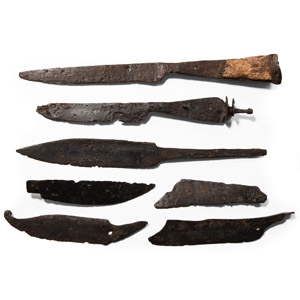
Medieval and Later Iron Knife Collection
14th-16th century A.D.Sold for (Inc. bp): £39
Including scale-tang and whittle-tang types; many of these objects are published in the Detector Finds book series. 145 grams total, 8.1-19.6 cm
From the collection of the famous author, writer and speaker, Gordon Bailey, Essex, UK; formed since 1968. -
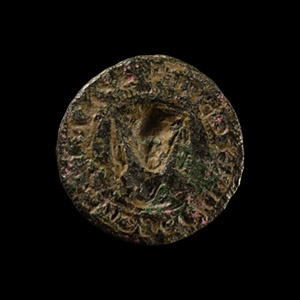
Medieval 'Published' Bronze Seal Matrix with Bust
14th century A.D.Sold for (Inc. bp): £111
Discoid seal with loop to the reverse, legend and central device of the vernicle. 4.07 grams, 21 mm
From the collection of the famous author, writer and speaker, Gordon Bailey, Essex, UK; formed since 1968.
