
Loading, please wait...
LOT 1564
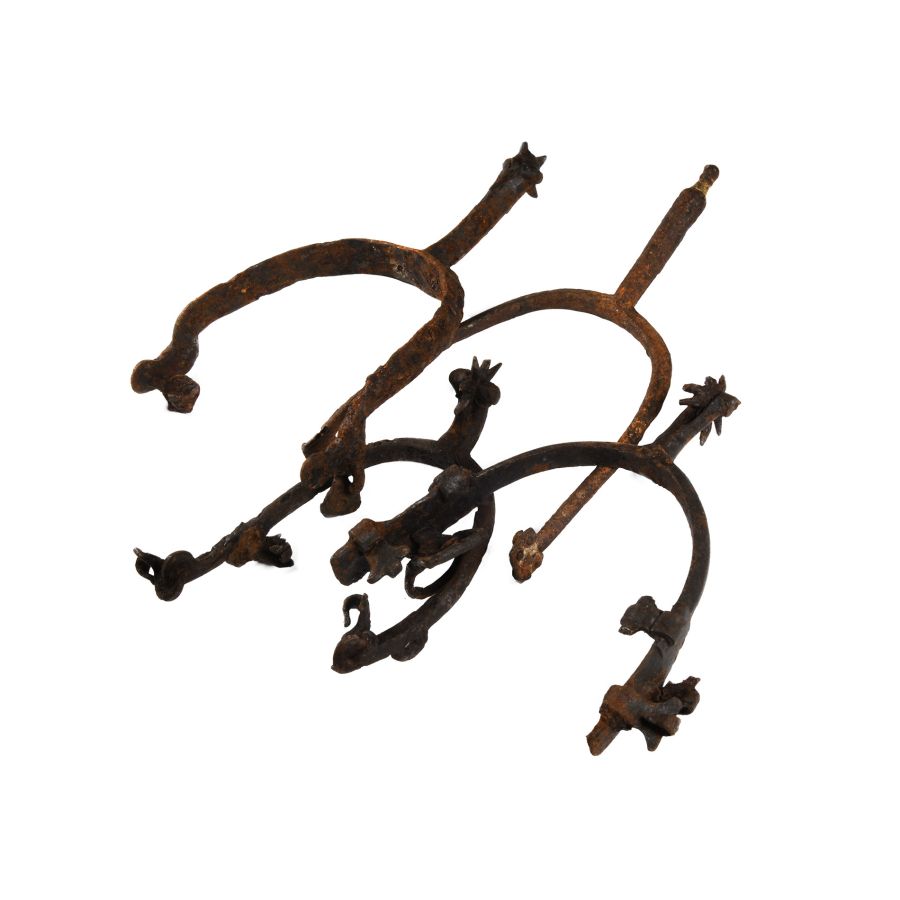
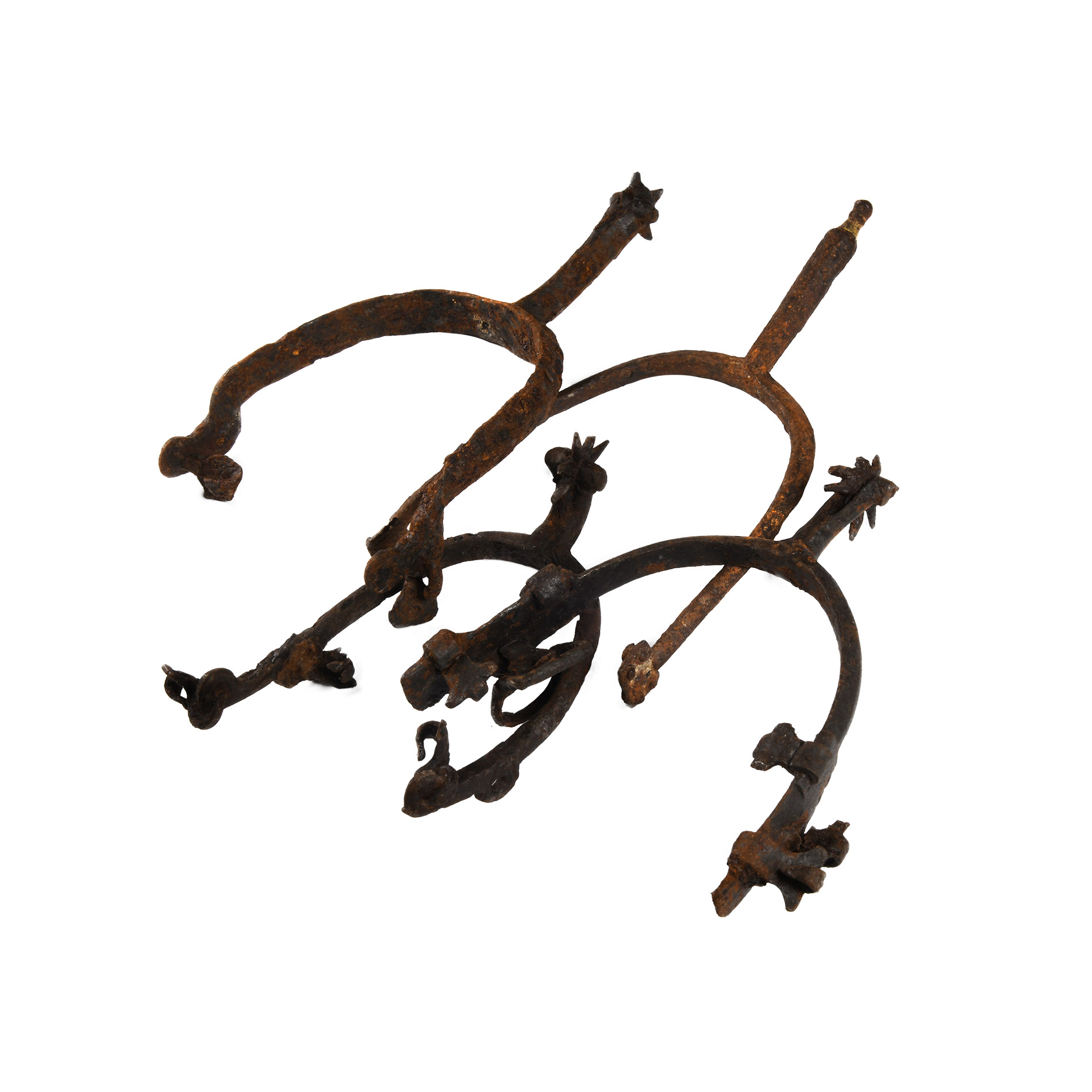
Medieval Iron Rowel Spur Collection
CIRCA 14TH-16TH CENTURY A.D.
5 1/4 - 6 in. (313 grams total, 13.3-15.3 cm).
Comprising spurs of various sizes; including examples retaining rowels and buckles. [3]
ProvenanceAcquired 1990s-early 2000s.
East Anglian private collection.
Cf. similar specimen in the British Museum, inventory no.1856,0701.2525, dated 1250-1350 A.D.
FootnotesEarly in 16th century, fashion of spurs changed and the spur were fitted with a much shorter, dropped neck, their rowels ranging from medium seven-point to large short seven points.
CONDITIONTimeLine Auctions follows a vetting process to ensure the authenticity and legality of all items, reinforcing our commitment to integrity and responsible trading. Each antiquity, antique, and coin lot undergoes thorough examination by a vetting committee of at least ten external specialists, professional trade association members, scientists, and archaeologists: Our Vetting Process
AUCTIONS:
TimeLine is a leading auction house specialising in antiquities, ancient art, collectables, natural history, coins, medals, and books. Our auctions offer museums, collectors, historians, and enthusiasts the opportunity to acquire unique and historically significant pieces.
LOT 1564
Medieval Iron Rowel Spur Collection
Estimate £100 - 140€120 - 160 (for guidance only)$140 - 190 (for guidance only)
-
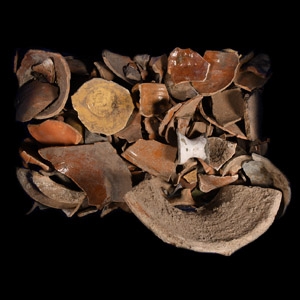
Medieval and Later Dutch Pottery Pit Dug Fragment Group
Circa 15th-17th century A.D.Sold for (Inc. bp): £20
Most glazed and from various vessel types, including examples with decoration. 17 kg total, 2-31 cm
Acquired 1990s-early 2000s. East Anglian private collection. -
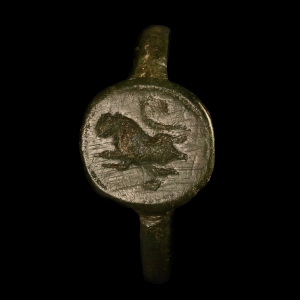
Medieval Bronze Ring with Leaping Lion
14th-16th century A.D.Sold for (Inc. bp): £104
Discoid bezel with incuse leaping lion motif, with curled tail. 1.48 grams, 21.61 mm overall, 19.40 mm internal diameter (approximate size British O, USA 7, Europe 14.98, Japan 14)
Private collection formed since the 1940s. UK art market. Property of an Essex gentleman. -
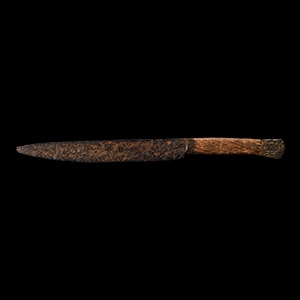
Medieval Iron Knife with Bronze Pommel
Circa 1500 A.D.Estimate: £200 - 300 (+bp*)
Opening Bid: £80
Comprising a single cutting edge and scale tang, bifacial pommel incised with a female figure possibly holding an arrow to one face and what is apparently a mythical beast or other animal to the other. 23 grams, 18.7 cm
Acquired 1960s-1990s. Late Alison Barker collection, a retired London barrister.
Examining the medieval miniatures, the knives were diagonally suspended, but the vertical suspension was the most common method in all periods. With the contrivance of an additional inner scabbard it was possible to carry more than one knife.
