
Loading, please wait...
LOT 1439
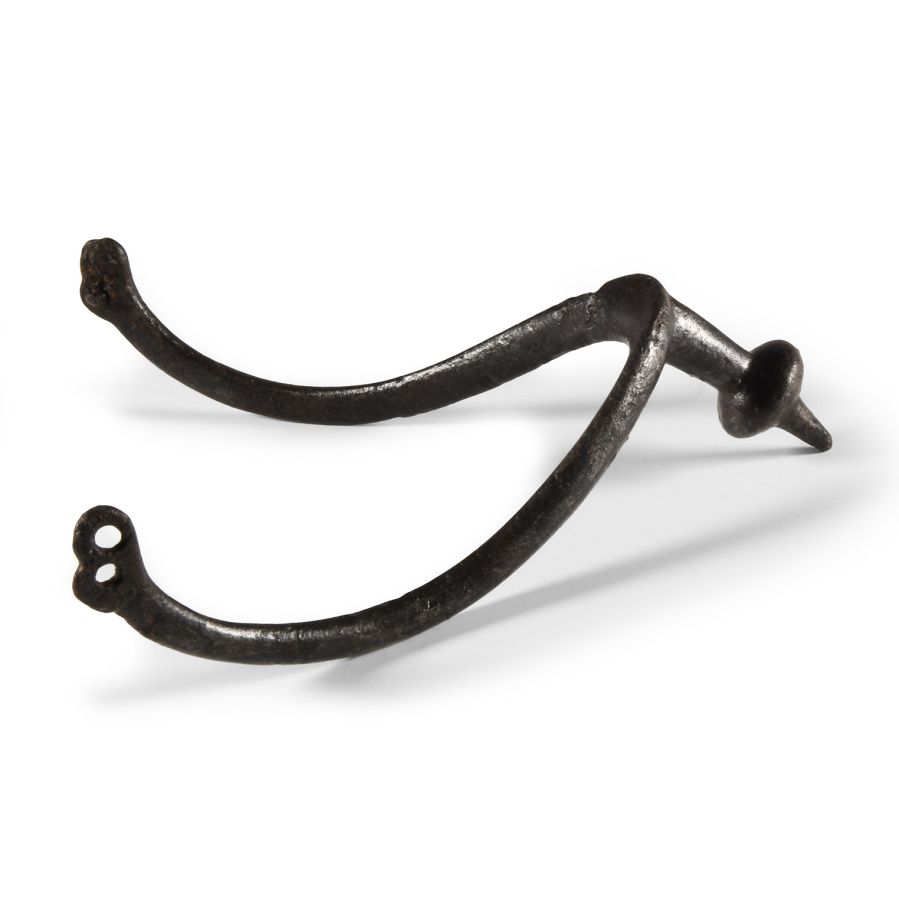
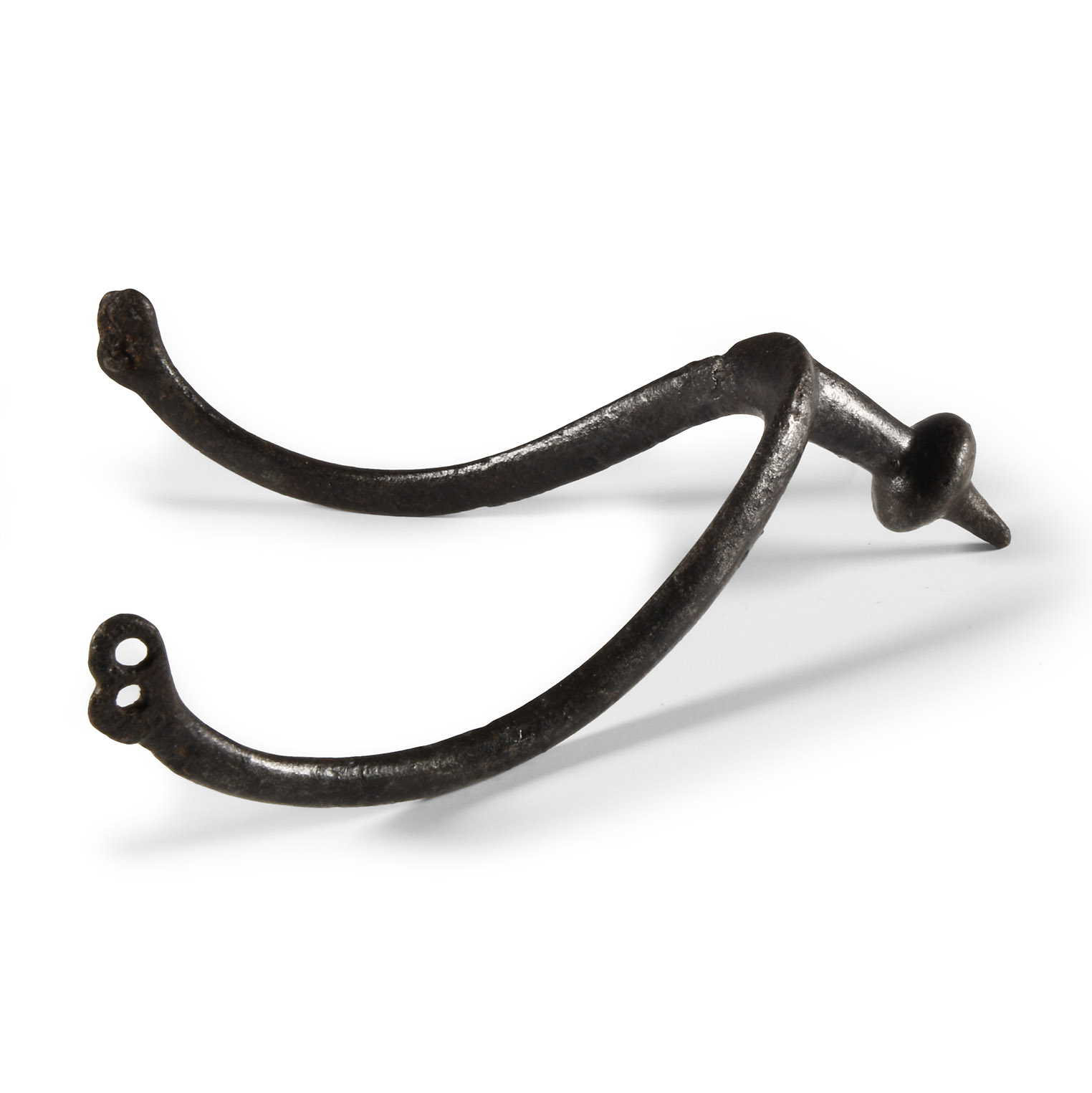
Medieval Iron Prick Spur
CIRCA 12TH CENTURY A.D.
5 1/8 in. (73 grams, 13 cm).
With abruptly curved arms ending in two loops, the prick with biconvex bulb. [No Reserve]
ProvenanceEx B Posey collection, 1990s.
Ex Den of Antiquity, Cambridgeshire, UK.
Accompanied by a dealer's catalogue information card.
TimeLine Auctions follows a vetting process to ensure the authenticity and legality of all items, reinforcing our commitment to integrity and responsible trading. Each antiquity, antique, and coin lot undergoes thorough examination by a vetting committee of at least ten external specialists, professional trade association members, scientists, and archaeologists: Our Vetting Process
AUCTIONS:
TimeLine is a leading auction house specialising in antiquities, ancient art, collectables, natural history, coins, medals, and books. Our auctions offer museums, collectors, historians, and enthusiasts the opportunity to acquire unique and historically significant pieces.
-
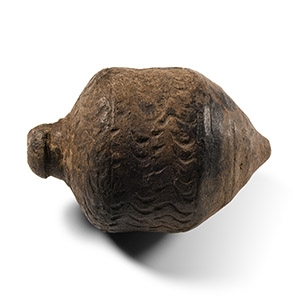
Byzantine 'Greek Fire' Ceramic Fire Bomb or Hand Grenade
9th-11th century A.D.Sold for (Inc. bp): £286
With domed filler-hole, broad shoulder, alternating bands of crescent impressed detailing; intended to be filled with explosive liquid and wick, used as a hand grenade. 242 grams, 10.1 cm
From a collection acquired on the UK art market from various auction houses and collections mostly before 2000. From an important Cambridgeshire estate; thence by descent. Accompanied by an academic paper by military specialist Dr Raffaele D'Amato, dated 15 July 2019 and titled 'Eastern Roman Empire - Greek Fire Bomb or Hand Grenade (μεσαίον kακάβιον) 9th-11th century AD'.
Apart from the use of siphons or manual flame-throwers called cheirosiphona, special corps of Roman soldiers employed terracotta grenades, in the form of small jars, abundantly evidenced in archaeological excavations. Such were the γανωτα, vessels (sometimes also of bronze) used for Greek fire. They were called μεσαία kακαβιά or κυτροκακάβια where the former had a bulbous shape and the latter a more cylindrical form. -
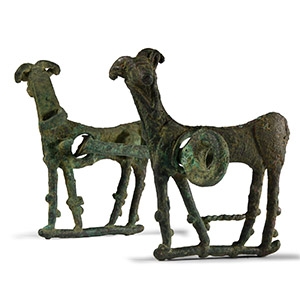
Luristan Bronze Horse Bit with Animals
Circa 11th-7th century B.C.Estimate: £1,500 - 2,000 (+bp*)
Opening Bid: £700
Comprising a pair of ram-shaped cheek-pieces with a hole through the body for the straight mouthpiece with looped terminals. 690 grams, 17.5 cm wide
From a collection formed in Paris in the 1990s.
The horse bits were transformed by Luristan people in to expressions of applied art. Metalworkers employed animal motifs, both realistic and imaginary, for their cheek-pieces. The question of whether these horse bits were for real use or only for use in a funerary context is superfluous, as signs of wear have been documented, and the goads and loops on interiors are functionally designed. The use of such horse bits is clearly documented in Assyrian reliefs of the time of Sennacherib (705-681 B.C.). -
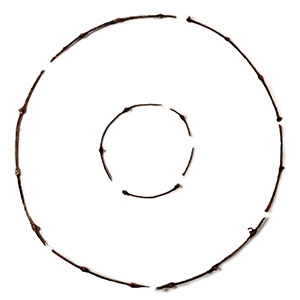
Cuman-Qipchak Iron Shield Rim Group
12th-13th century A.D.Sold for (Inc. bp): £104
Square in section and curved in profile with pierced lobes and attachment rivets. 252 grams total, 7.2-43 cm
UK gallery, early 2000s.
These kind of shields are often found in the burials of nomadic warriors of Eastern Europe accompanied by certain sets of weapons — four-part helmets, quiver kits, sabers and a spearhead. Such graves contained the remains of similar wooden shields with metal parts. Determining the dating of these burial complexes in the framework of the Golden Horde time, the Archaeologists dwell in detail on the attribution of the helmets and the remnants of the shields, linking their appearance in the Northeast Black Sea Coast with the resettlement here of the black hoods from Southern Russia in 1260s.
