
Loading, please wait...
LOT 1440
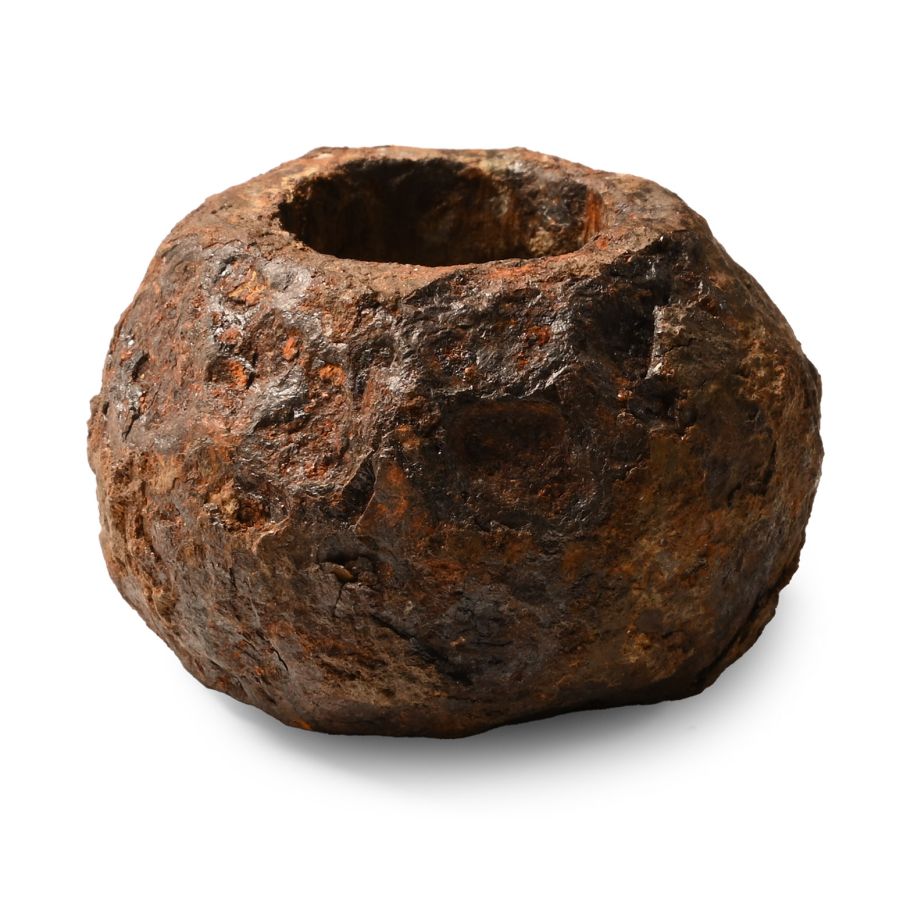
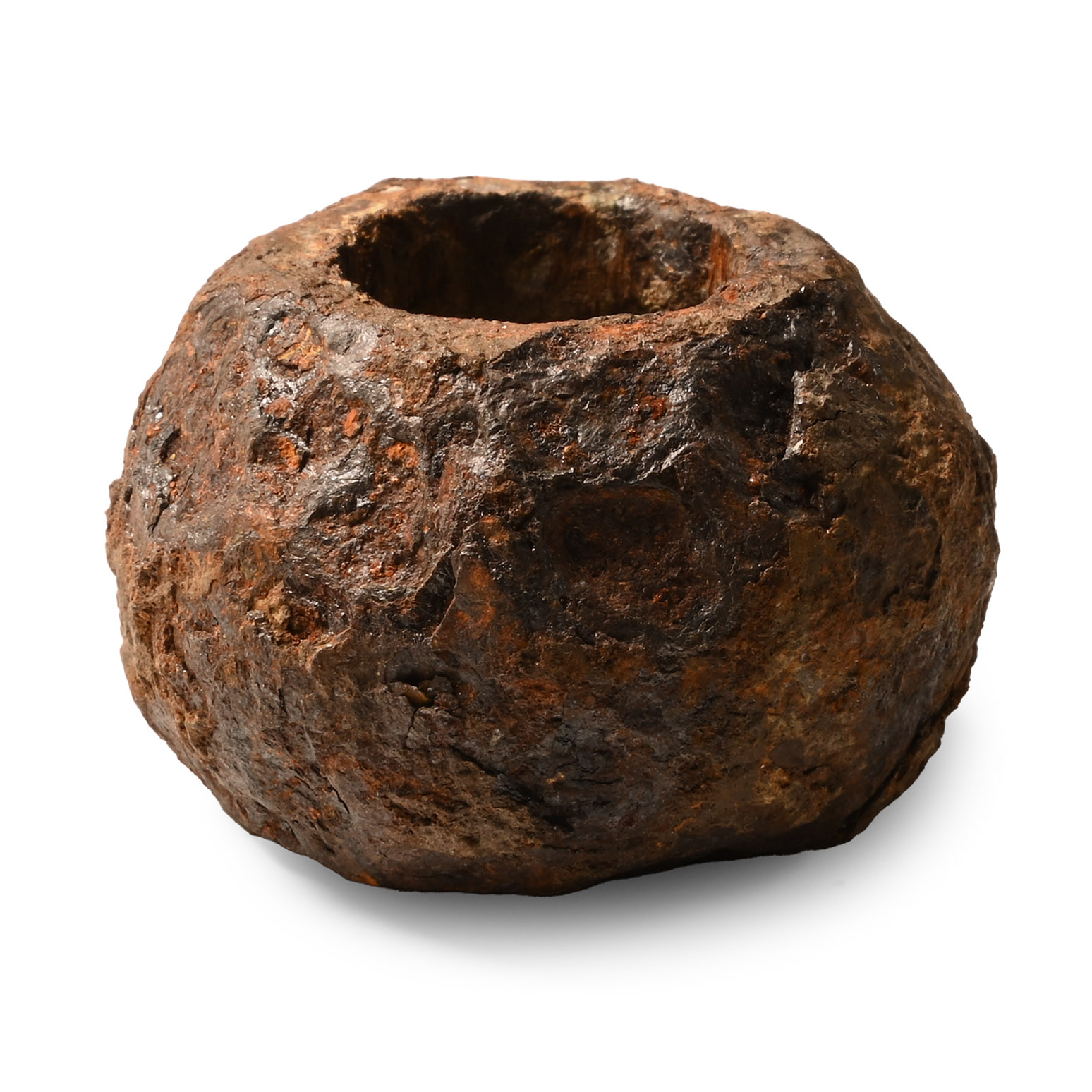
Medieval Iron Macehead
CIRCA 12TH-15TH CENTURY A.D.
1 5/8 in. (133 grams, 41 mm).
Displaying shallow striations running diagonally around the body; cylindrical socket. [No Reserve]
ProvenancePrivate collection, Arundel, West Sussex, UK, 1975-late 1990s.
LiteratureCf. Milovanic, D., Metalwork in Serbia (in Serbian), Belgrade, 1986, fig.342, for similar specimen.
CONDITIONTimeLine Auctions follows a vetting process to ensure the authenticity and legality of all items, reinforcing our commitment to integrity and responsible trading. Each antiquity, antique, and coin lot undergoes thorough examination by a vetting committee of at least ten external specialists, professional trade association members, scientists, and archaeologists: Our Vetting Process
AUCTIONS:
TimeLine is a leading auction house specialising in antiquities, ancient art, collectables, natural history, coins, medals, and books. Our auctions offer museums, collectors, historians, and enthusiasts the opportunity to acquire unique and historically significant pieces.
-
.jpg)
Migration Period Iron Sword with Bronze Pommel
5th-6th century A.D.Sold for (Inc. bp): £1,235
A spatha with a double-edged parallel-sided blade, battle nicks to both cutting edges; long tang with a fastening rivet in situ; small trapezoidal bronze pommel. 707 grams, 91 cm
From the private collection of a London gentleman, from his grandfather's collection formed before the early 1970s. Accompanied by an academic report by Dr Raffaele D’Amato. This lot has been checked against the Interpol Database of stolen works of art and is accompanied by a search certificate number no.12040-216429.
The spatha, often with an elegantly decorated hilt with golden elements, was characterised by a relatively light handle so that the centre of gravity of the weapon was moved towards the tip. The evolution of the 'barbarian' long sword in the west, during the invasions, began around the 5th century. -
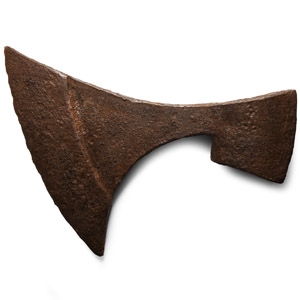
Medieval Iron Broad Axehead with Maker's Mark
Circa 14th-15th century A.D.Sold for (Inc. bp): £468
The socket D-shaped in plan with gently curved rear edge, narrow neck ad swept curve to the blade with forge-welded steel edge; lateral stamped mark. 700 grams, 210 mm
Ex private North American collection, California, USA, 1970s-1990s. -
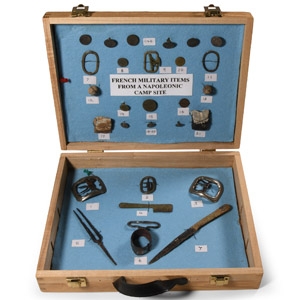
Cased Napoleonic 'Published' French Military Artefact Collection
Early 19th century A.D.Sold for (Inc. bp): £338
Including musketballs, military buckles and frames, musket flints, buttons, a single-edged knife and other items in a hinged wooden case; many of these objects are published in the Detector Finds book series. 1.56 kg total, 32 x 25 x 7.5 cm including case
From the collection of the famous author, writer and speaker, Gordon Bailey, Essex, UK; formed since 1968.
