
Loading, please wait...
LOT 1420
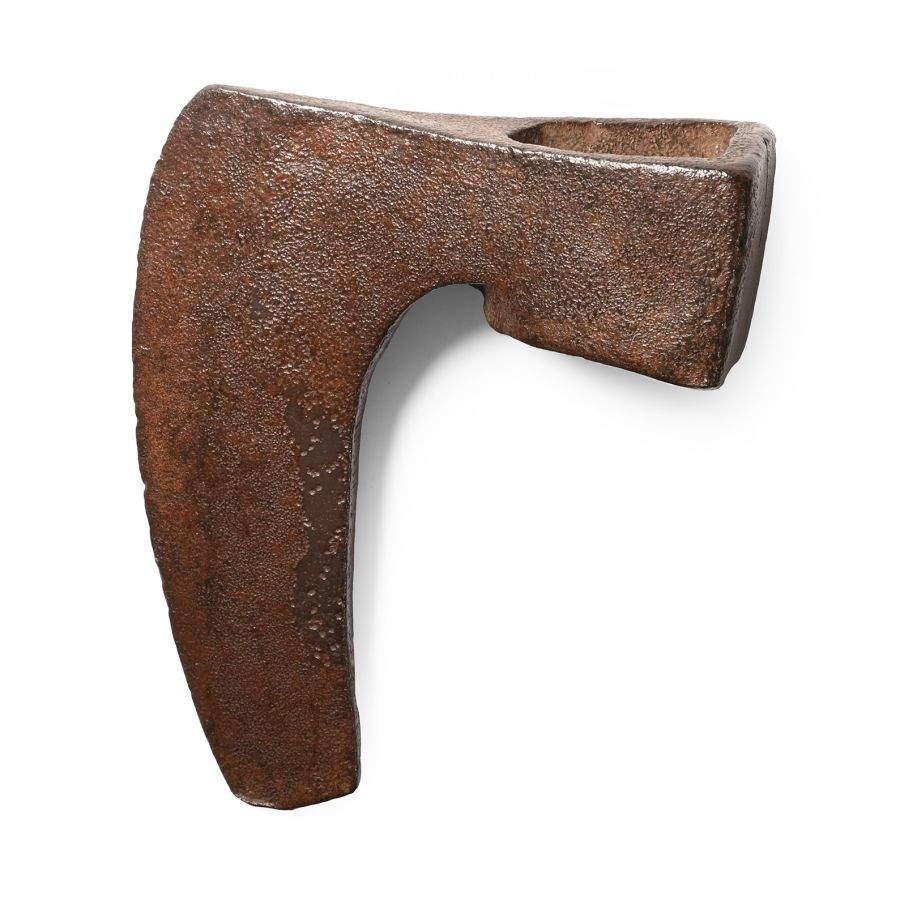
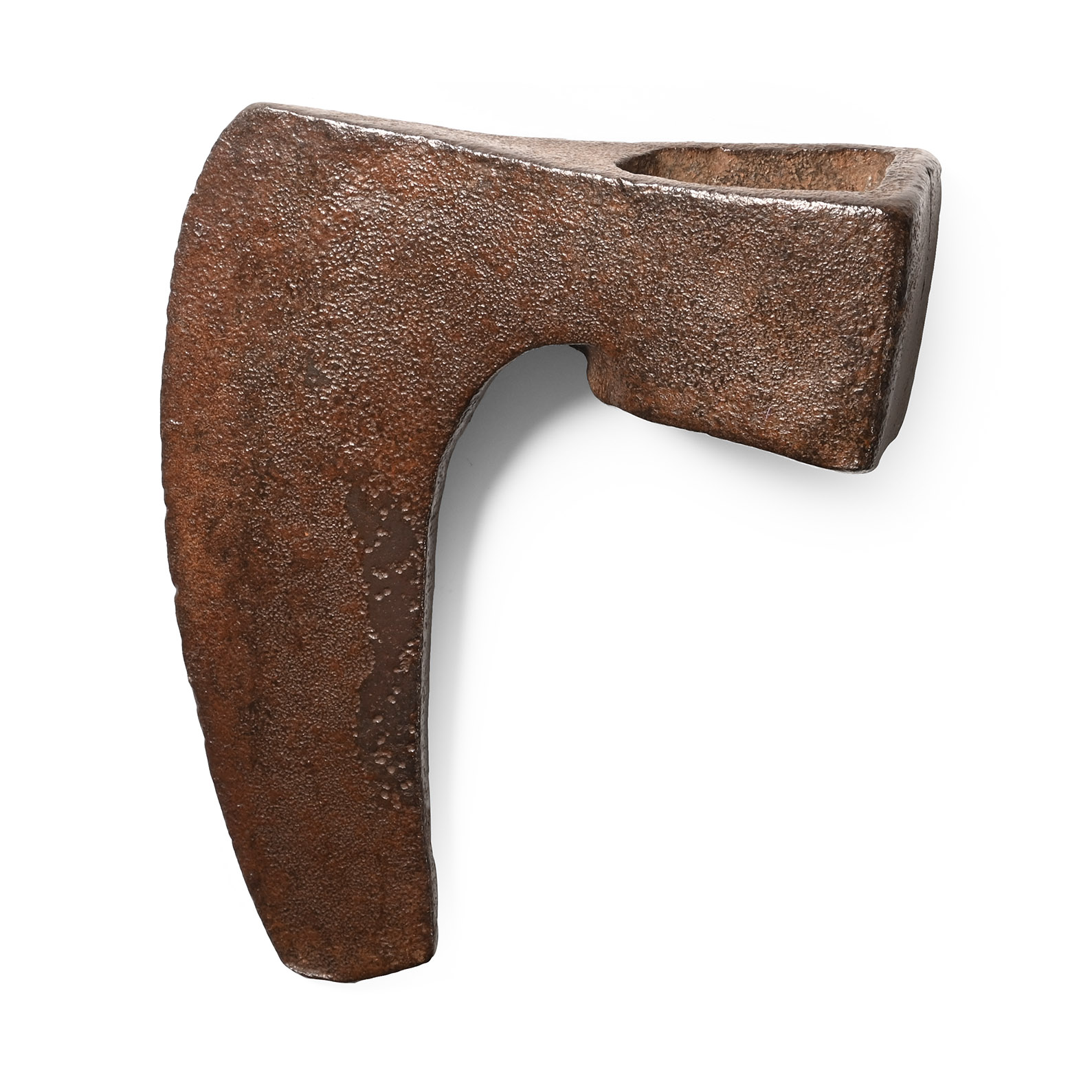
Medieval Iron Long Bearded Axehead
CIRCA 14TH-16TH CENTURY A.D. OR LATER
5 in. (474 grams, 12.7 cm).
With a narrow curving blade and a tongue-shaped socket. [No Reserve]
ProvenanceEx Californian collection, USA, 1980s.
CONDITIONTimeLine Auctions follows a vetting process to ensure the authenticity and legality of all items, reinforcing our commitment to integrity and responsible trading. Each antiquity, antique, and coin lot undergoes thorough examination by a vetting committee of at least ten external specialists, professional trade association members, scientists, and archaeologists: Our Vetting Process
AUCTIONS:
TimeLine is a leading auction house specialising in antiquities, ancient art, collectables, natural history, coins, medals, and books. Our auctions offer museums, collectors, historians, and enthusiasts the opportunity to acquire unique and historically significant pieces.
-
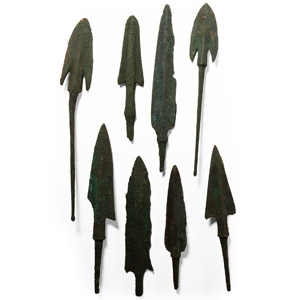
Luristan Bronze Arrowhead Collection
14th-10th century B.C.Sold for (Inc. bp): £117
Two with a sturdy square-section tang, narrow barbed head with midrib; the others with triangular or foliate blades; each with a raised midrib and a short tang. 212 grams total, 10.1-16.2 cm
Ex London collection, formed 1990-2000.
Although some of them are different in shape, these arrowheads are apparently related types of a polythetic group. Two basic deltoid forms are represented: one has a sharp, flat blade, the ends of which extend to form wings or barbs, and a prominent midrib extending into a long tang that often has a stop; the blade shape varies from deltoid to more manifestly triangular. The other form has no barbs, but it has a prominent midrib extending to the tang, and a narrow leaf-shaped blade. -
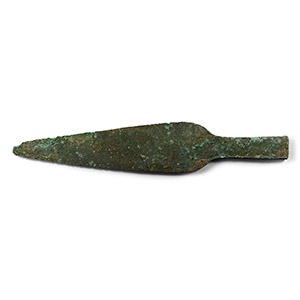
Western Asiatic Integral Hilted Bronze Short Sword
Late 3rd-2nd millennium B.C.Estimate: £300 - 400 (+bp*)
Opening Bid: £150
With a broad, lentoid-section flat blade, rounded tip, sloping sides, well marked shoulders with wide but short tang. 713 grams, 43.5 cm
Acquired 1980-2015. Ex Abelita family collection.
The sword finds similarity with the one from the Royal Cemetery of Ur. This is the most primitive form of dagger, consisting of a simple, pointed blade having slightly convex outline shoulders sloping to a short tang which has no rivets, and was probably hafted to wood with bitumen. Examples of the type come from Kish, Ur, dated to the 'Jemdet Nasr Period,' while the Ur date from the Early Dynastic to Sargonic Periods. -
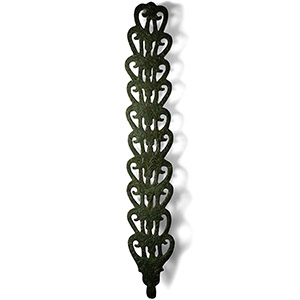
Scythian Bronze Zoomorphic Openwork Horse Chamfron
4th century B.C.Sold for (Inc. bp): £8,450
The edges formed of opposed curving serpent heads, each pair flanking a central zoomorphic head, possibly representing a horse or a beast; the animals with incised detailing to their bodies and heads; a large horse(?) head to the lower edge with its muzzle forming the point of the chamfron; two loops to the reverse. 283 grams, 39.5 cm
From the Gorovits family collection, since at least the 1940s. Private collection, London. Accompanied by an academic report by Dr Raffaele D’Amato. This lot has been checked against the Interpol Database of stolen works of art and is accompanied by search certificate number no. 17178-221462.
Bronze open-worked frontlets like this one were found with horses in the Barrow-mound no.5 of the Ulyap burial-ground in the Kuban basin, and their secure dating to the 4th century B.C. was established by the Thasian amphoras found in the respective graves (nn. 14-15-21, see Leskov, 1990, figs.180,183). The incised decoration of the chamfron finds various parallels both on frontlets from Barrow-Mounds nos. 4/1913 and 4/1917 near Elizavetinskaya Kossack-Village, in Kuban Basin, and from Gyuenos in Abkhazia (Galanina, 2010, pl.7,12). The piece belongs to a rare type of chamfron, known only from finds in the Scythian and Meotian burials of 5th-4th centuries B.C.
