
Loading, please wait...
LOT 1759
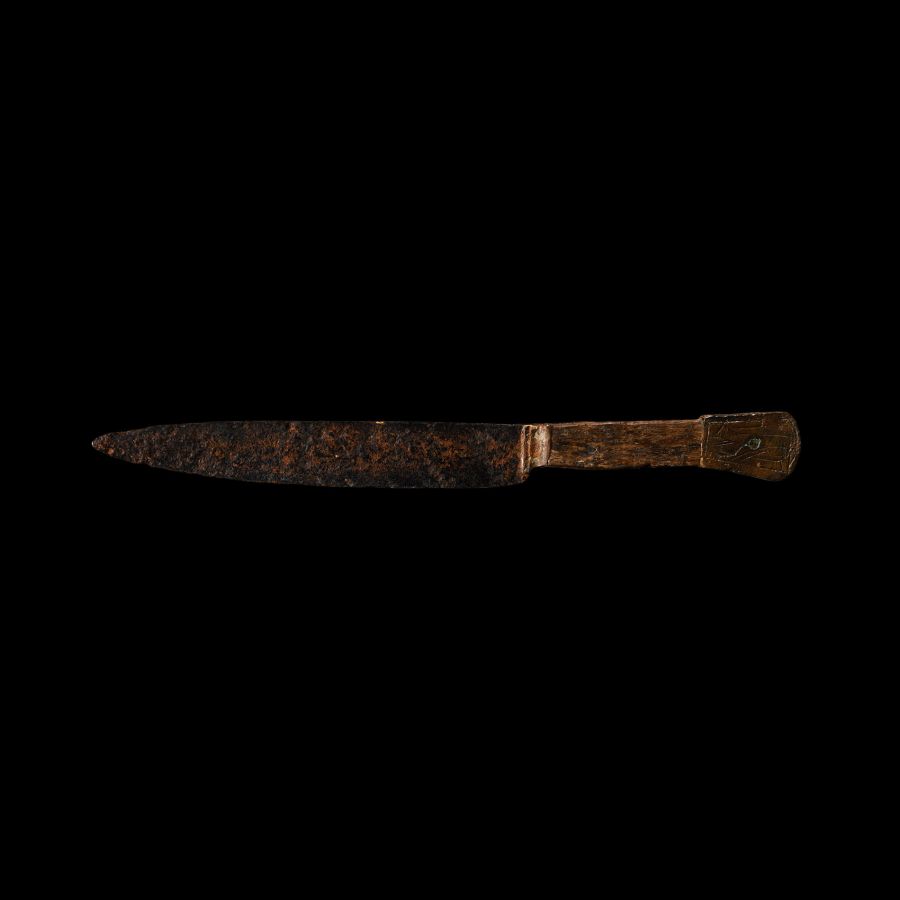
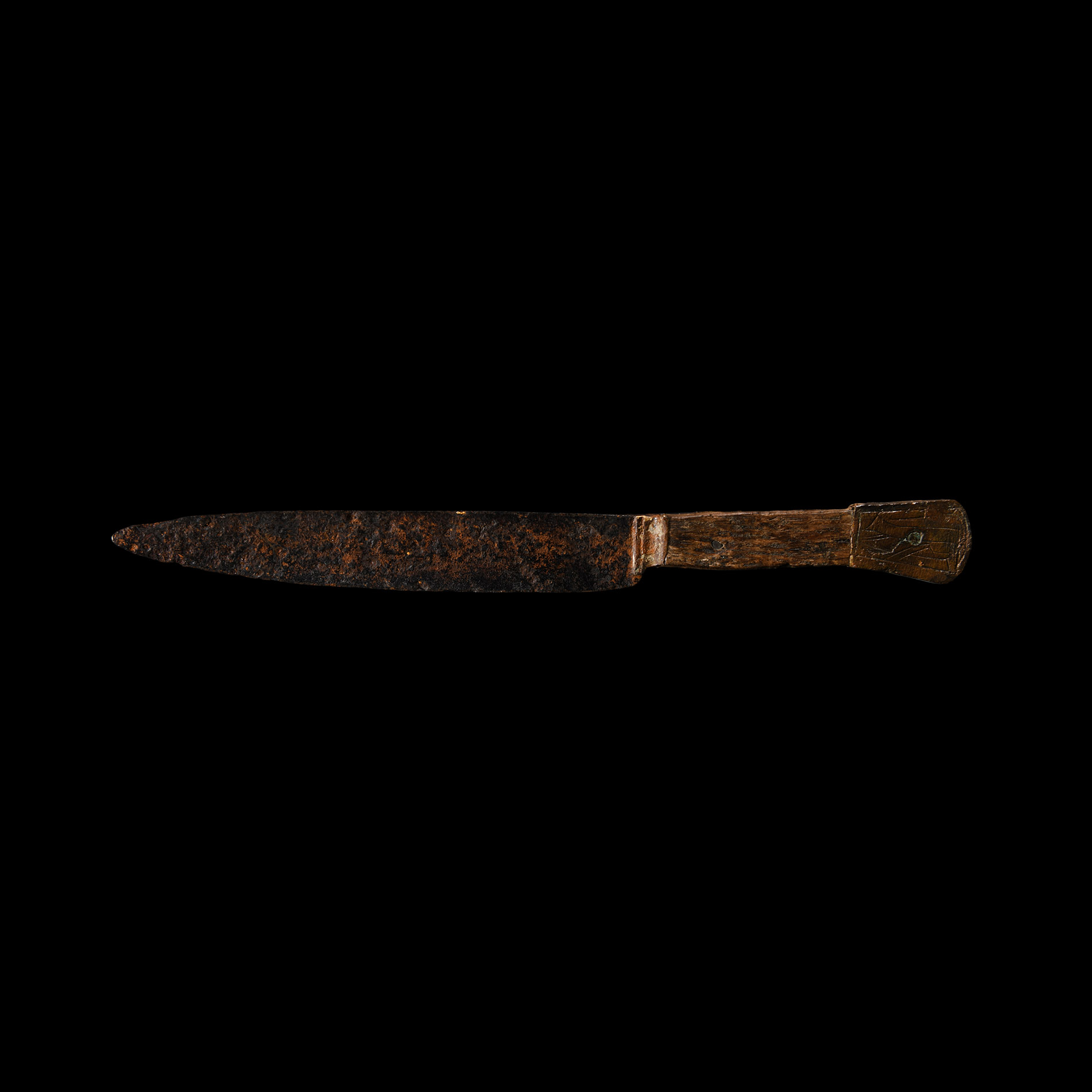
Medieval Iron Knife with Bronze Pommel
CIRCA 1500 A.D.
8 in. (49 grams, 20.2 cm).
Comprising a single cutting edge, scale tang and bifacial pommel with incised motifs.
ProvenanceAcquired 1960s-1990s.
Late Alison Barker collection, a retired London barrister.
Cf. Marquardt, K., Eight Centuries of European Knives, Forks and Spoons: an Art Collection, Europe, 1997, pp.28-32, for type.
FootnotesIn the medieval knives, the tang could be attached to the tang in two ways depending on the the form of the tang. Whittle-tang knives have a tapered tang which is inserted into or through the handle. Scale-tang knives have wider and flatter tangs onto which the plates comprising the handle are attached with metal rivets.
CONDITIONTimeLine Auctions follows a vetting process to ensure the authenticity and legality of all items, reinforcing our commitment to integrity and responsible trading. Each antiquity, antique, and coin lot undergoes thorough examination by a vetting committee of at least ten external specialists, professional trade association members, scientists, and archaeologists: Our Vetting Process
AUCTIONS:
TimeLine is a leading auction house specialising in antiquities, ancient art, collectables, natural history, coins, medals, and books. Our auctions offer museums, collectors, historians, and enthusiasts the opportunity to acquire unique and historically significant pieces.
LOT 1759
Medieval Iron Knife with Bronze Pommel
Estimate £200 - 300€230 - 350 (for guidance only)$270 - 410 (for guidance only)
-
Medieval Glazed Pottery Group
15th century A.D. and laterSold for (Inc. bp): £1
Comprising glazed and unglazed ceramic vessels including jars, a skillet and handled pots; together with a Bronze Age bowl and jar. 4.9 kg total, 7.5-30 cm
Acquired 1990s-early 2000s. East Anglian private collection. -
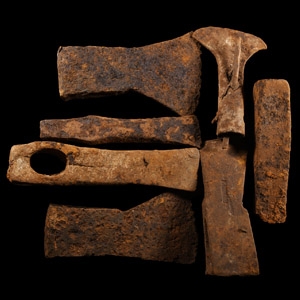
Medieval Iron Axe Group
15th-17th century A.D.Estimate: £150 - 200 (+bp*)
Opening Bid: £60
Comprising socketted axe heads of various types, most with convex cutting edges. 5.4 kg total, 13-21 cm
Acquired 1990s-early 2000s. East Anglian private collection. -
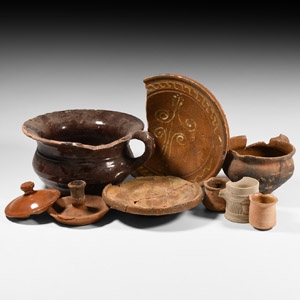
Medieval Ceramic Group
15th century A.D. and laterSold for (Inc. bp): £20
Comprising glazed and unglazed vessel fragments, including decorated examples and a candleholder. 2.9 kg total, 4.5-24.5 cm
Acquired 1990s-early 2000s. East Anglian private collection.
