
Loading, please wait...
LOT 1737
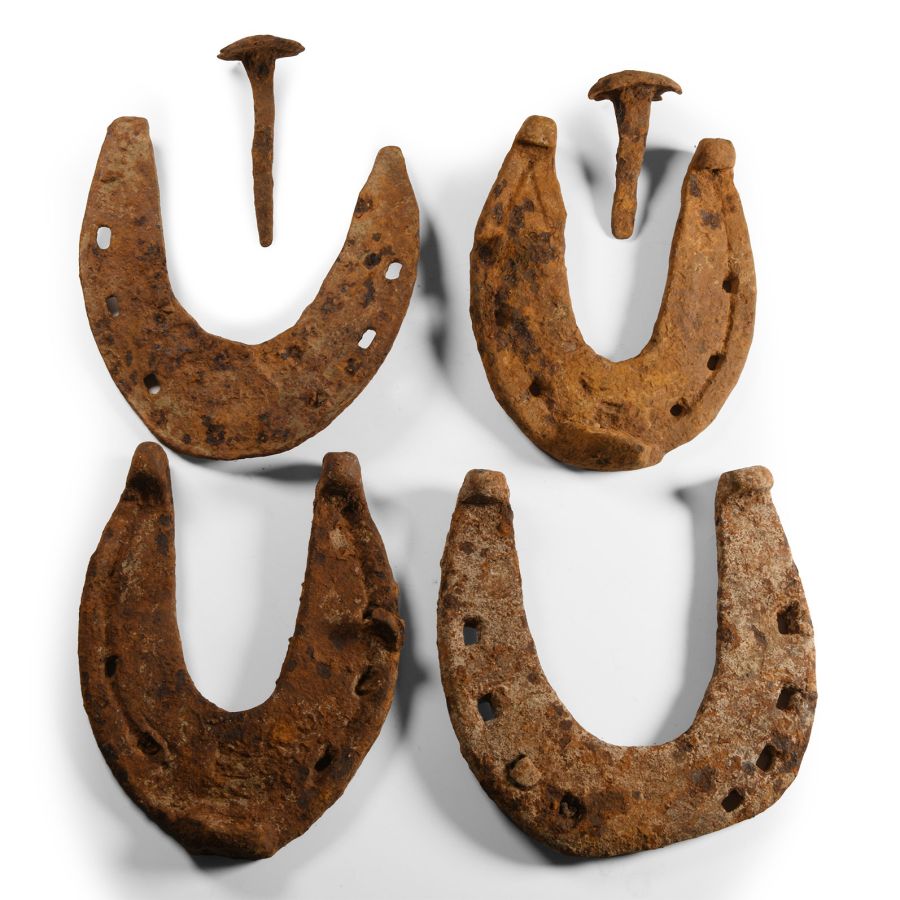
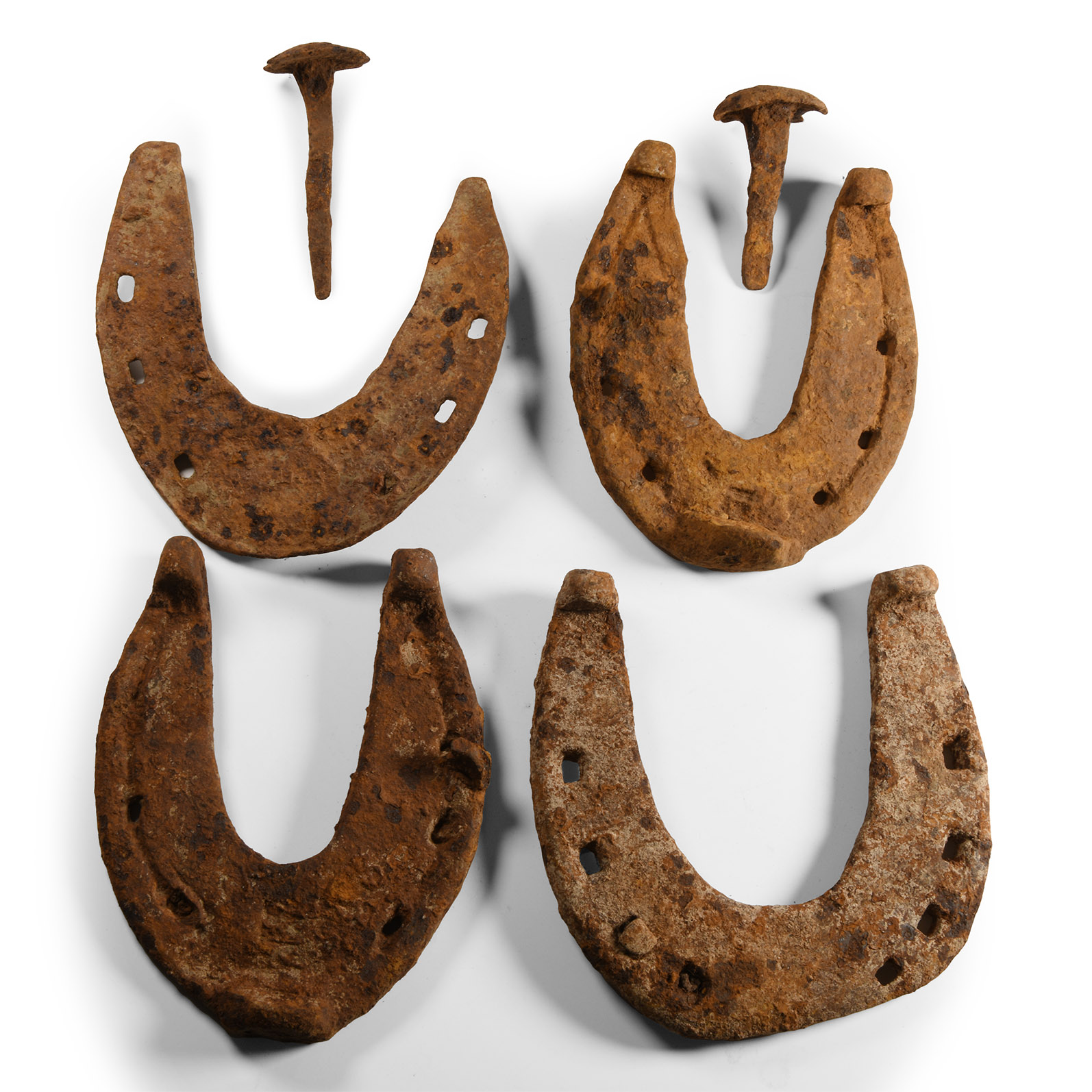
Medieval Iron Horseshoe Group
CIRCA 15TH-16TH CENTURY A.D.
2 1/8 - 4 7/8 in. (1.2 kg total, 5.5-12.5 cm).
Mainly formed with broad plate and countersunk rectangular nail-holes; with two large clout-nails. [6, No Reserve]
ProvenanceFrom the collection of B. Posey, Germany 1990s.
CONDITIONTimeLine Auctions follows a vetting process to ensure the authenticity and legality of all items, reinforcing our commitment to integrity and responsible trading. Each antiquity, antique, and coin lot undergoes thorough examination by a vetting committee of at least ten external specialists, professional trade association members, scientists, and archaeologists: Our Vetting Process
AUCTIONS:
TimeLine is a leading auction house specialising in antiquities, ancient art, collectables, natural history, coins, medals, and books. Our auctions offer museums, collectors, historians, and enthusiasts the opportunity to acquire unique and historically significant pieces.
-

Medieval Decorated 'He who loves from the heart, gives with a good heart' Posy Boxwood Comb
Circa 1490-1510 A.D.Sold for (Inc. bp): £9,100
Central panel decorated with a heart pierced by two arrows and inscription: 'qui de bon [COER] eyme', and verso openwork carving of blind interlaces and inscription: 'de bon [COER] donne', translating to 'He who loves from the heart, gives with a good heart'; probably given as a love token. 58 grams, 15 cm
Private collection, USA. Private collection, Suffolk. Accompanied by a copy of an illustrated catalogue document.
Medieval specialist Dr Malcolm Jones writes: 'The same formula and use of the rebus heart-device can be found engraved on contemporary jewellery, e.g. on a 14th/15thC English gold ring recently on the French antique jewellery market which is inscribed in Black Letter script, ie. uous eme bien [I love you very much - de bon ♥ - from a good heart]. The familiar heart-symbol ♥ -- which nowadays we ‘read’ as love [I ♥ New York] -- makes its first appearance as a rebus in this late medieval era, engraved on rings, where it is to be read as the noun, coer/cuer, etc. One of its earliest appearances is on a bronze ring of 13th or 14thC date in the British Museum inscribed in Lombardic capitals: A VILA MON ♥ [Here is my heart GARDI LI MO[Y] keep it for me]. -
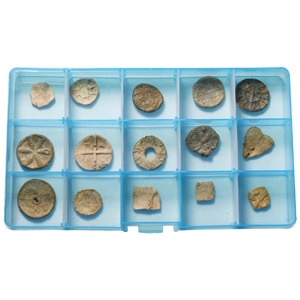
Medieval and Later 'Wiltshire and Somerset' Lead Farm Token Collection
15th-17th century A.D.Sold for (Inc. bp): £85
Mixed group of discoid tokens including annular, square and heart-shaped types. 133 grams total, 17.2 x 10 cm including box
Found Wiltshire and Somerset, UK. -
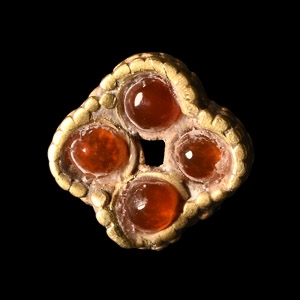
Medieval Gold Pendant with Carnelian
Circa 14th-16th century A.D.Sold for (Inc. bp): £117
Quatrefoil with granulated border, four inset carnelians. 0.43 grams, 8 mm
From a late Japanese specialist collector, 1970-2000s.
