
Loading, please wait...
LOT 1699
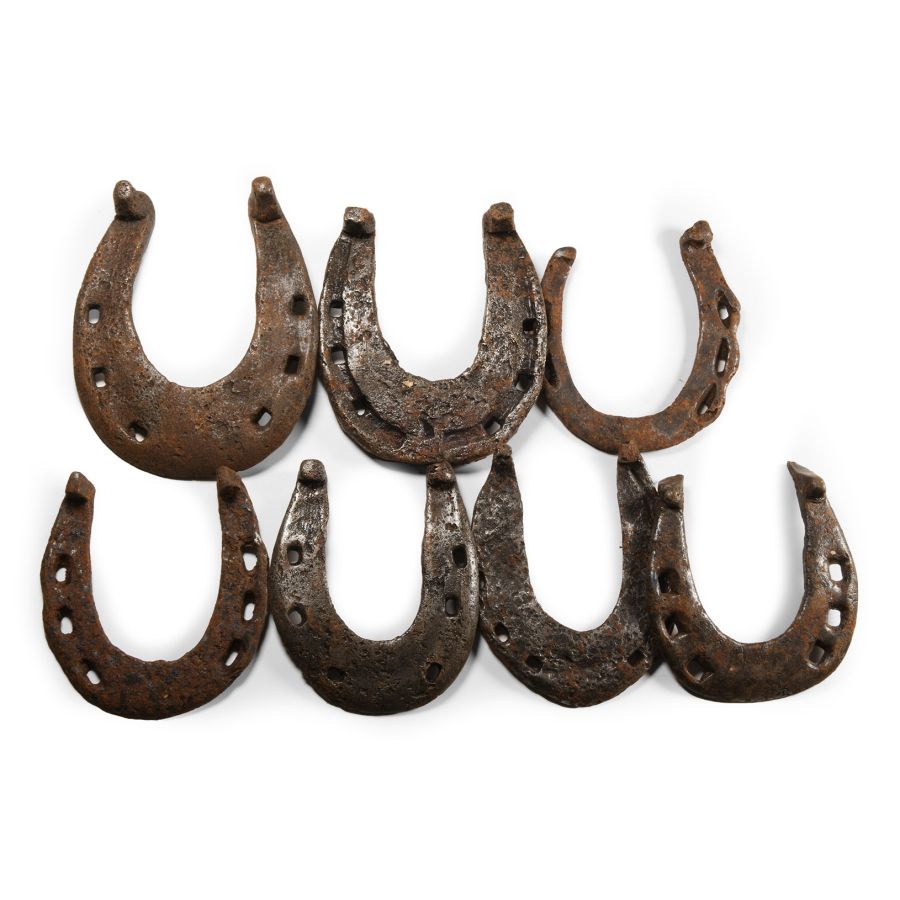
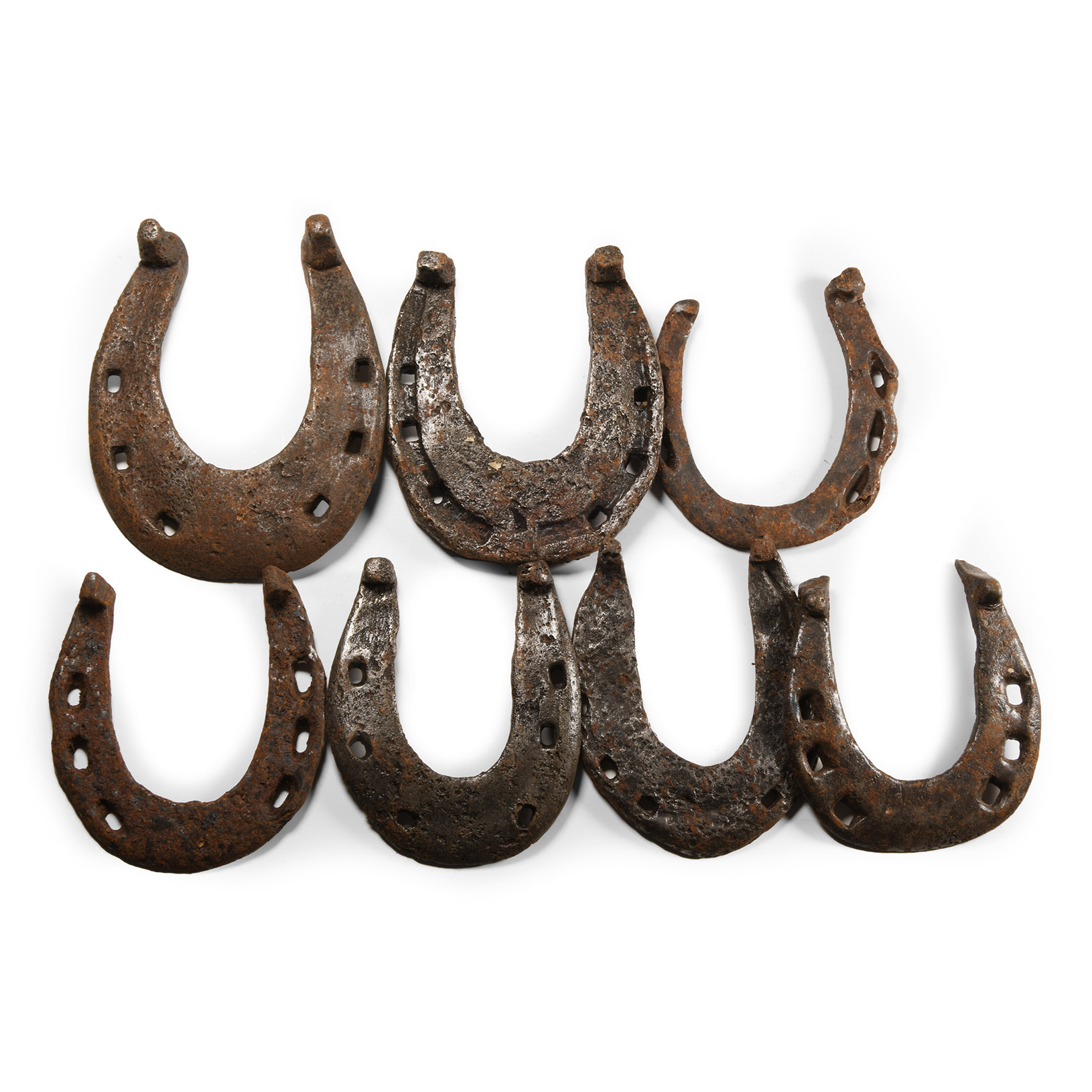
Medieval Iron Horseshoe Group
15TH-16TH CENTURY A.D.
4 - 4 7/8 in. (1.2 kg total, 10.2-12.4 cm).
Of various types including rectangular holes, ellipsoid holes with countersinking, one with lobed outer edge. [7, No Reserve]
ProvenanceFrom a collection acquired on the UK art market from various auction houses and collections mostly before 2000.
From an important Cambridgeshire estate; thence by descent.
TimeLine Auctions follows a vetting process to ensure the authenticity and legality of all items, reinforcing our commitment to integrity and responsible trading. Each antiquity, antique, and coin lot undergoes thorough examination by a vetting committee of at least ten external specialists, professional trade association members, scientists, and archaeologists: Our Vetting Process
AUCTIONS:
TimeLine is a leading auction house specialising in antiquities, ancient art, collectables, natural history, coins, medals, and books. Our auctions offer museums, collectors, historians, and enthusiasts the opportunity to acquire unique and historically significant pieces.
-
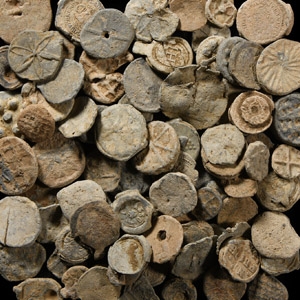
Medieval and Later Lead Token and Bag Seal Collection
Circa 15th-19th century A.D.Sold for (Inc. bp): £52
Mixed group of lead-alloy trade tokens and bag-seals with monograms, rosettes and other detailing. 707 grams total, 13-30 mm
Found Hertfordshire, UK. -
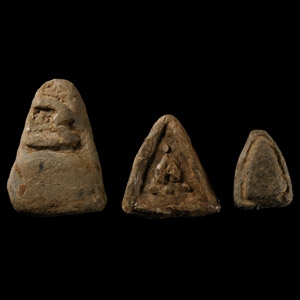
Medieval Lead Weight Collection
Circa 13th-16th century A.D.Sold for (Inc. bp): £39
Triangular and heater-shaped types with reserved geometric decoration. 207 grams total, 45 -85 mm
Ex Simmons gallery, London, UK. Ex North London collection, 1990s. -
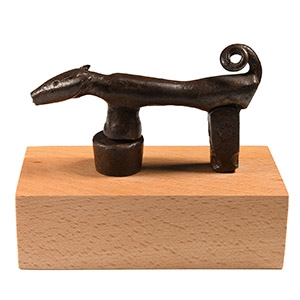
Medieval Spanish Iron Doorknocker
1440-1460 A.D.Sold for (Inc. bp): £260
Hand-forged with long columnar body, waisted neck, conical head with impressed points for the eyes and triangular ears, spiral tail; the fore-legs formed as a conical block corresponding to a drum-shaped pad; hindlegs replaced by a pivot; mounted on a wooden stand. 987 grams total, 16 cm including stand
Ex-Luis Elvira, 2005.
