
Loading, please wait...
LOT 1841
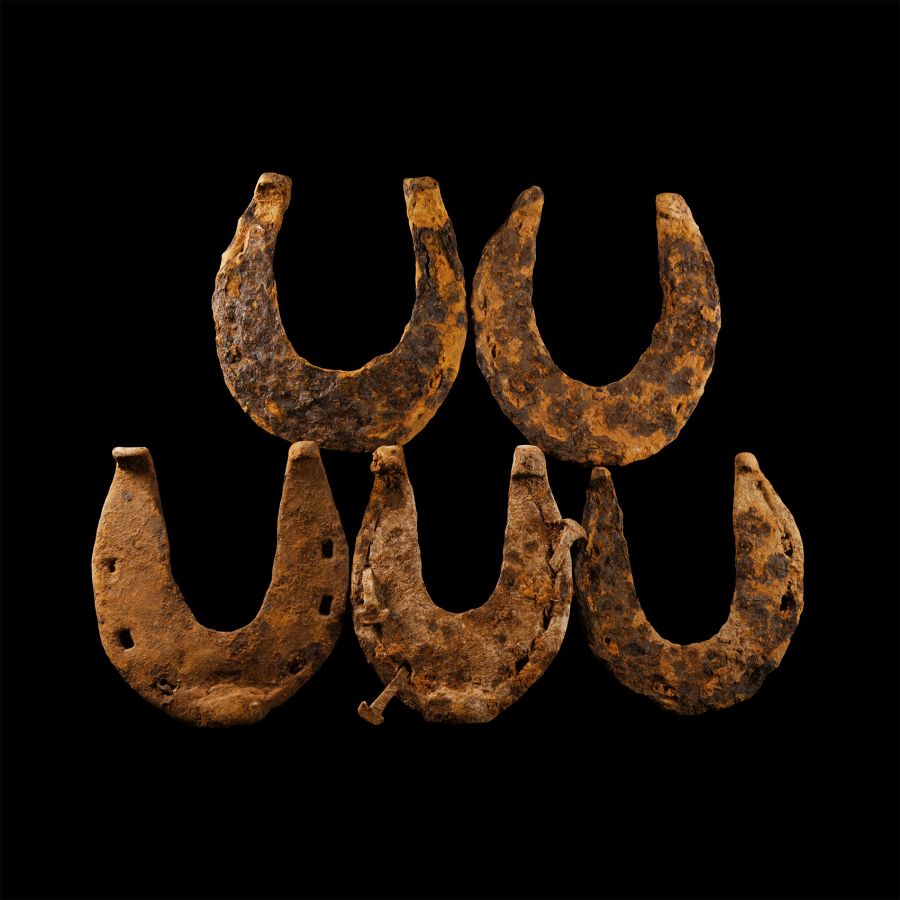
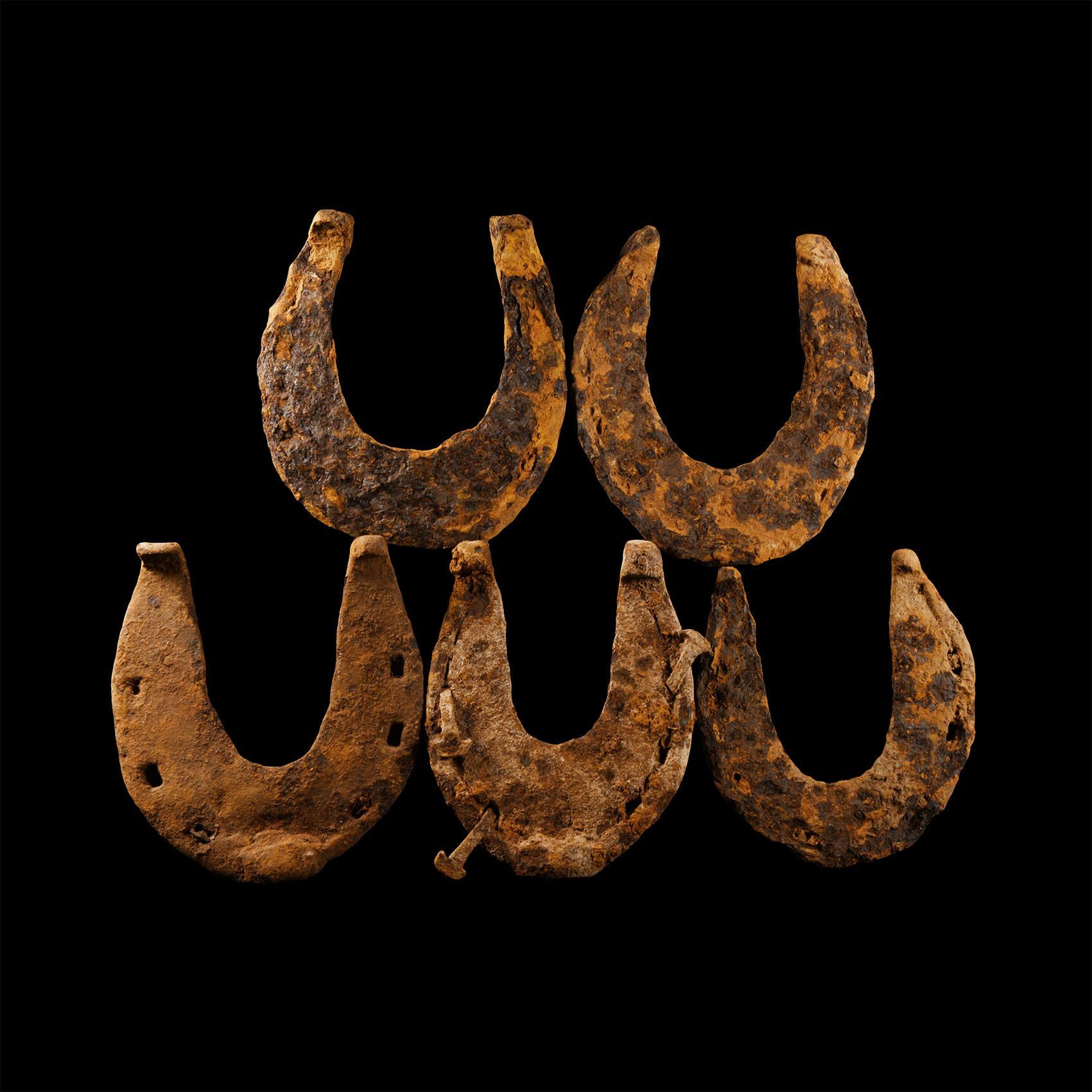
Medieval Iron Horseshoe Group
14TH-16TH CENTURY A.D.
4 3/8 - 4 3/4 in. (1 kg total, 11-12.3 cm).
Composed of shoes of different types and dates and including examples retaining nails. [5, No Reserve]
ProvenanceEx Suffolk, UK, gentleman, 1990s.
CONDITIONTimeLine Auctions follows a vetting process to ensure the authenticity and legality of all items, reinforcing our commitment to integrity and responsible trading. Each antiquity, antique, and coin lot undergoes thorough examination by a vetting committee of at least ten external specialists, professional trade association members, scientists, and archaeologists: Our Vetting Process
AUCTIONS:
TimeLine is a leading auction house specialising in antiquities, ancient art, collectables, natural history, coins, medals, and books. Our auctions offer museums, collectors, historians, and enthusiasts the opportunity to acquire unique and historically significant pieces.
-

Medieval Lead Figural Amulet
14th-15th century A.D.Sold for (Inc. bp): £78
Formed as a stylised androgynous figure modelled in the half-round with stylised detailing, legs drawn up to chest and arms folded across the stomach. 19.8 grams, 43 mm
European collection, 1990s. Property of a Cambridgeshire, UK, gentleman. -
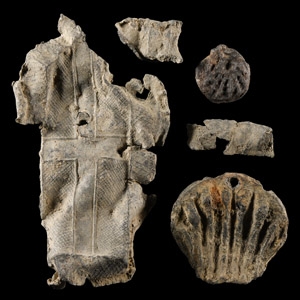
Medieval 'Thames' Pewter Pilgrim's Ampulla and Scallop Shell Badge Collection
15th-16th century A.D.Sold for (Inc. bp): £39
Mainly comprising fragmentary badges, including: an ampulla with reserved cross on a hatched field; larger scallop pierced for attachment; other miscellaneous fragments. 73 grams total, 20-93 mm
Found Thames foreshore spoil, 1980s. Accompanied by a copy of the The British Museum's Portable Antiquities Scheme (PAS) report no.LON-BACC15 for the ampulla. -

Medieval Iron Axehead
14th-15th century A.D.Sold for (Inc. bp): £85
Composed of a sub-triangular-section socket, stamped to one cheek. 349 grams, 13.6 cm
Acquired 1990s-early 2000s. East Anglian private collection.
This type of axehead, with similar specimens found in the territories of the Teutonic Order, was by far the most popular form of axe which remains unchangeable and continues to be used in the Baltic to this day. It appears in East European territories as early as the mid 13th century A.D.
