
Loading, please wait...
LOT 1377
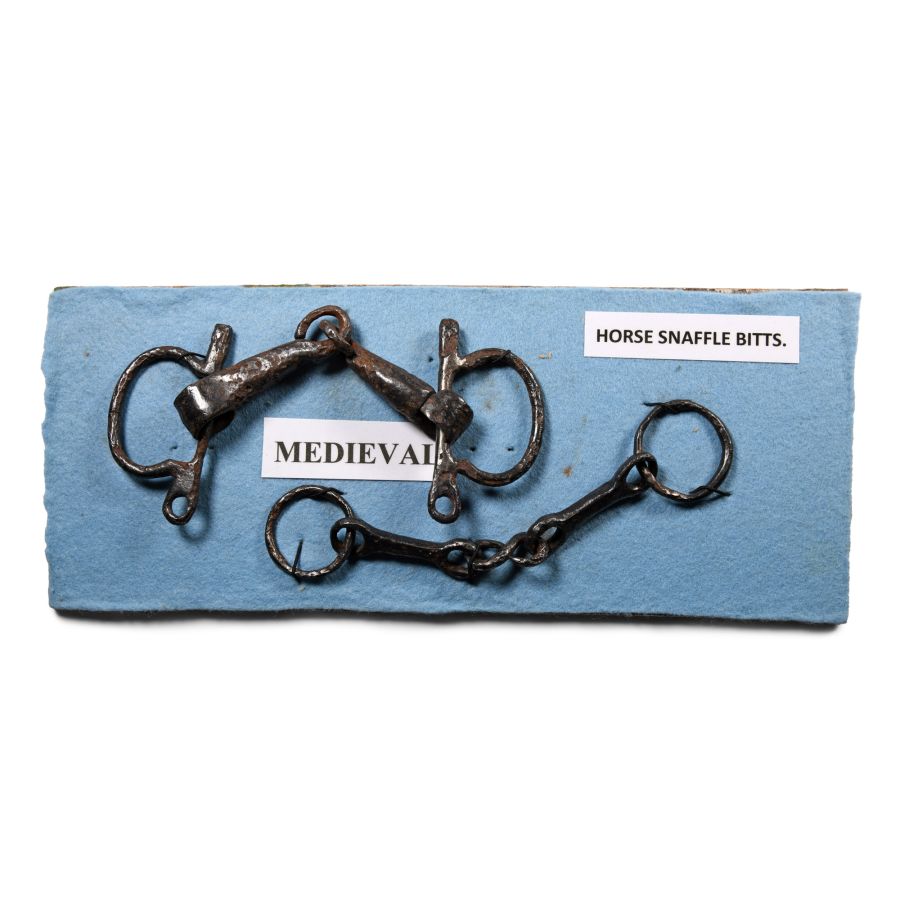
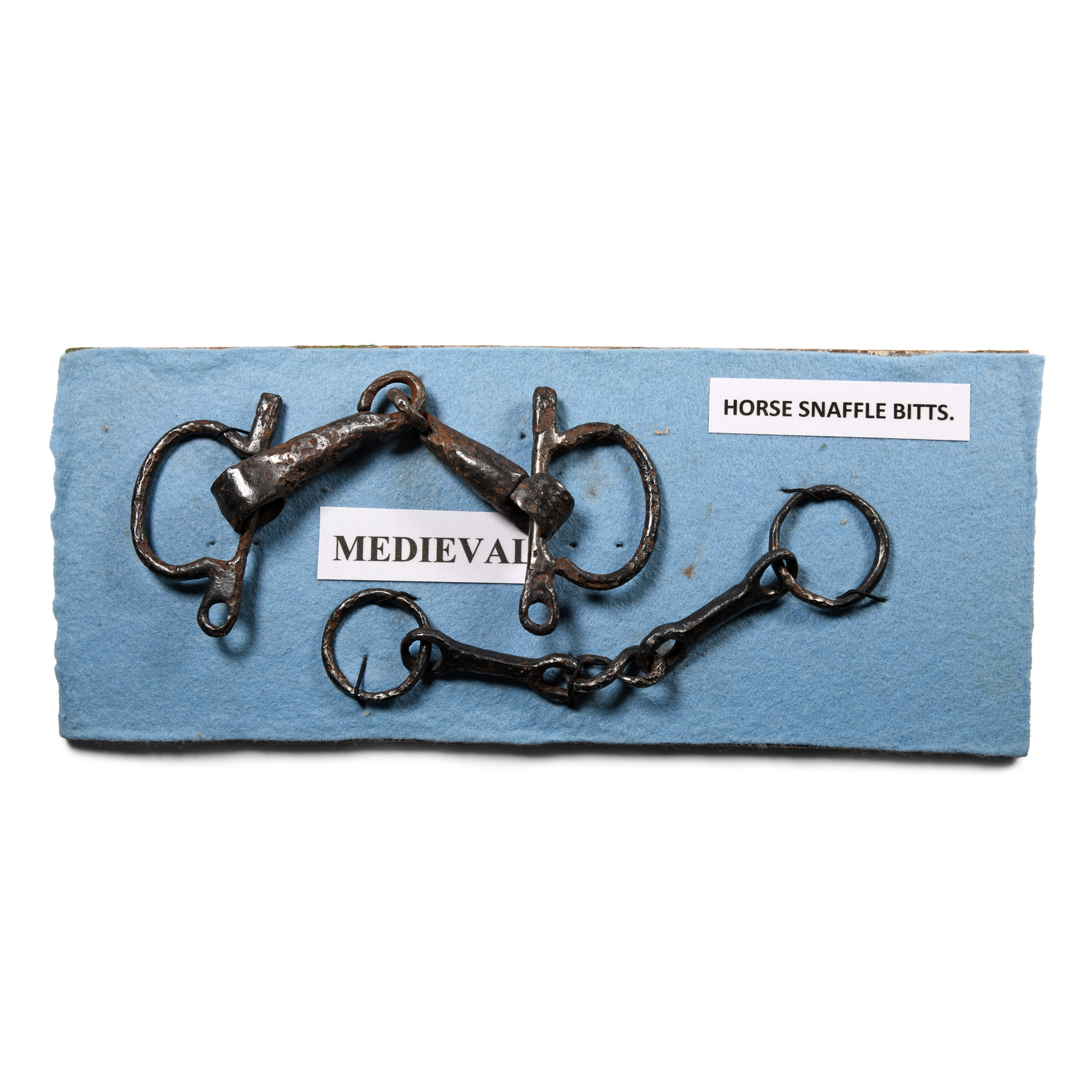
Medieval Iron Horse Snaffle Bit Collection
CIRCA 14TH-16TH CENTURY A.D.
6 7/8 - 7 7/8 in. (467 grams total, 17.5-20 cm).
Two snaffle bits with curb strap ring to each end, mounted on a fabric-covered display board with titling panel. [2, No Reserve]
ProvenanceFrom the collection of the famous author, writer and speaker, Gordon Bailey, Essex, UK; formed since 1968.
CONDITIONTimeLine Auctions follows a vetting process to ensure the authenticity and legality of all items, reinforcing our commitment to integrity and responsible trading. Each antiquity, antique, and coin lot undergoes thorough examination by a vetting committee of at least ten external specialists, professional trade association members, scientists, and archaeologists: Our Vetting Process
AUCTIONS:
TimeLine is a leading auction house specialising in antiquities, ancient art, collectables, natural history, coins, medals, and books. Our auctions offer museums, collectors, historians, and enthusiasts the opportunity to acquire unique and historically significant pieces.
-
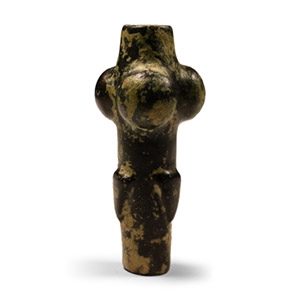
Luristan Bronze Bulbous Macehead
Circa 7th-6th century B.C.Sold for (Inc. bp): £182
With three round knobs at the top, radiating from the hollow shaft, with a further three heater-shaped projections below. 167 grams, 98 mm
Private collection, UK. -
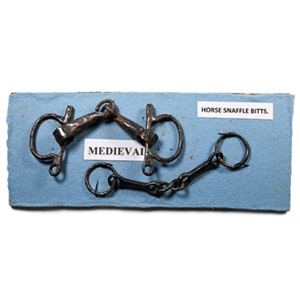
Medieval Iron Horse Snaffle Bit Collection
Circa 14th-16th century A.D.Sold for (Inc. bp): £72
Two snaffle bits with curb strap ring to each end, mounted on a fabric-covered display board with titling panel. 467 grams total, 17.5-20 cm
From the collection of the famous author, writer and speaker, Gordon Bailey, Essex, UK; formed since 1968. -
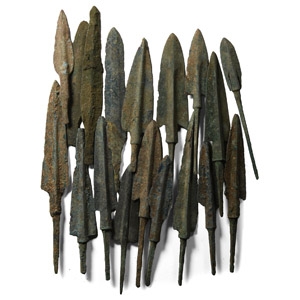
Luristan Bronze Arrowhead Collection
Circa 14th-10th century B.C.Sold for (Inc. bp): £312
Including triangular, leaf-shaped, barbed and other types. 450 grams total, 9.5-15.5 cm
Ex London, UK, collection, 1990s.
