
Loading, please wait...
LOT 1758
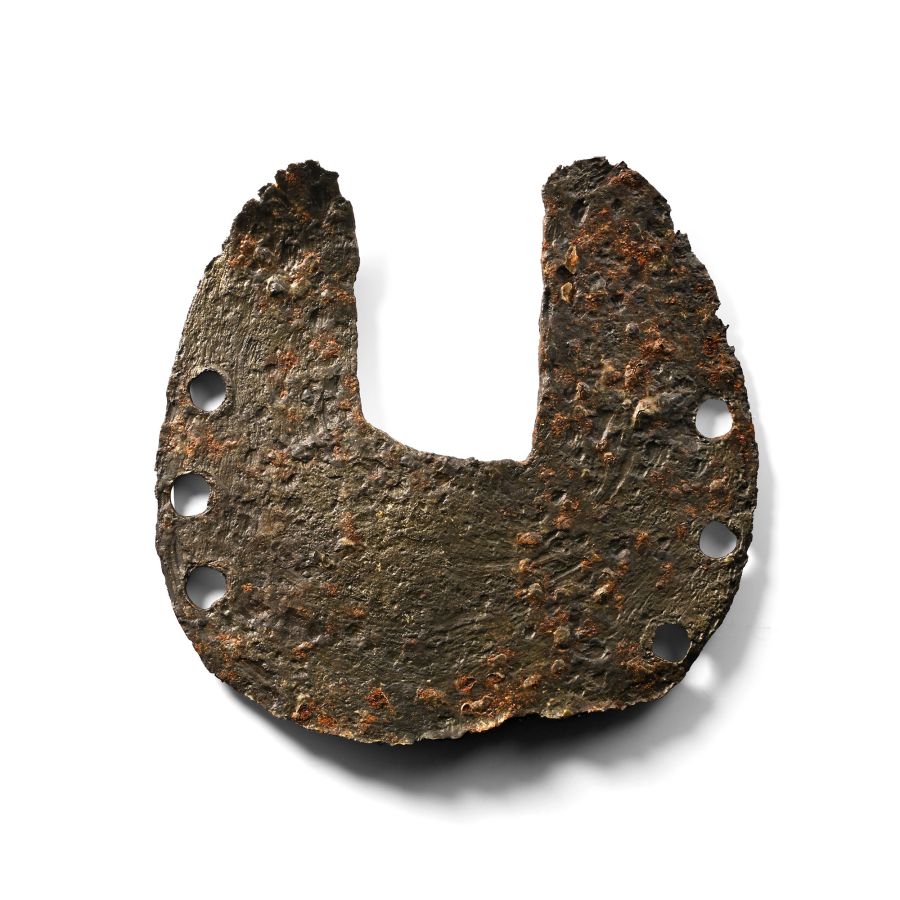
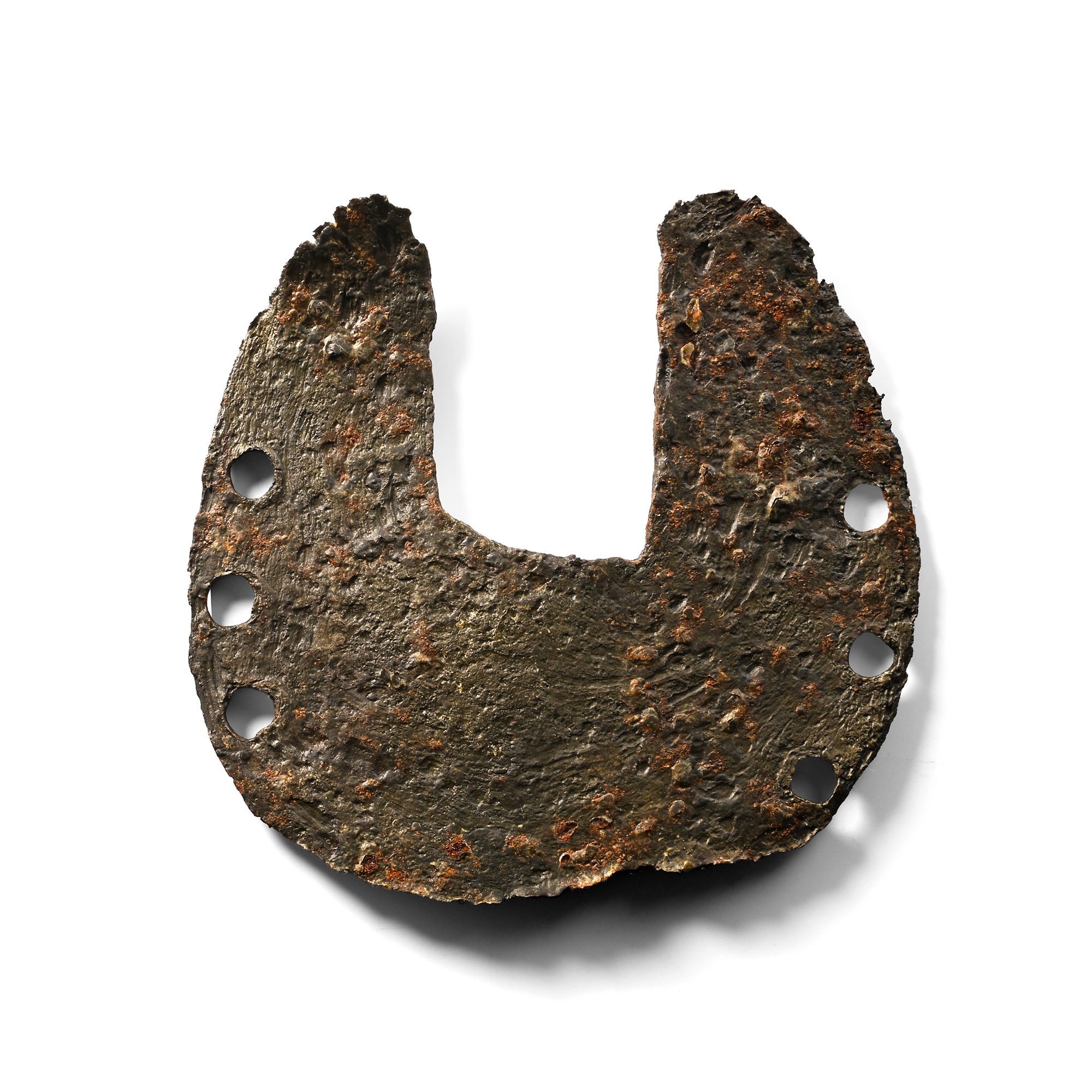
Medieval Iron Horse Shoe Plate
14TH-15TH CENTURY A.D.
4 1/4 in. (114 grams, 11 cm).
Crescentic in plan with rectangular void, round attachment holes. [No Reserve]
ProvenanceAcquired 1990s-early 2000s.
From an East Anglian private collection.
From the property of a late Lincolnshire, UK, gentleman.
TimeLine Auctions follows a vetting process to ensure the authenticity and legality of all items, reinforcing our commitment to integrity and responsible trading. Each antiquity, antique, and coin lot undergoes thorough examination by a vetting committee of at least ten external specialists, professional trade association members, scientists, and archaeologists: Our Vetting Process
AUCTIONS:
TimeLine is a leading auction house specialising in antiquities, ancient art, collectables, natural history, coins, medals, and books. Our auctions offer museums, collectors, historians, and enthusiasts the opportunity to acquire unique and historically significant pieces.
-
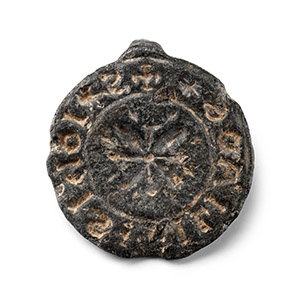
Medieval Lead 'JOHN SON OF ADAM' Personal Seal Matrix
Circa 13th century A.D.Sold for (Inc. bp): £52
Discoid in plan with lug to rear (unpierced); central cross pommy with interstitial bars; legend to the border 'S’ IOhIS: FILI ADE' (seal of John son of Adam). 19.9 grams, 34.5 mm
Found Kent. From the later Peter Hooper Pewter and Lead collection, who was a guest lecturer at West Dean College a longtime member of the Pewter Society, who contributed to the Pewter Society Magazine. -
.jpg)
Large Medieval Heraldic Tile with the Heads of Three Africans within a Shield
Normandy, 15th century A.D.Sold for (Inc. bp): £169
Square in plan and thick in section; upper face with reserved heater shield, chevron between three profile 'Moor's head' motifs. 2.65 kg, 22 cm
Benjamin Proust, Paris, 2015.
The Moor's head motif appears on the heraldry of Sardinia, Corsica and other Mediterranean locations. -
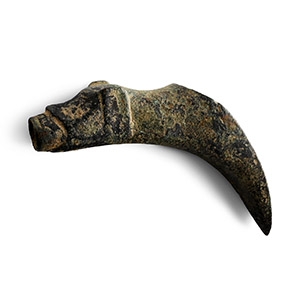
Medieval Bronze Priest's Laver Holy Water Pouring Vessel Spout
14th-15th century A.D.Sold for (Inc. bp): £20
With stylised zoomorphic detailing to the spout, mouth developing to a round-section spout, arched neck with section cut away for attachment. 49 grams, 66 mm
From the collection of a Buckinghamshire, UK, collector established from the earlier 1960s.
A priest's laver was a large ceremonial basin used for ritual ablutions.
