
Loading, please wait...
LOT 1139
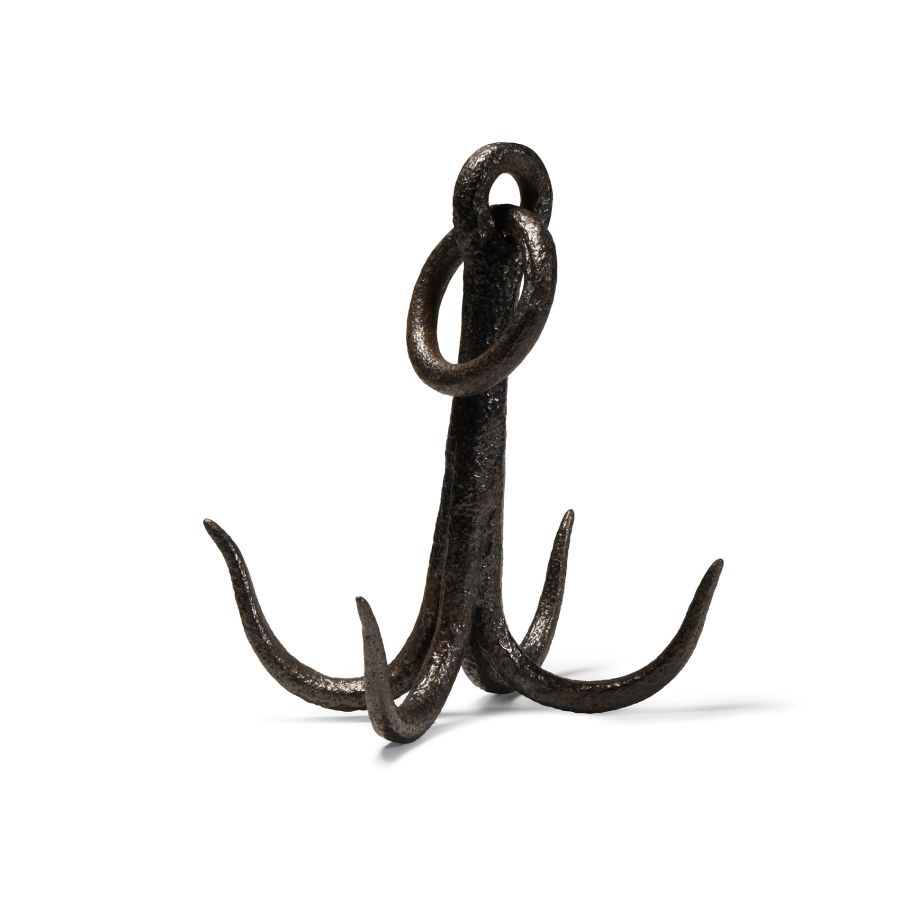
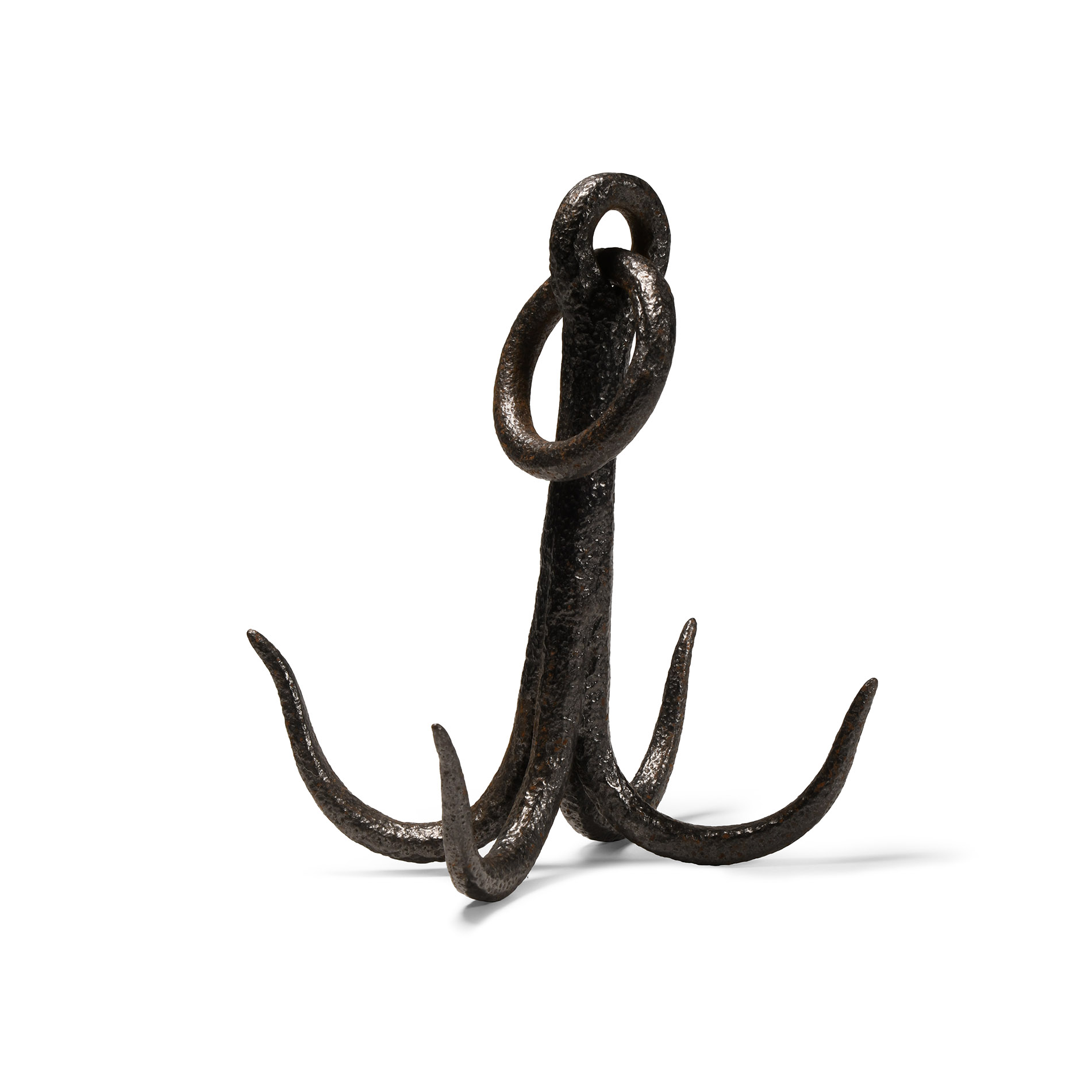
Medieval Iron Grappling Hook
15TH-16TH CENTURY A.D.
8 5/8 in. (598 grams, 22 cm).
Retaining a free-running suspension loop. [No Reserve]
ProvenanceAcquired 1990s-early 2000s.
East Anglian private collection.
Cf. Tarassuk, L. & Blair, C., Complete Encyclopaedia of Arms & Weapons, London, 1982, p.199 s.v. grappling iron.
FootnotesThe device (manus ferreae) was invented by the Romans in approximately 260 B.C.The grappling hook was originally used in naval warfare to catch ship rigging so that it could be boarded (the famous harpax of Agrippa at the battle of Actium in 31 B.C.), then widely employed in the siege wars.
CONDITIONTimeLine Auctions follows a vetting process to ensure the authenticity and legality of all items, reinforcing our commitment to integrity and responsible trading. Each antiquity, antique, and coin lot undergoes thorough examination by a vetting committee of at least ten external specialists, professional trade association members, scientists, and archaeologists: Our Vetting Process
AUCTIONS:
TimeLine is a leading auction house specialising in antiquities, ancient art, collectables, natural history, coins, medals, and books. Our auctions offer museums, collectors, historians, and enthusiasts the opportunity to acquire unique and historically significant pieces.
-
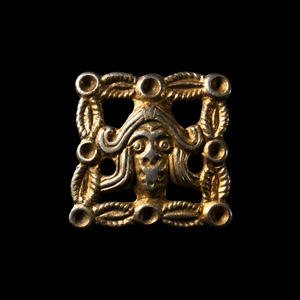
Khazar Silver-Gilt Sword Belt Mount with Warrior
9th-10th century A.D.Sold for (Inc. bp): £374
Square in plan with a slightly convex openwork panel composed of alternating circular cells and leaf-like ovals, central male head with long hair and stylised facial features, possibly wearing a helmet; attachment loop to each corner on the reverse. 8.27 grams, 22 mm
Fine condition.
Acquired in the 1980s-1990s. Ex an important central London gallery, London W1. -
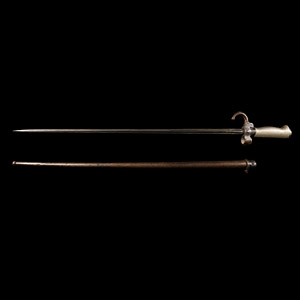
French Lebel 1886 Model 'Rosalie' Epee Bayonet with Scabbard
19th-20th century A.D.Sold for (Inc. bp): £52
Sword bayonet for use with the 8 mm M1886 Lebel rifle; fitted with 'German silver' grip scales; original scabbard. 532 grams, 65 cm
Property of a Luton, UK gentleman, by inheritance.
Known affectionately as “Rosalie” to French troops, the M1886 was the French mainstay during WWI and many were still in service at the Fall of France in 1940. The Lebel also saw extensive use worldwide by native troops in the French colonies. The M1886 introduced the distinctive cruciform blade, which remained a feature of most French bayonets until 1956. This example was made in 1890 at the Manufacture D'Armes St. Etienne (MAS). The scabbard was made by Manufacture Nationale d'Armes de Châtellerault (MAC). This is an early example that escaped later modifications, retaining its long blade, quillon, and raised round press stud. The silver-alloy grip is removable. -
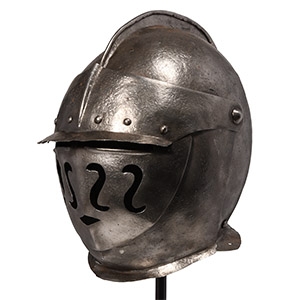
European Savoyard Burgonet
Circa 1620 A.D.Estimate: £3,500 - 4,500 (+bp*)
Opening Bid: £1,389
Comprising a full face shield with broad wavy bars and a small mouth opening, a wide hinged visor; the visor and the front section of the helmet secured by large hook-and-eye closures on the right-hand side; the crown with a tall ridge running from front to back, small collar for protecting the neck. 1.14 kg, 25 cm high
Acquired from Andrew Bennett in 2016. The Kusmirek Collection, UK. Accompanied by a copy of a payment confirmation from Andrew Bennett, dated 1st June 2016. Accompanied by an academic report by Dr Raffaele D'Amato. This lot has been checked against the Interpol Database of stolen works of art and is accompanied by search certificate number no. 11768-203986.
This variation of the burgonet helmet is thought to have originated in the Savoy region of southeast France, and was very popular with heavy cavalry (Reiters) serving with a variety of Continental armies of the period. The term Savoyard is a reference to a large number of these helmets that the Swiss captured from the troops of the Duke of Savoy during an unsuccessful assault on the city of Genoa in 1602. The undulated bars and the small mouth of the visor are all indicative of the Savoyard style. The hinges on the side allowed the front of the helmet as a whole to be lifted away from the rear, aiding the wearer to place it over his head.
