
Loading, please wait...
LOT 1605
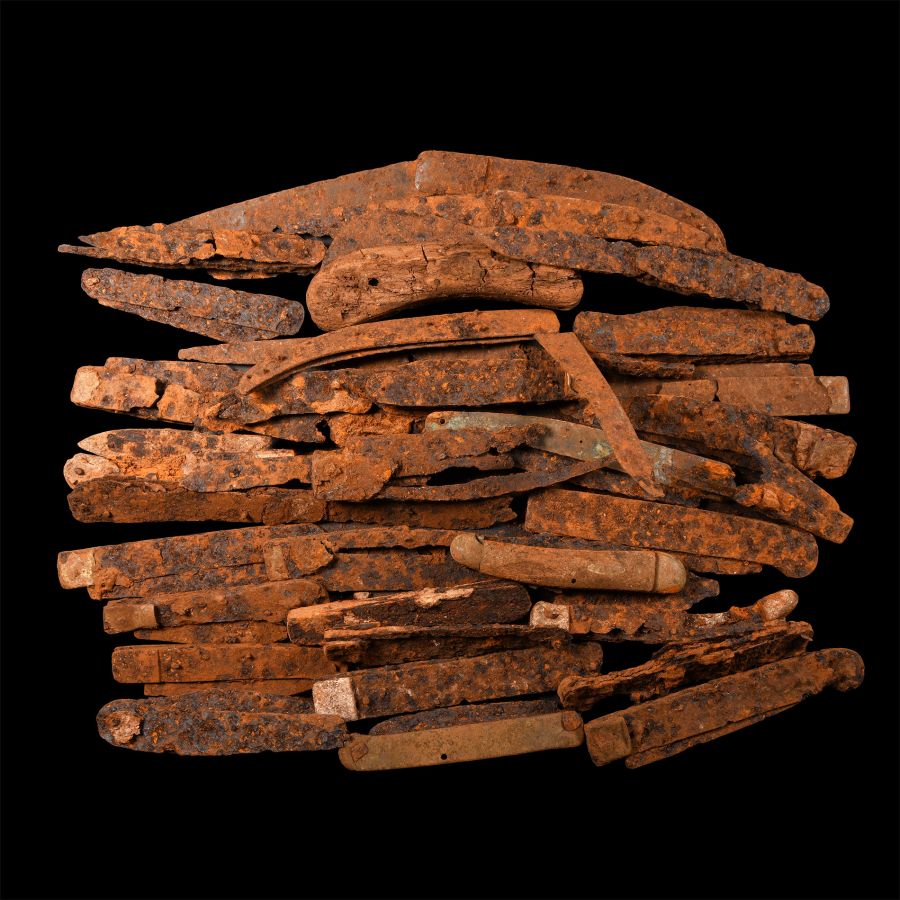
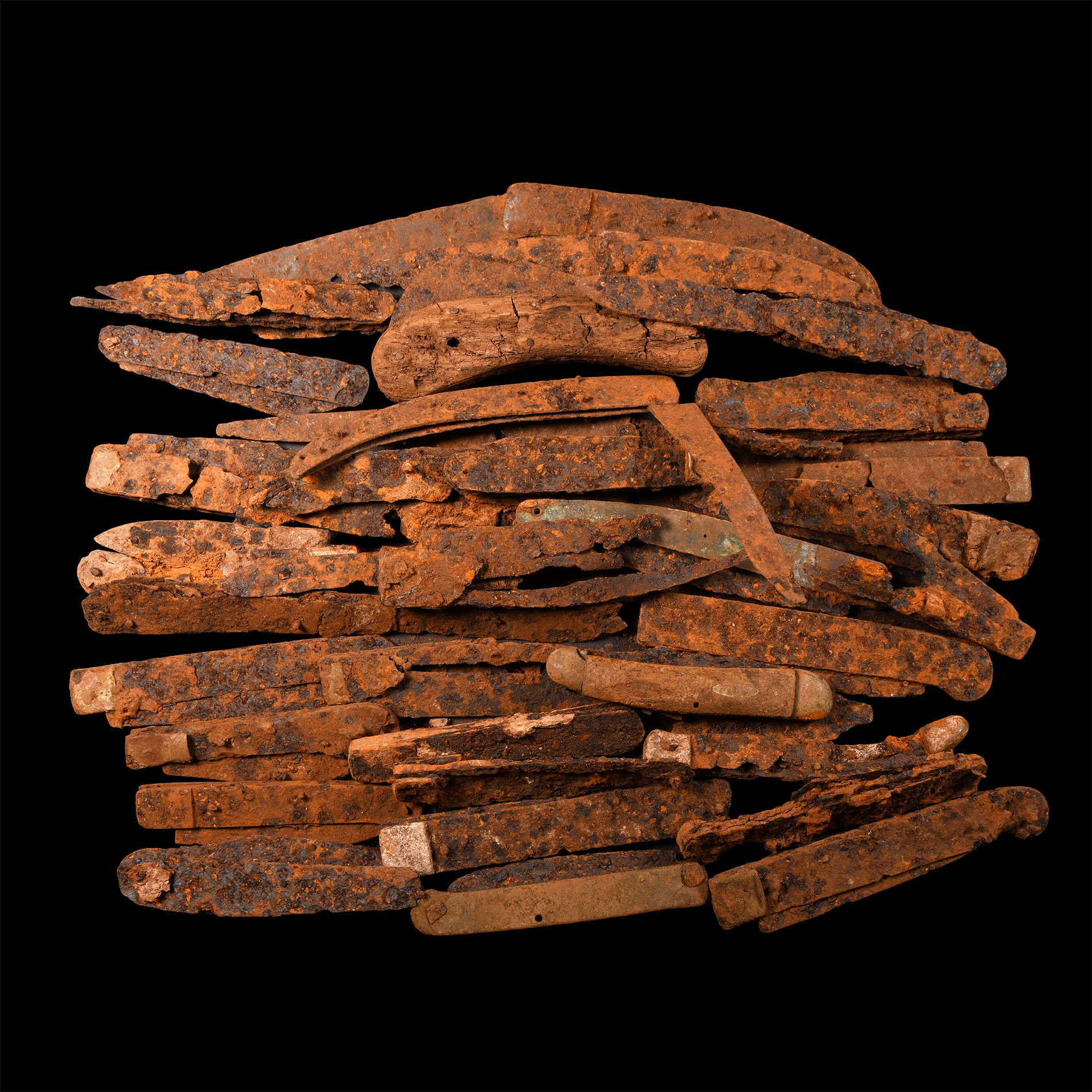
Medieval Iron Folding Knife Group
CIRCA 15TH CENTURY A.D.
3 1/2 - 9 in. (1.6 kg total, 9-23 cm).
Comprising blades and handles of various styles and dates, including examples with decorative elements. [34, No Reserve]
ProvenanceAcquired 1990s-early 2000s.
East Anglian private collection.
TimeLine Auctions follows a vetting process to ensure the authenticity and legality of all items, reinforcing our commitment to integrity and responsible trading. Each antiquity, antique, and coin lot undergoes thorough examination by a vetting committee of at least ten external specialists, professional trade association members, scientists, and archaeologists: Our Vetting Process
AUCTIONS:
TimeLine is a leading auction house specialising in antiquities, ancient art, collectables, natural history, coins, medals, and books. Our auctions offer museums, collectors, historians, and enthusiasts the opportunity to acquire unique and historically significant pieces.
-
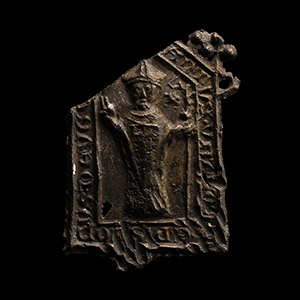
Medieval Pewter Pilgrim's Badge of St. Ubaldus
14th-15th century A.D.Sold for (Inc. bp): £208
Formed as a pentagonal plate showing a bishop in relief to the centre, wearing a mitre and floor length cope and surplice, holding attributes of his office, surrounding Latin legend: '[S]ANTVS VBALDVS EPISCOPVS DEV GV[BIO]' (St. Ubaldus, bishop, of Gubbio); one remaining attachment loop. 7.7 grams, 43 mm
European collection, 1990s. Property of a Cambridgeshire, UK, gentleman.
Commemorating a pilgrimage to the shrine of St. Ubaldus (1085-1160) in Gubbio. -
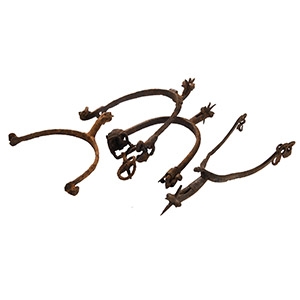
Medieval Iron Rowel Spur Collection
Circa 13th-16th century A.D.Estimate: £100 - 140 (+bp*)
Opening Bid: £40
Comprising examples of various types, including some retaining the rowel, buckle and other fitting elements. 249 grams total, 11.5-15 cm
Acquired 1990s-early 2000s. East Anglian private collection.
The early rowel spurs had short necks and small four-six or seven point star rowels, while four rowels were uncommon. After c.1350 the multipoint rowel became voguish though the former shapes continued. -
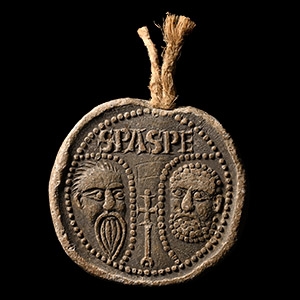
Medieval Lead Papal Bulla Seal of Pope Alexander IV
1254-1261 A.D.Sold for (Inc. bp): £520
(Rinaldo Di Segni); First Type, obverse with facing busts of Saints Paul and Peter with 'SPA SPE' inscription above and long cross between; reverse with 'ALE XANDER PP IIII' inscription in three lines. 49 grams, 39 mm
Ex 6th Earl of Arran (Sir Arthur Gore), 1920.
