
Loading, please wait...
LOT 1386
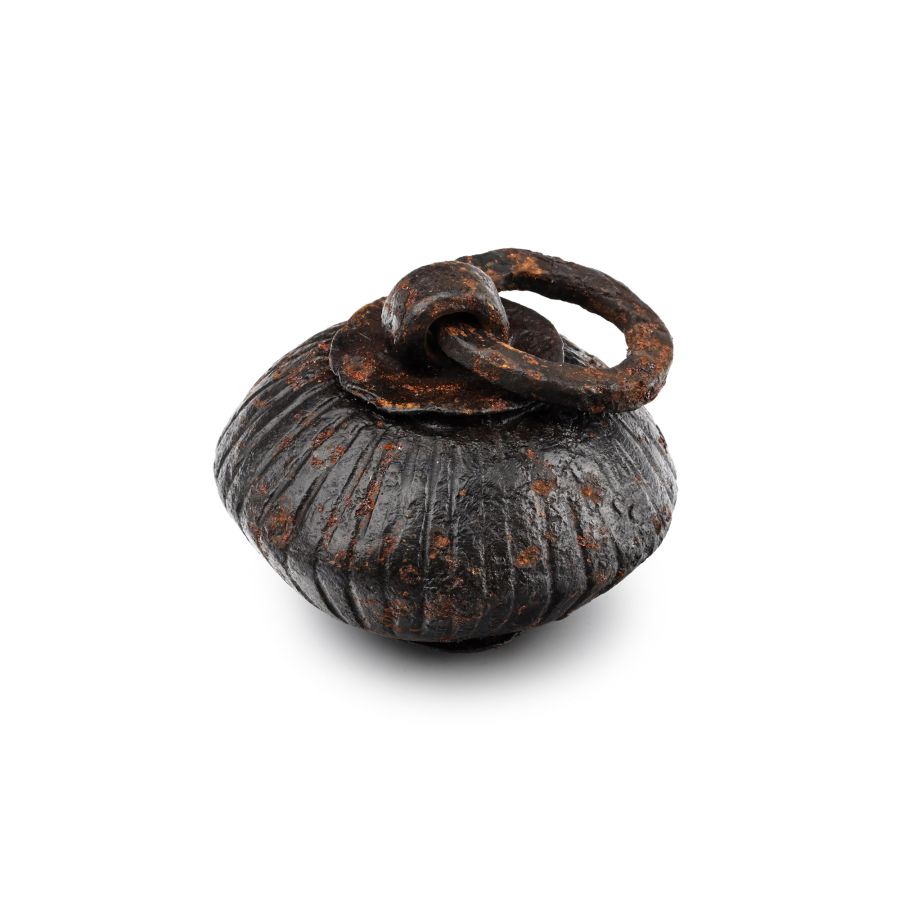
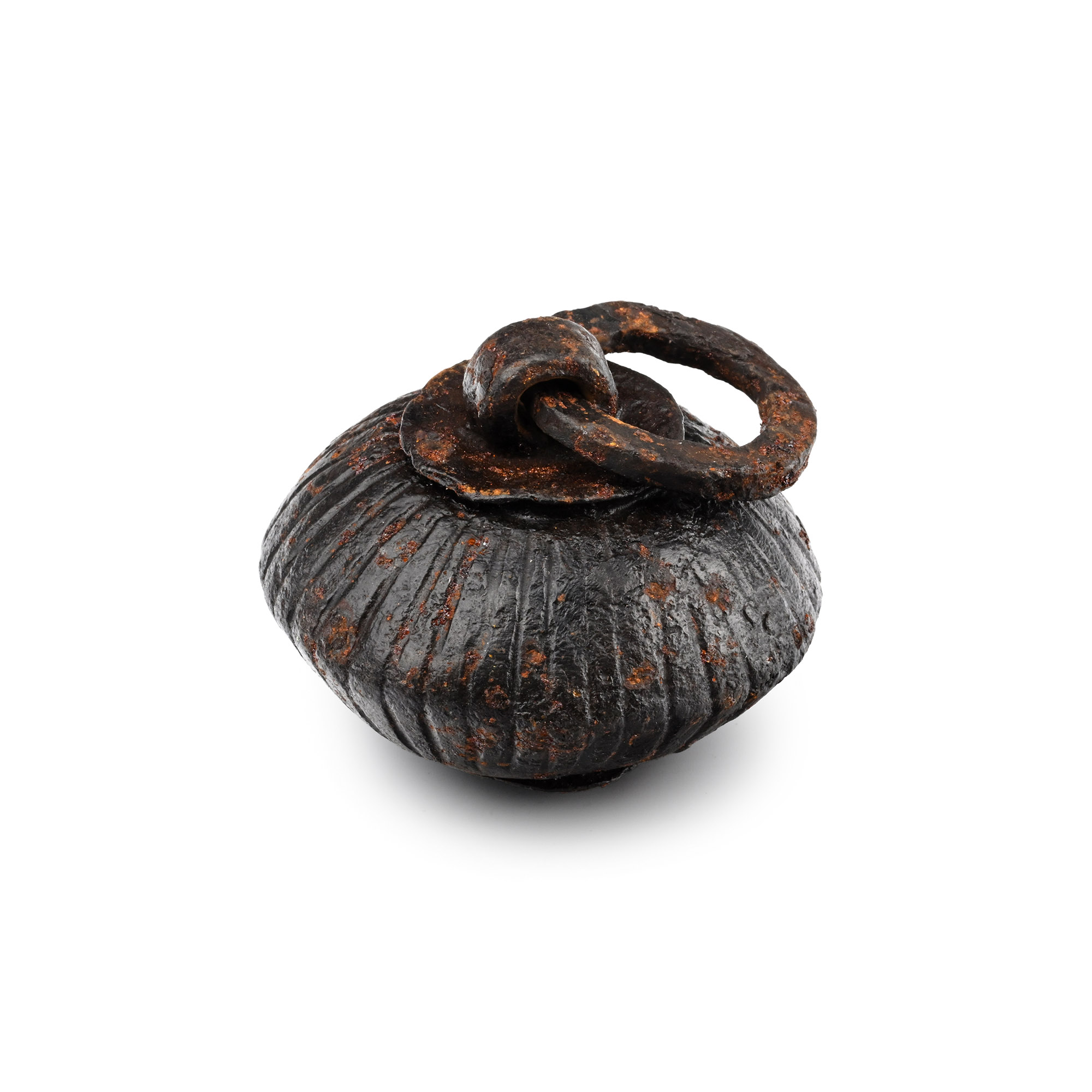
Medieval Iron Flail Head
14TH-15TH CENTURY A.D.
2 in. (277 grams, 50 mm).
Biconvex in profile with loop and ring, segmented surface. [No Reserve]
ProvenanceFrom the family collection of a London gentleman; formed in the late 1940s-1950s; thence by descent.
From the property of a late Lincolnshire, UK, gentleman.
TimeLine Auctions follows a vetting process to ensure the authenticity and legality of all items, reinforcing our commitment to integrity and responsible trading. Each antiquity, antique, and coin lot undergoes thorough examination by a vetting committee of at least ten external specialists, professional trade association members, scientists, and archaeologists: Our Vetting Process
AUCTIONS:
TimeLine is a leading auction house specialising in antiquities, ancient art, collectables, natural history, coins, medals, and books. Our auctions offer museums, collectors, historians, and enthusiasts the opportunity to acquire unique and historically significant pieces.
-
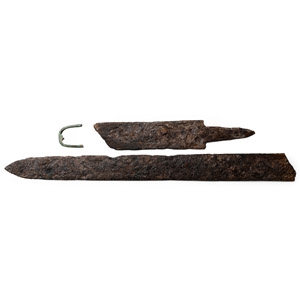
Saxon Sacrificed Iron Spatha with Bronze Chape
5th-6th century A.D.Estimate: £1,500 - 2,000 (+bp*)
Opening Bid: £600
Double-edged long sword (spatha) of type Osterburken-Kemathen; the blade with squared shoulders, broken into two parts for sacrificial reasons, tapering towards the point; sturdy tang partially preserved; wooden traces of the scabbard and hilt still visible; accompanied by a bronze outer rim of a scabbard; restored. 630 grams total, 78 cm long
From the private collection of a London gentleman, from his grandfather's collection formed before the early 1970s.
The deliberate fragmentation of a sword, often into three pieces, was a symbolic act of ‘killing’ the weapon, which was then placed as a grave good or offered in a ceremonial context. This was a Germanic custom already visible in the Vandal Przeworsk culture around the 3rd or 4th century A.D., which continued in Northern European areas until the 5th and the 6th centuries A.D. -
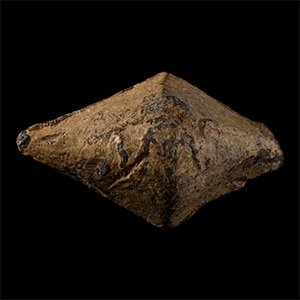
Roman Lead Cnaeus Pompey Battle of Munda Slingshot
1st century B.C.Sold for (Inc. bp): £208
A facetted lentoid-section sling shot (glans) with inscription in Latin letters 'CN' (Cneius) 'MAG' (Magnus) on one side, and 'IMP' for 'IMPERATOR' (victorious general) to the other side, i.e Gnaeus Pompeius Magnus Imperator (Pompey the Great the victorious general). 79.4 grams, 44 mm
Previously from a private Spanish collection. Ex London, UK, gentleman. Accompanied by a copy of a Spanish export licence.
The shot (Völling type 1C) is marked with the abbreviated name of Gnaeus Pompey; it was used in quantity at the Battle of Monda (or Munda) against Julius Caesar, 17th March 45 BC. The projectiles could be of different material: in lead (glandes) or in pottery or stone (lapides missiles). Sometimes they were signed with the name of the general, as is our specimen. -
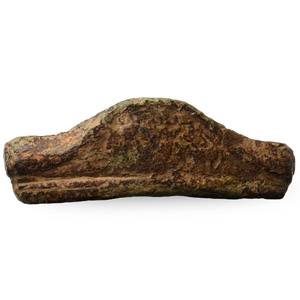
Roman 'Crown Type' Sword Hilt Guard
1st century B.C.-1st century A.D.Sold for (Inc. bp): £52
Ellipsoid in section with central slot to accept the tang; scooped 'cocked hat' profile to the broad faces, with horizontal rounded band to the lower edge. 17.6 grams, 47 mm
Found Tuesday 1st April 2025 in Wenham Parva, Babergh, Suffolk, UK. Accompanied by a copy of the British Museum's Portable Antiquities Scheme (PAS) report no.SF-92FBDC.
