
Loading, please wait...
LOT 1855
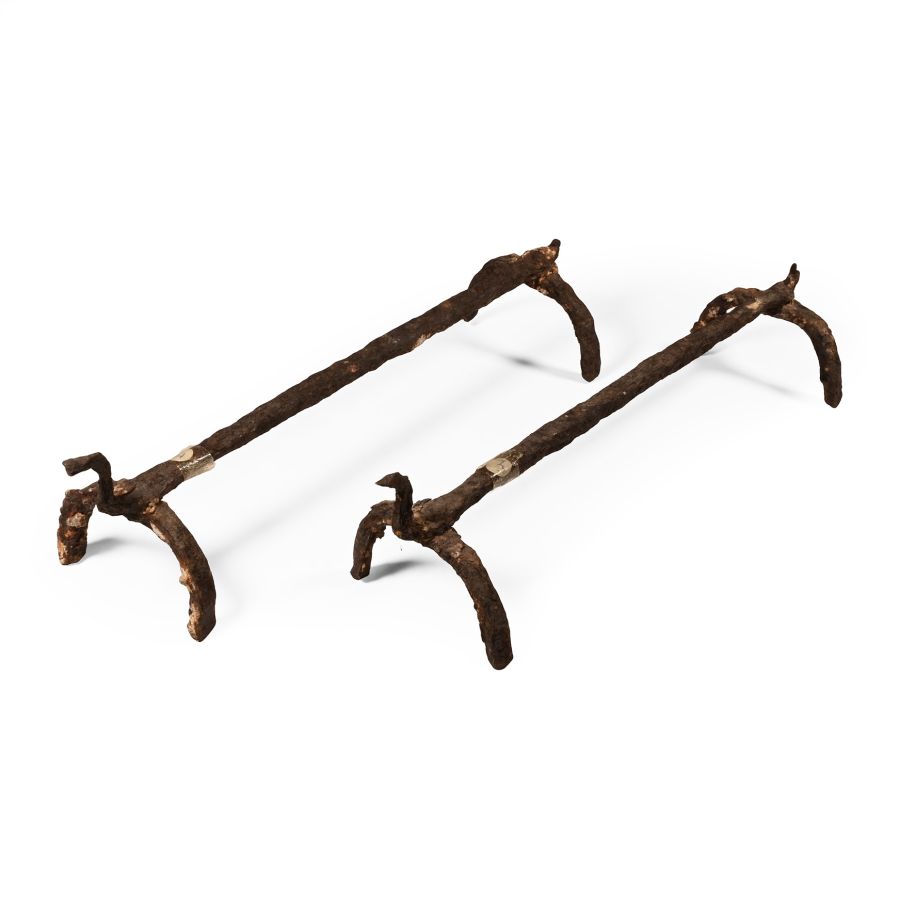
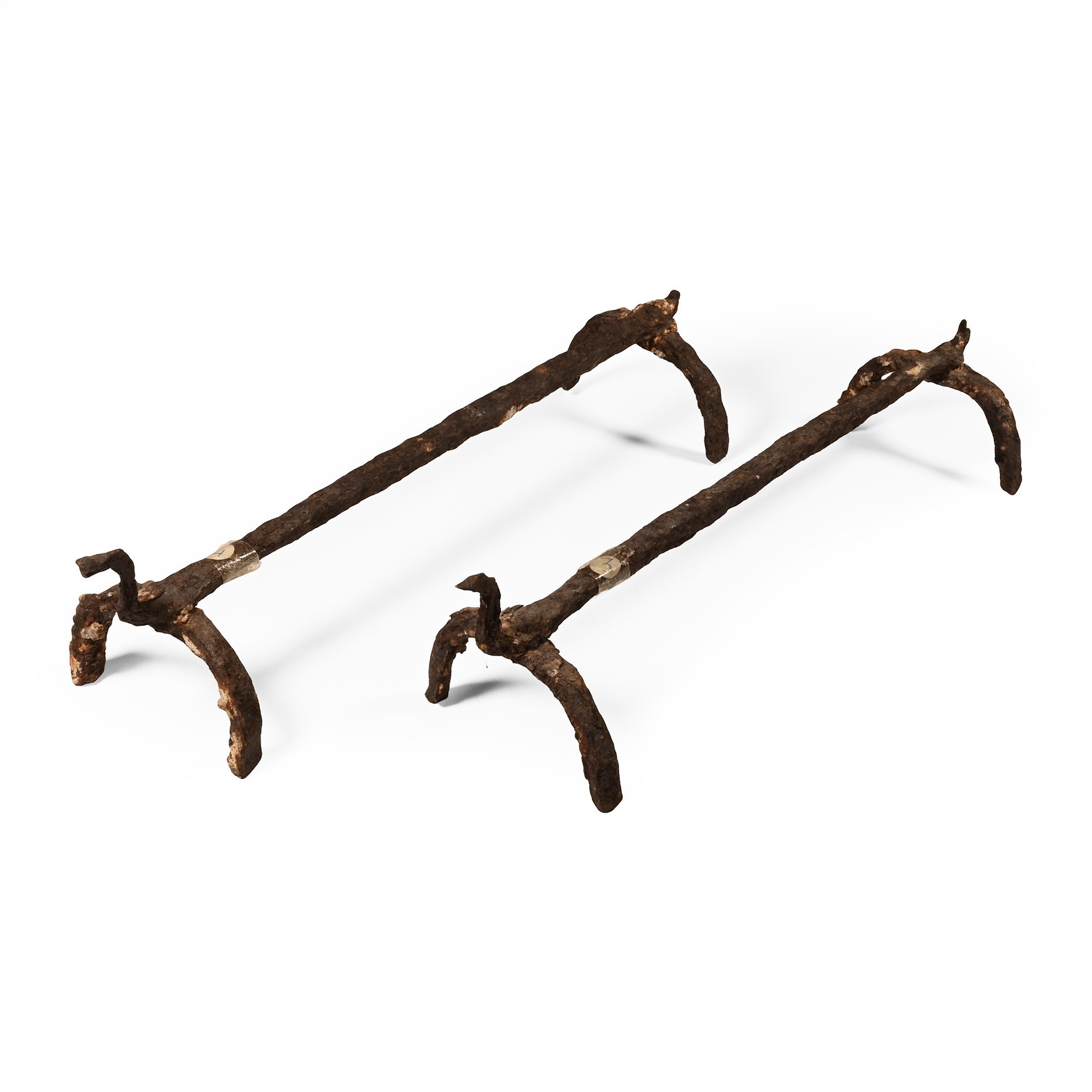
Medieval Iron Fire Dog Pair
15TH-16TH CENTURY A.D.
14 1/2 - 15 1/8 in. (990 grams total, 37-38.5 cm).
Matched pair, each a square-section iron bar with tapering ends, crescent finials forming angled legs; raised finials with swan-neck (two absent); old collector's labels '3' and '4'. [2, No Reserve]
ProvenanceEx Robin Symes Gallery, Mayfair, UK, pre 1999.
CONDITIONTimeLine Auctions follows a vetting process to ensure the authenticity and legality of all items, reinforcing our commitment to integrity and responsible trading. Each antiquity, antique, and coin lot undergoes thorough examination by a vetting committee of at least ten external specialists, professional trade association members, scientists, and archaeologists: Our Vetting Process
AUCTIONS:
TimeLine is a leading auction house specialising in antiquities, ancient art, collectables, natural history, coins, medals, and books. Our auctions offer museums, collectors, historians, and enthusiasts the opportunity to acquire unique and historically significant pieces.
-
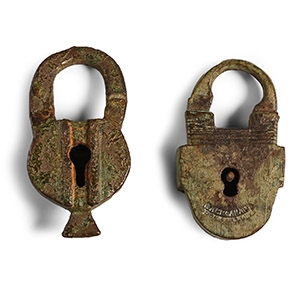
Medieval and Later Bronze Padlock Group
15th-19th century A.D.Estimate: £120 - 170 (+bp*)
Opening Bid: £50
One with thick C-shaped locking arm, keyhole with slot, wedge-shaped tab below; the other D-shaped with hinged arm, keyhole with turning pin, stamped maker's name '...CAHAP' beneath the hole. 55.6 grams total, 46-50 mm
Ex German art market, 2000s. Acquired from an EU collector living in London. From the collection of Surrey, UK, gentleman. -
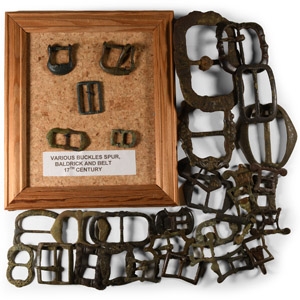
Medieval Bronze Buckle Collection
14th-19th century A.D.Sold for (Inc. bp): £13
Including double-loop, hinged, scrolled and other types; many of these objects are published in the Detector Finds book series. 524 grams total, buckles: 2.4-10 cm
From the collection of the famous author, writer and speaker, Gordon Bailey, Essex, UK; formed since 1968. -
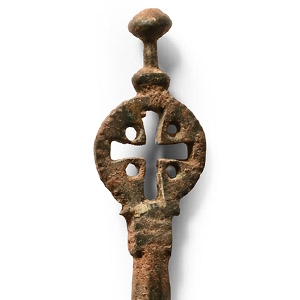
Norman Bronze Key Shank with Cross
Late 11th century A.D.Sold for (Inc. bp): £52
Octagonal in section with pierced discoid bow and knop finial; openwork cross with pellets in the spandrels, rectangular bolster. 15.7 grams, 11.1 cm
Acquired on the UK art market. Property of an Essex, UK, gentleman.
