
Loading, please wait...
LOT 1130
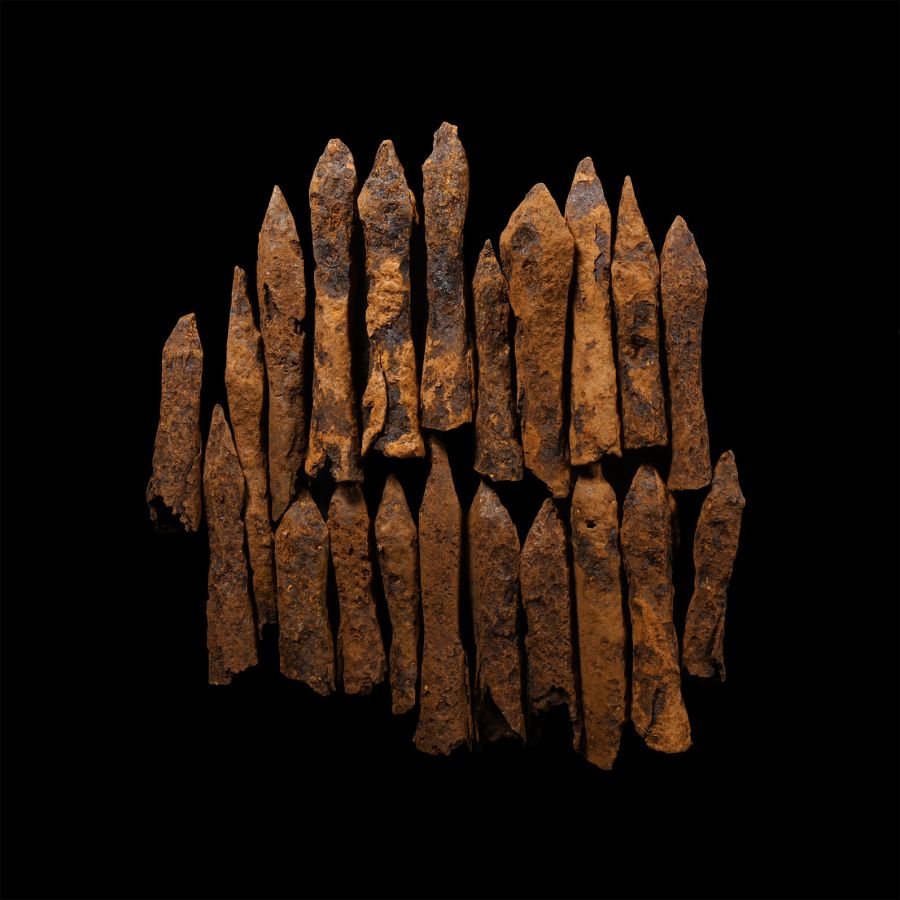
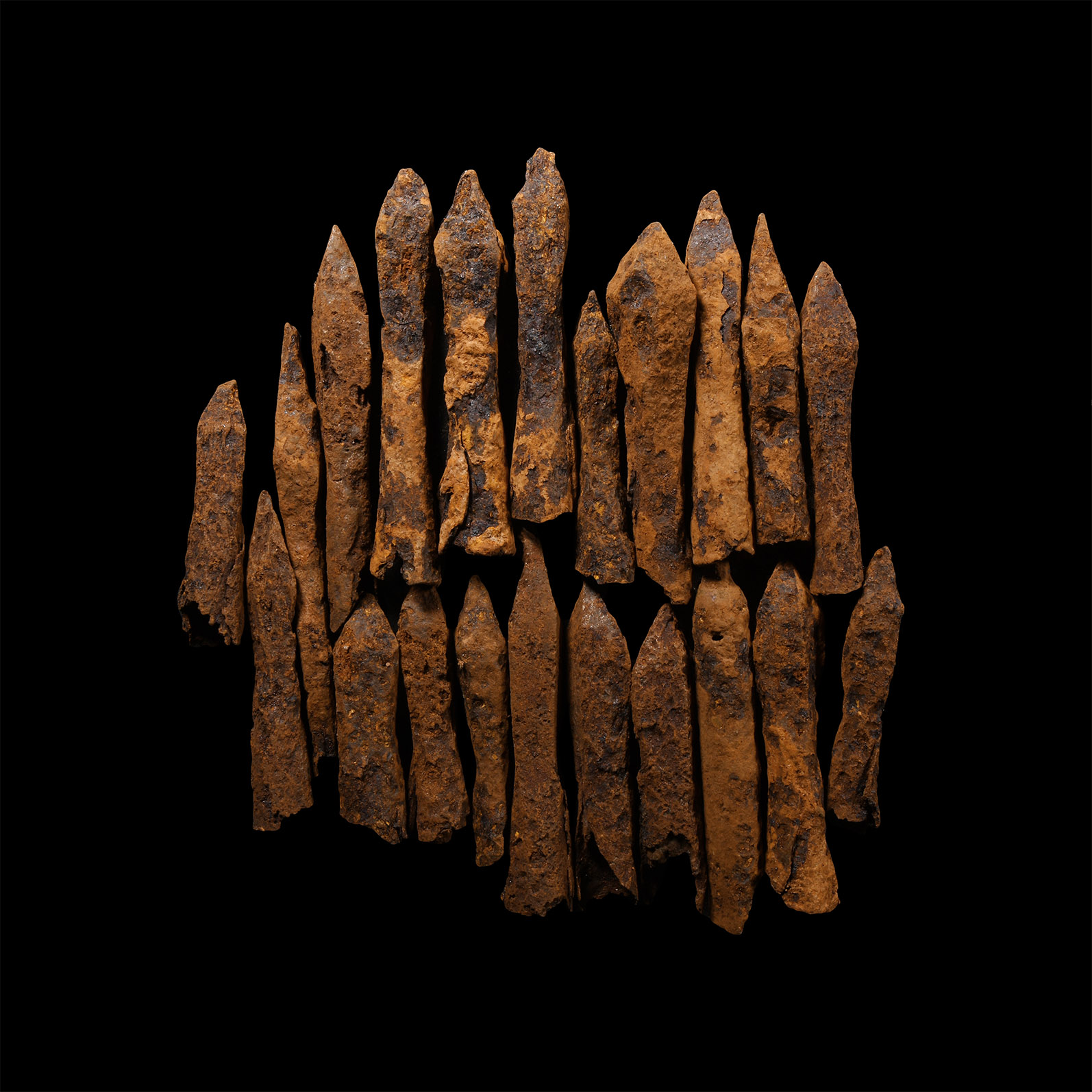
Medieval Iron Crossbow Bolt Group
CIRCA 12TH-15TH CENTURY A.D.
2 1/8 - 4 in. (888 grams total, 5.4-10.3 cm).
Composed of socketted bolts of various types, most with tapering or facetted square-section tips. [20]
ProvenanceAcquired 1990s-early 2000s.
East Anglian private collection.
TimeLine Auctions follows a vetting process to ensure the authenticity and legality of all items, reinforcing our commitment to integrity and responsible trading. Each antiquity, antique, and coin lot undergoes thorough examination by a vetting committee of at least ten external specialists, professional trade association members, scientists, and archaeologists: Our Vetting Process
AUCTIONS:
TimeLine is a leading auction house specialising in antiquities, ancient art, collectables, natural history, coins, medals, and books. Our auctions offer museums, collectors, historians, and enthusiasts the opportunity to acquire unique and historically significant pieces.
-
.jpg)
English Cuirassier Single Bar Burgonet
Circa 1620 A.D.Sold for (Inc. bp): £4,680
Iron fronted with visor, nasal guard bar and front and back gorget plates, the lifting visor marked with parallel lines; the front and back plates secured with a single hook. 2.25 kg, 34.5 cm high
Acquired on the UK art market. The Kusmirek Collection, UK. Accompanied by an academic report by Dr Raffaele D'Amato. This lot has been checked against the Interpol Database of stolen works of art and is accompanied by search certificate number no. 11766-203985.
During the latter half of the 16th century, the heavy 'knightly' lance gradually fell out of use, possibly because of the widespread adoption of the infantry pike. Also, the lance required a great amount of practice to perfect its use, whilst proficiency in the use of firearms was considerably more easily acquired. The lancer or demi-lancer, when he had abandoned his lance, became the pistol-armed cuirassier or reiter. The adoption of the pistol as the primary weapon led to the development of the stately caracole tactic, where cuirassiers fired their pistols at the enemy, then retired to reload whilst their comrades advanced in turn to maintain firing. Following some initial successes, this tactic proved to be extremely ineffective, as infantry, with superior firearms and numbers, could easily outgun the cuirassiers. The change from cavalry being reliant on firearms, to shock-capable close combat cavalry, reliant mainly on the sword, was attributed to Gustavus Adolphus of Sweden in the 1620s and 1630s, but was actually already widely practiced throughout Europe since the invention of pistol-armed heavy cavalrymen in the late 16th century. -
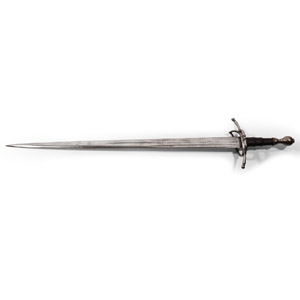
German Hand-And-A-Half Bastard Sword
15th century A.D.Sold for (Inc. bp): £4,680
Comprising a straight, flat triple fuller, double edged and tapering blade engraved with imperial orb sign, Passau wolf mark dated 15th century and 'DIGN LAGDIGNLA', with steel hilt comprising of down-turned quillons with ball finials and single ring outer defence, the bars of round section; matching inner defence bar with matching decoration to the quillons, spherical pommel rebound leather grip with original 'Turk's heads' to top and bottom but worn. 1.46 kg, 1.05 m
Acquired from Military Swords Ltd, UK, 2017. The Kusmirek Collection, UK. Accompanied by a copy of an invoice. This lot has been checked against the Interpol Database of stolen works of art and is accompanied by search certificate no.203964. -
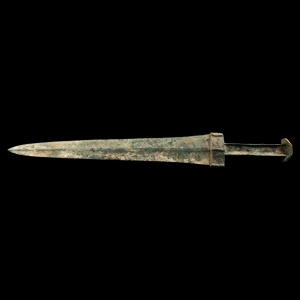
Luristan Bronze Dagger
2nd-1st millennium B.C.Estimate: £300 - 400 (+bp*)
Opening Bid: £160
Comprising a narrow double-edged blade, triangular in profile with raised midrib, rectangular guard with flanges, rectangular grip with lateral flanges to accept an organic grip, curved integral finial. 312 grams, 43 cm
Ex German collection, Cologne, 1980-1990s.
This weapon is typical of the cemeteries dating to the local Late Bronze Age (1300-1000 B.C.). The blade is still triangular but the crescentic pommel is reduced and flanged to be filled with organic material such as bone or wood.
