
Loading, please wait...
LOT 1593
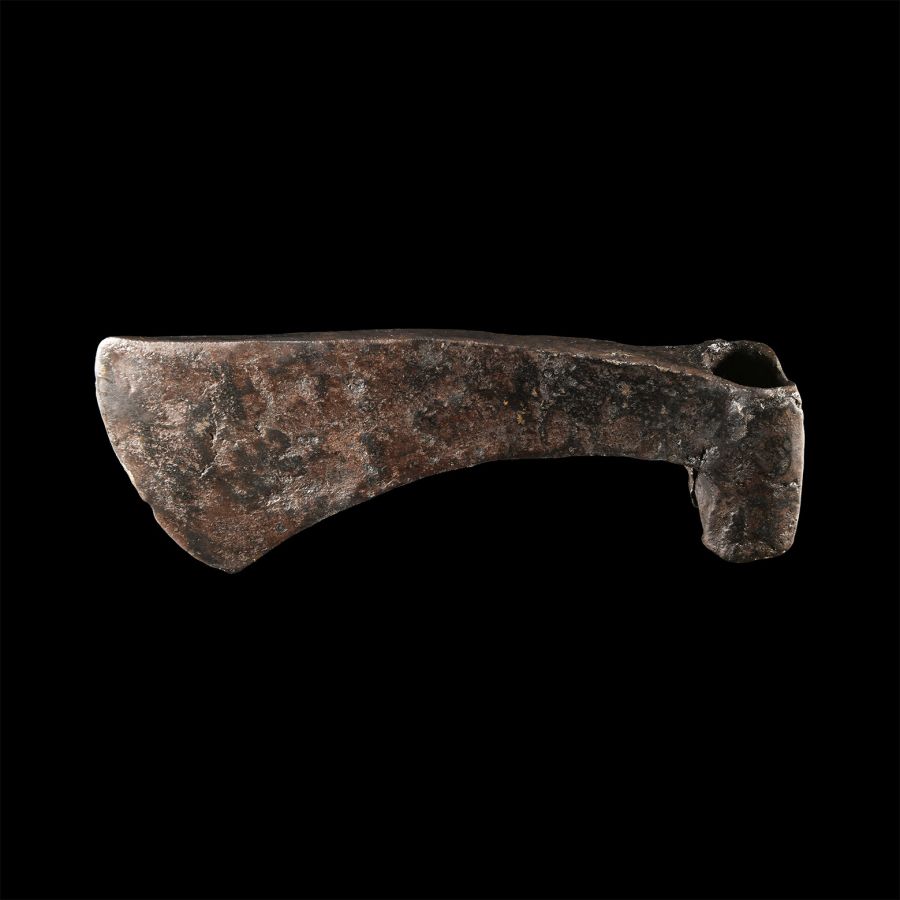
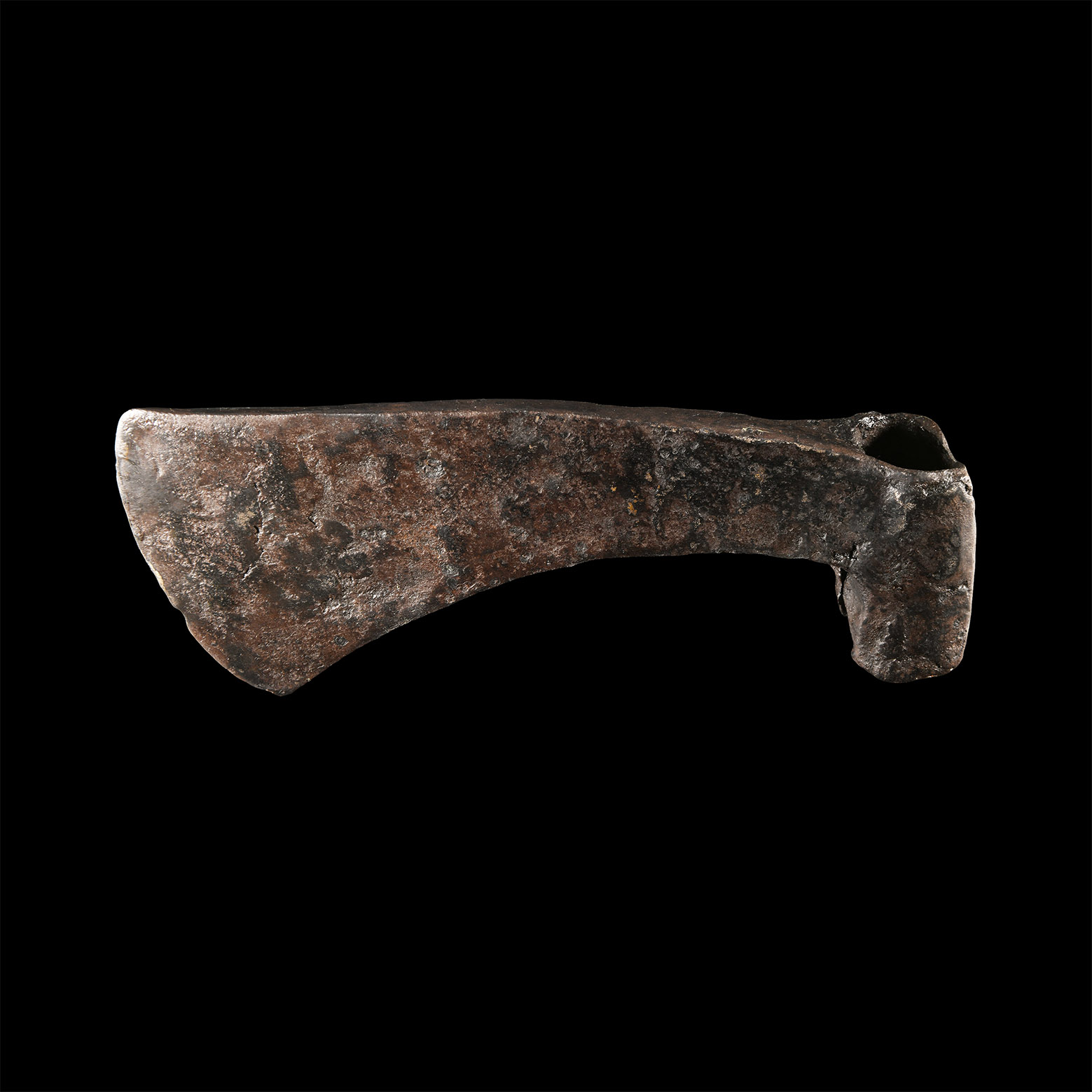
Medieval Iron Crescent-Shaped Axehead
13TH-15TH CENTURY A.D.
8 5/8 in. (1 kg, 22 cm).
With a thick rectangular-section blade, curved edge and D-shaped section socket with elongated slender neck. [No Reserve]
ProvenanceAcquired 1971-1972.
From the collection of the vendor's father.
Property of a London, UK, collector.
See Glosek, M., Późnośredniowieczna broń obuchowa w zbiorach polskich (Late medieval blunt weapons in Polish collections), Warszawa-Łódź, 1996, pl.XIII, letters D,H, for similar axeheads.
FootnotesA number of axes of this type have been found in Western Central Europe and the Baltic countries. They were mostly found in the second half of 13th century and 15th century A.D. contexts, but ichnographically attest that they were still in use in the 16th century A.D.
CONDITIONTimeLine Auctions follows a vetting process to ensure the authenticity and legality of all items, reinforcing our commitment to integrity and responsible trading. Each antiquity, antique, and coin lot undergoes thorough examination by a vetting committee of at least ten external specialists, professional trade association members, scientists, and archaeologists: Our Vetting Process
AUCTIONS:
TimeLine is a leading auction house specialising in antiquities, ancient art, collectables, natural history, coins, medals, and books. Our auctions offer museums, collectors, historians, and enthusiasts the opportunity to acquire unique and historically significant pieces.
-
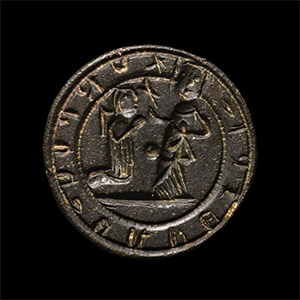
Large Medieval Bronze Seal Matrix with Scene Showing Robed Figures
14th-15th century A.D.Estimate: £250 - 350 (+bp*)
Opening Bid: £135
With facetted stem and pierced pentagonal finial, incised orientation cross to top face; circular die with outer rim bearing enigmatic legend; standing robed figure with one hand extended towards a kneeling hooded figure. 15.5 grams, 25.3 mm
Fine condition.
Acquired 1970s. Ex UK collection. Property of a Portsmouth, UK gentleman. -
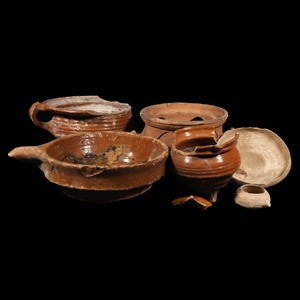
Medieval Glazed Pottery Group
15th century A.D. and laterSold for (Inc. bp): £1
Comprising glazed and unglazed ceramic vessels including jars, a skillet and handled pots; together with a Bronze Age bowl and jar. 4.9 kg total, 7.5-30 cm
Acquired 1990s-early 2000s. East Anglian private collection. -
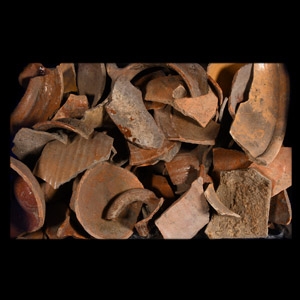
Medieval and Later Dutch Pottery Pit Dug Fragment Group
Circa 15th-17th century A.D.Sold for (Inc. bp): £1
Most glazed and from various vessel types, including examples with handles and coloured glaze. 15 kg total, 4-25.5 cm
Acquired 1990s-early 2000s. East Anglian private collection.
