
Loading, please wait...
LOT 1930
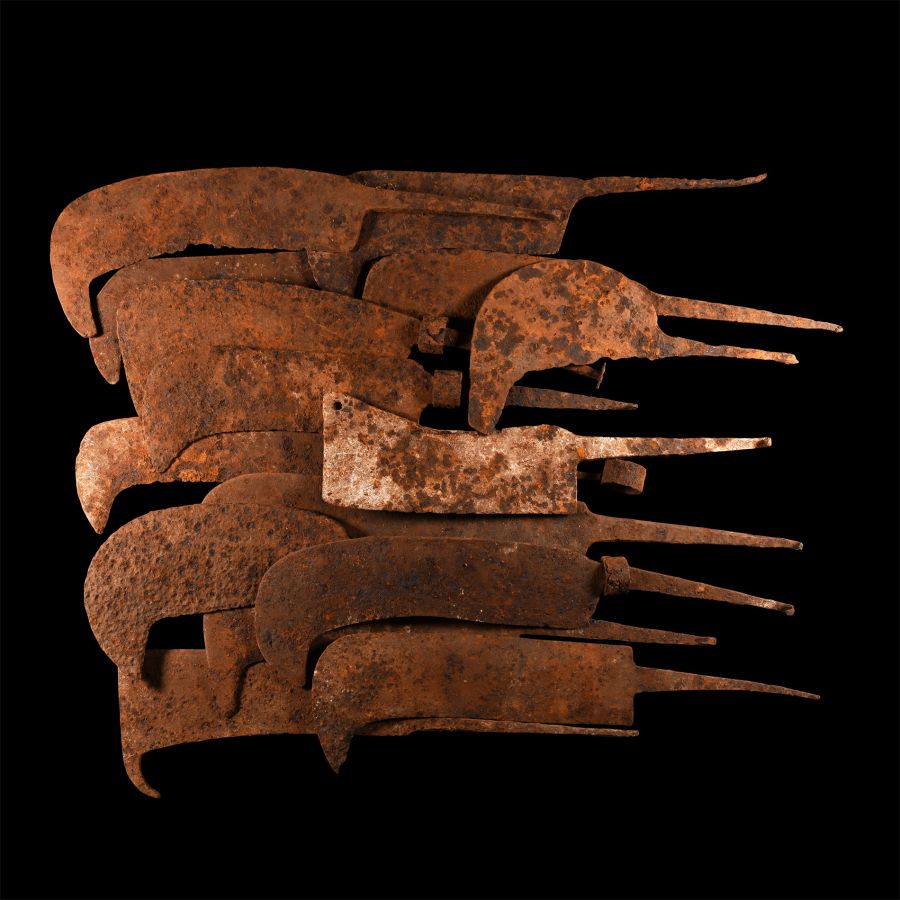
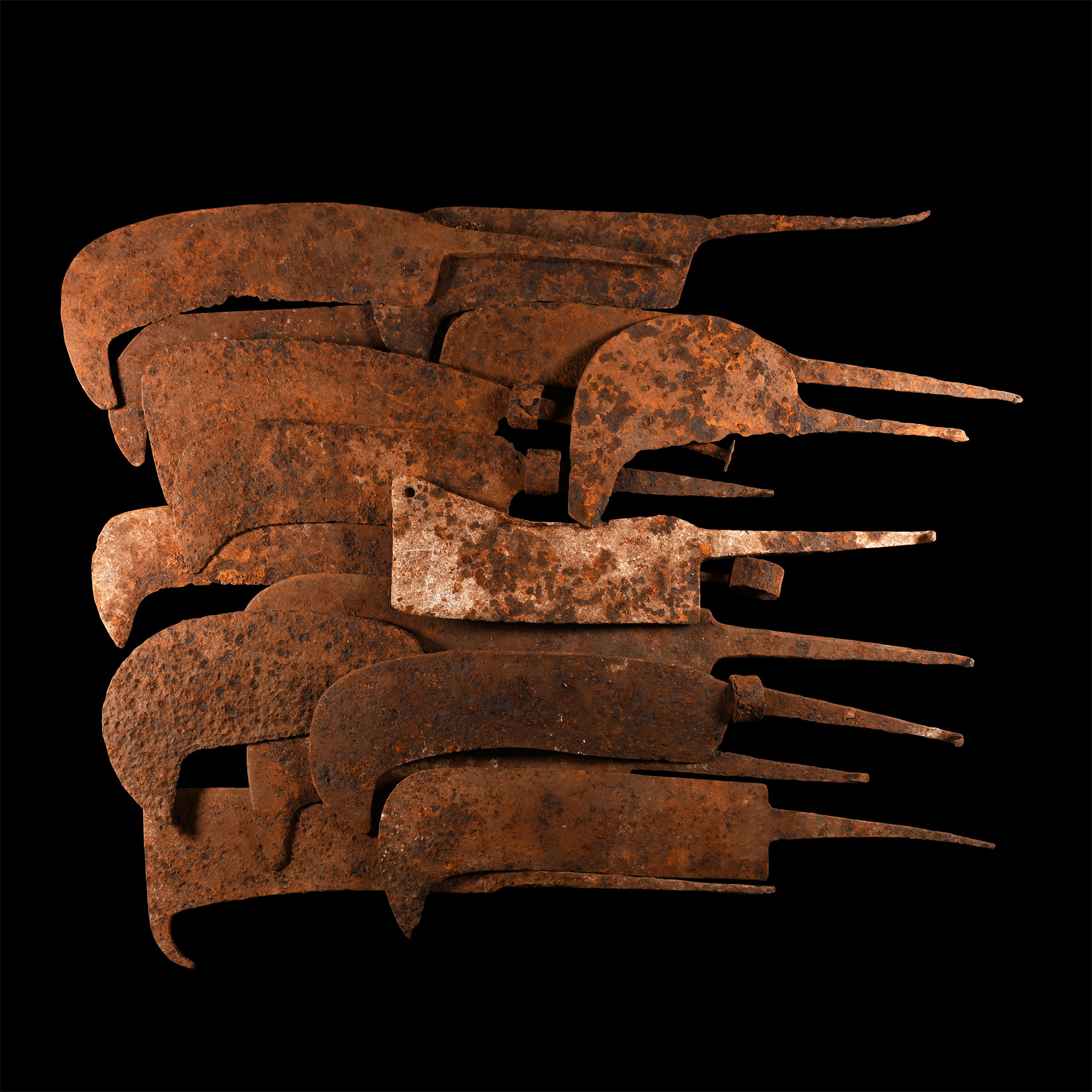
Medieval Iron Cleaver Group
15TH-17TH CENTURY A.D.
9 3/4 - 18 in. (8 kg total, 25-48 cm).
Comprising hook-ended examples together with one square-ended example. [14, No Reserve]
ProvenanceAcquired 1990s-early 2000s.
East Anglian private collection.
Cf. Seetah, K., ‘The Middle Ages on the block: animals, Guilds and meat in the medieval period’ in Pluskowski Breaking and Shaping Beastly Bodies, animals as material culture in the Middle Ages Oxford, 2007, fig.3.6 (images of Medieval cleaver from the Luttrell Psalter).
FootnotesDuring the Roman period chopping tools such as cleavers were predominantly used whilst during the medieval period knives and cleavers were the preferred tools for butchering carcasses. Cleavers were also often depicted in medieval art as having riveted handles. Such handles made a cleaver more durable, whilst using steel as a component of the blade made it last longer.
CONDITIONTimeLine Auctions follows a vetting process to ensure the authenticity and legality of all items, reinforcing our commitment to integrity and responsible trading. Each antiquity, antique, and coin lot undergoes thorough examination by a vetting committee of at least ten external specialists, professional trade association members, scientists, and archaeologists: Our Vetting Process
AUCTIONS:
TimeLine is a leading auction house specialising in antiquities, ancient art, collectables, natural history, coins, medals, and books. Our auctions offer museums, collectors, historians, and enthusiasts the opportunity to acquire unique and historically significant pieces.
-
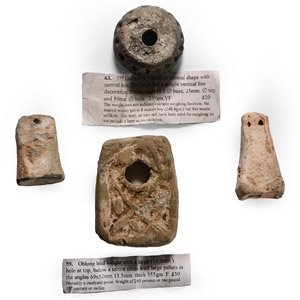
Medieval Lead Weight Group
12th-15th century A.D.Sold for (Inc. bp): £26
Including one a truncated cone with vertical ribbing, a square-section wedge with reserved 'T' to underside, and other types; two with typed collector's note. 976 grams total, 43-69 mm
Ex Simmons Gallery, 1990s. Accompanied by two typed information slips. -
.jpg)
Medieval Iron Rowel Spur Collection
Circa 14th-16th century A.D.Sold for (Inc. bp): £72
Comprising examples of various types, including some retaining the rowel, buckle and other fastening elements. 257 grams total, 12.1-14.5 cm
Acquired 1990s-early 2000s. East Anglian private collection. -
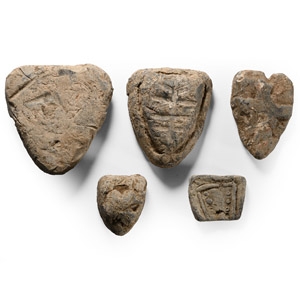
Medieval Lead Weight Group
12th-15th century A.D.Sold for (Inc. bp): £1
Mainly triangular and heater-shaped types with raised detailing. 1.4 kg total, 38-71 mm
Ex Simmons Gallery, 1990s.
