
Loading, please wait...
LOT 1159
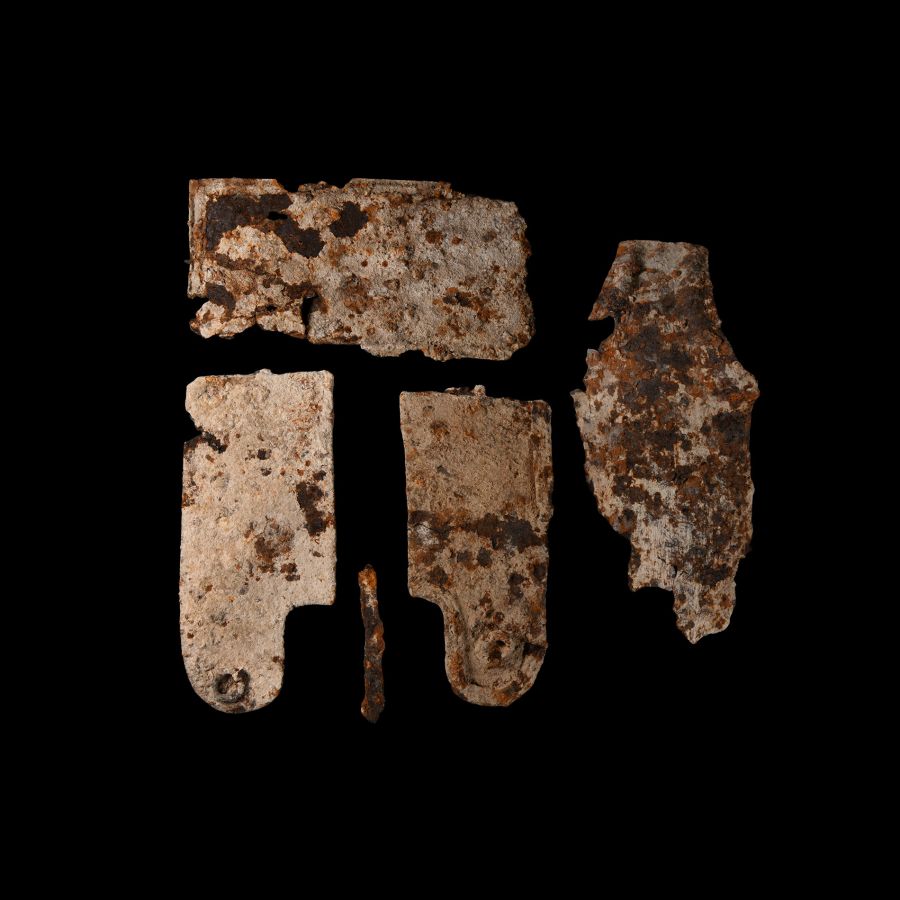
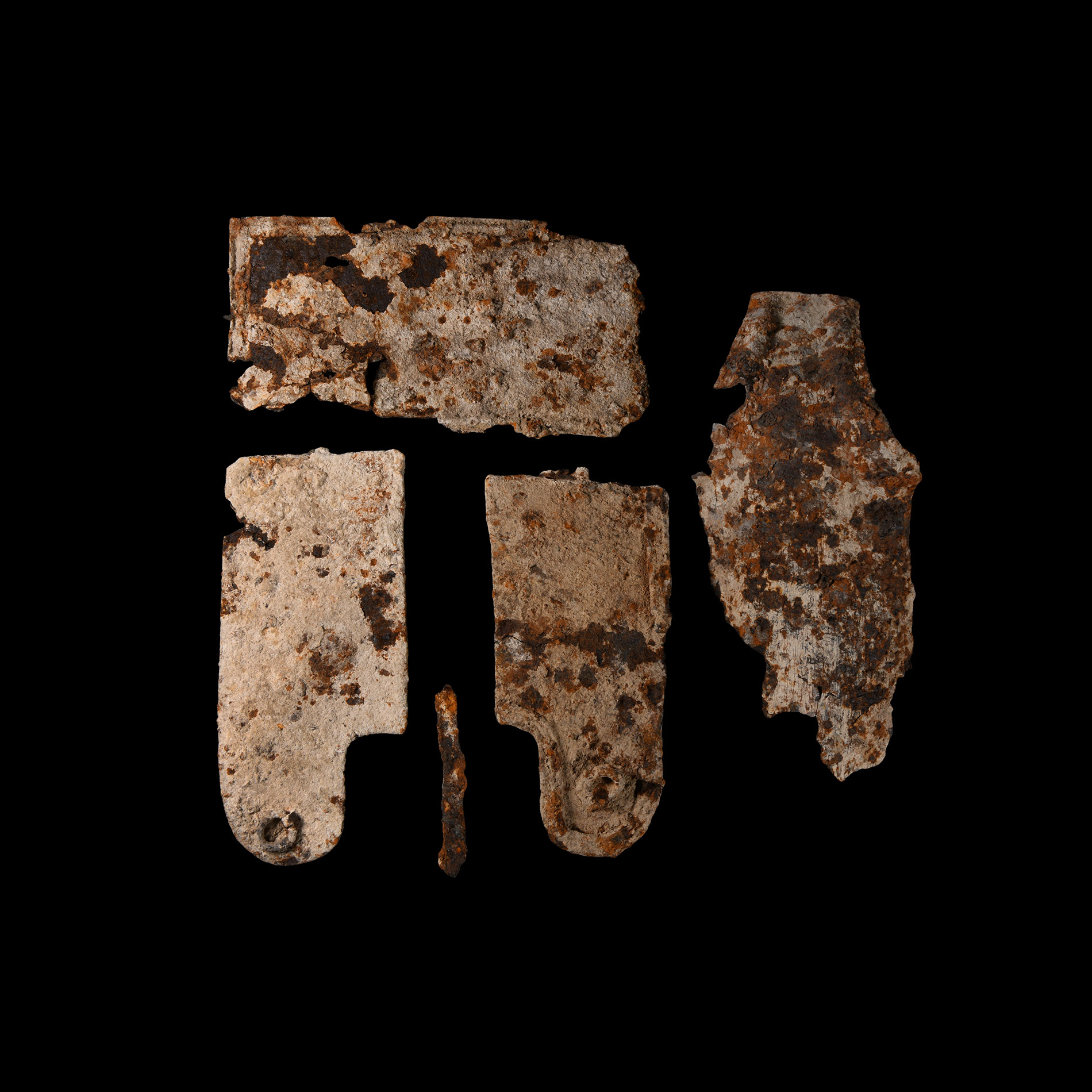
Medieval Iron Cheek Guards and Chamfron Group
CIRCA 14TH-16TH CENTURY A.D.
2 3/4 - 7 5/8 in. (450 grams total, 7.2-19.5 cm).
Comprising curved and flat plates, some incorporating shaped regions, raised borders and seized ring loops. [5, No Reserve]
ProvenanceAcquired 1990s-early 2000s.
East Anglian private collection.
TimeLine Auctions follows a vetting process to ensure the authenticity and legality of all items, reinforcing our commitment to integrity and responsible trading. Each antiquity, antique, and coin lot undergoes thorough examination by a vetting committee of at least ten external specialists, professional trade association members, scientists, and archaeologists: Our Vetting Process
AUCTIONS:
TimeLine is a leading auction house specialising in antiquities, ancient art, collectables, natural history, coins, medals, and books. Our auctions offer museums, collectors, historians, and enthusiasts the opportunity to acquire unique and historically significant pieces.
-
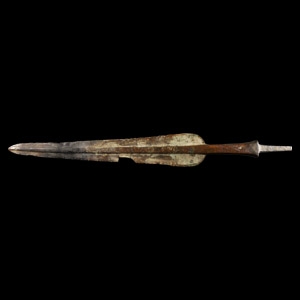
Amlash Tanged Spearhead
12th century B.C.Estimate: £250 - 350 (+bp*)
Opening Bid: £83
Composed of a tapering leaf-shaped blade with raised midrib, splayed neck and tapering tang. 637 grams, 49 cm
Acquired on the London art market, prior to 1980s. The Kusmirek Collection, UK.
The weapon belongs to the type 1 of the Khorasani spearhead classification, mainly from Marlik or Amlash areas. Similar pieces have been dated by Stutzinger to 1200-1100 B.C. -
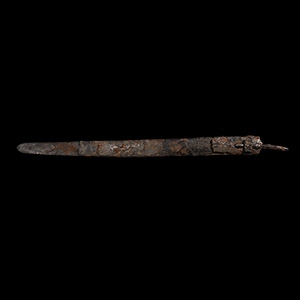
Iron Age Celtic La Tene III Sword
1st century B.C.Sold for (Inc. bp): £780
Accompanied by a scabbard with fragments of the slider; the sword with lentoid-section two-edged iron blade, tapering gently to a broad point; slightly bent square-section tang; the fragments of the scabbard show a broad, slender sheath with stepped lower end, the obverse face rolled over the edges to clasp the reverse plate; the suspension elements comprising a fragment of the transverse bars clasping the front and back plates connected to vertical flared straps with a stepped slider-loop to the centre, once framed by two more similar bars with vertical straps forming a hollow square in which the slider-loop sits; mounted on a wall display mount. 1.5 kg total, 87 cm
Private collection, Munich, Germany, 1970s. Private collection, London, UK, 2014, acquired from the above.
Celtic swords of this period were longer, reaching one meter in length, with the tip having the tendency to be rounded, while the scabbards were less decorated or more simply ornamented than the swords of the previous period. -
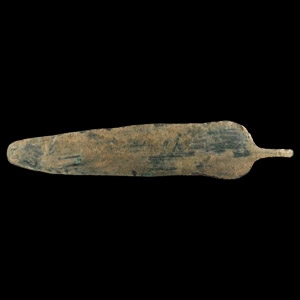
Luristan Bronze Spearhead
14th-10th century B.C.Estimate: £120 - 170 (+bp*)
Opening Bid: £60
Lanceolate profile with rounded tip and deep shoulders, short tang. 223 grams, 40 cm
Ex German collection, Cologne, 1980-1990s.
The metalworking techniques used in making bronze weapons in Luristan were very complex. Surfaces were often finished in repoussé work, and some of the weapons were chased, others engraved. The spearhead seems to belong to the type V (heavy spearheads) of the Khorasani's classification, having ovate blade with rounded and gently curved shoulders. Unfortunately the original mid-rib is today completely effaced.
