
Loading, please wait...
LOT 1815
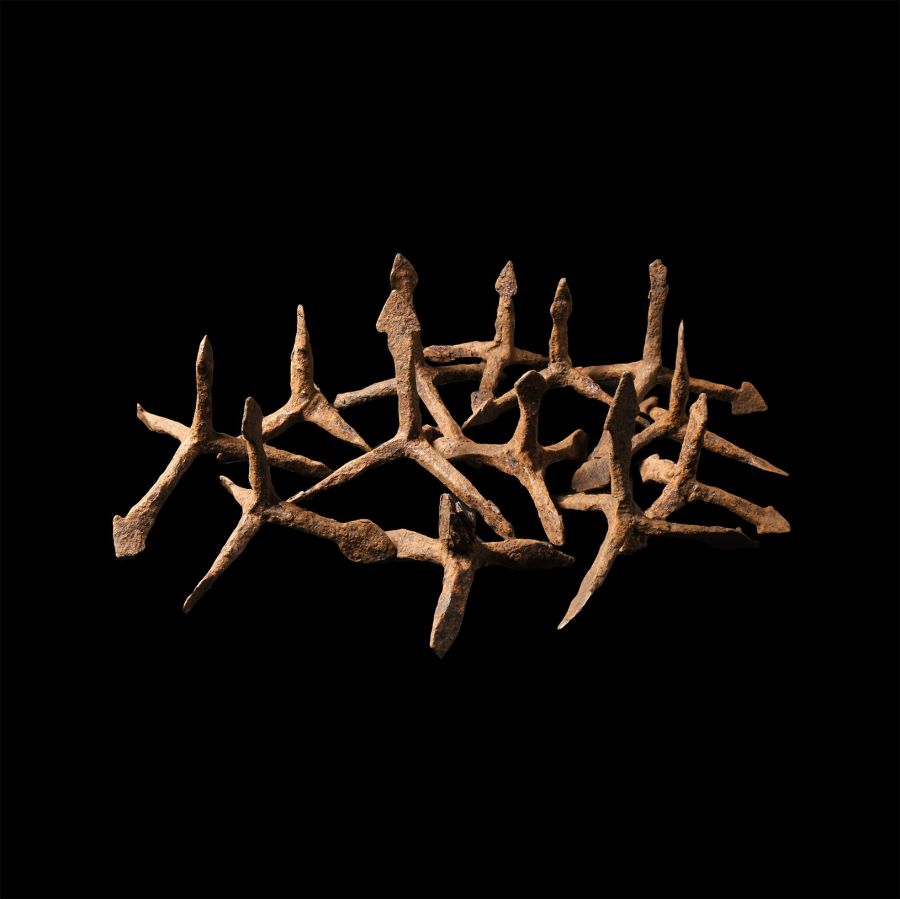
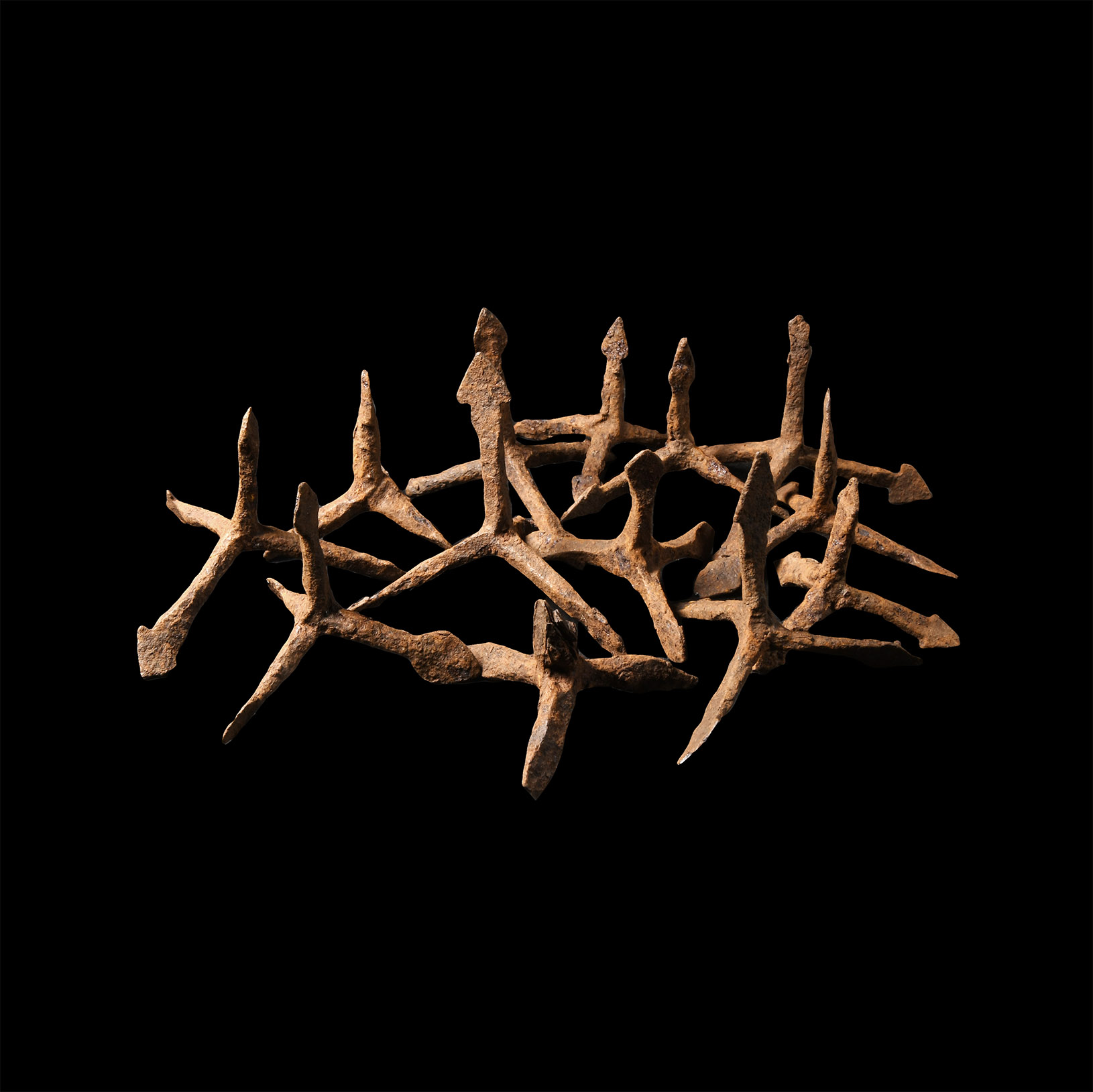
Medieval Iron Caltrop Group
14TH-16TH CENTURY A.D.
1 3/4 - 2 1/2 in. (161 grams total, 45-65 mm).
Most with the usual four spikes, with arrow-shaped heads. [13]
ProvenanceAcquired 1990s-early 2000s.
East Anglian private collection.
Caltrops were scattered on battlefields in an effort to stop or slow advancing enemy cavalry or foot soldiers; regardless of how a caltrop lands, one spike is always facing upwards.
CONDITIONTimeLine Auctions follows a vetting process to ensure the authenticity and legality of all items, reinforcing our commitment to integrity and responsible trading. Each antiquity, antique, and coin lot undergoes thorough examination by a vetting committee of at least ten external specialists, professional trade association members, scientists, and archaeologists: Our Vetting Process
AUCTIONS:
TimeLine is a leading auction house specialising in antiquities, ancient art, collectables, natural history, coins, medals, and books. Our auctions offer museums, collectors, historians, and enthusiasts the opportunity to acquire unique and historically significant pieces.
-
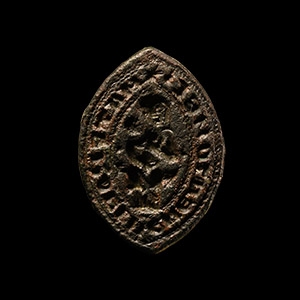
Medieval Bronze Vesica-Shaped Seal Matrix
14th century A.D.Estimate: £150 - 200 (+bp*)
Opening Bid: £75
Showing a central figure of Mary seated supporting the infant Jesus; ropework edges to the border with legend in Lombardic script '*MATER DEI MEMENTO ME[.]' (Mother of God, remember (me)); loop to the reverse. 7.78 grams, 26 mm
Cambridgeshire collection, 1990s. -
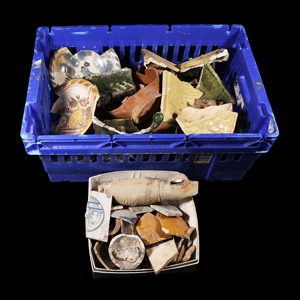
Medieval Pottery Group
Circa 15th-16th century A.D.Sold for (Inc. bp): £1
Comprising glazed and unglazed fragments from vessels of various types, including decorated and polychrome examples. 15 kg total, 2-26 cm
Acquired 1990s-early 2000s. East Anglian private collection. -
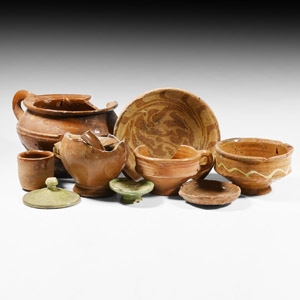
Medieval Ceramic Group
15th century A.D. and laterSold for (Inc. bp): £1
Composed primarily of glazed vessels and vessel fragments, including decorated examples. 3.1 kg total, 2-21 cm
Acquired 1990s-early 2000s. East Anglian private collection.
